Top Five Design Priorities for Law Firms
October 20, 2022

A workplace worthy of the work
Law offices have long been shaped by the traditions of the profession: private, formal, and designed to project steady confidence and assurance.
Today, attorneys need a space that upholds those historical values while supporting modern day work. That means workspaces to collaborate, better support for revolving technology, and spaces that feel as considered to employees and clients as they do authoritative.
As firms consider what they need from their physical environments, five design priorities can balance institutional legacy with the demands of a modern workplace.
1. The human experience. When we design law offices, we think about what it feels like to walk inside the building and sit down. Both staff and guest comfort is central to these decisions.
Environmental quality shapes how people feel and function in a space. Elements such as temperature, lighting, acoustics, textures, materials, and furnishings all contribute to a person’s experience from entry to exit. Thoughtful design pairs these elements to the brand and organizational needs.
2. Brand alignment. Law office design should reflect the firm’s brand identity with a consistent, signature style that also allows for localized tailoring. The goal is consistency elevated by context: thoughtful, repeatable solutions grounded in familiarity, in a space that feels authentic in every location.
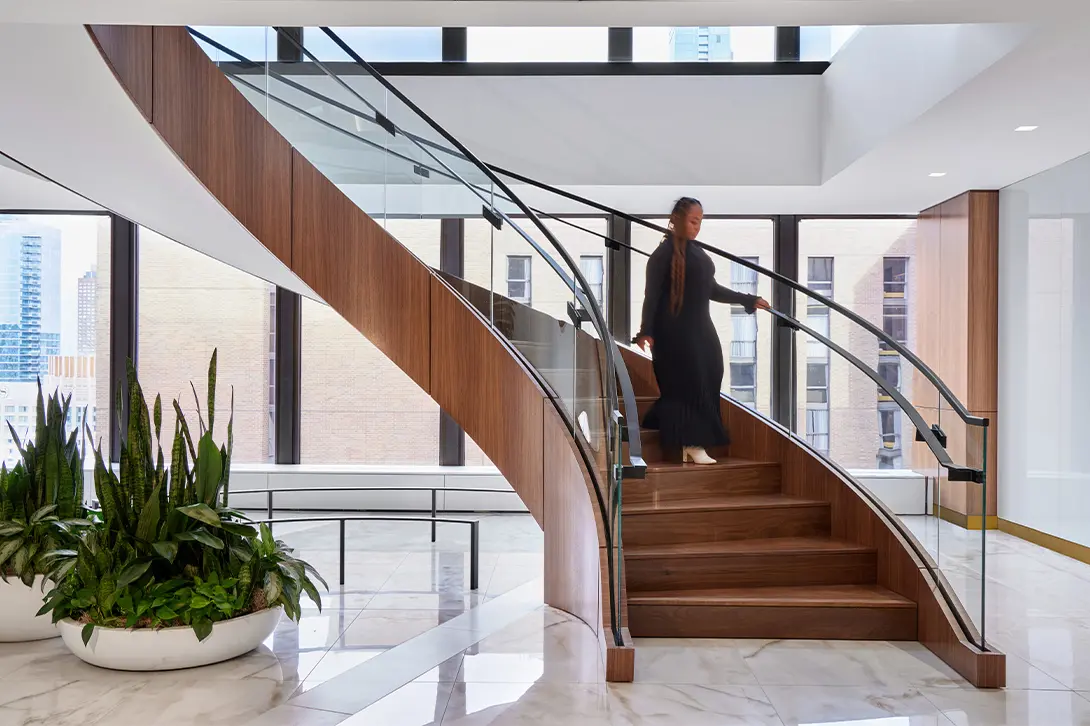
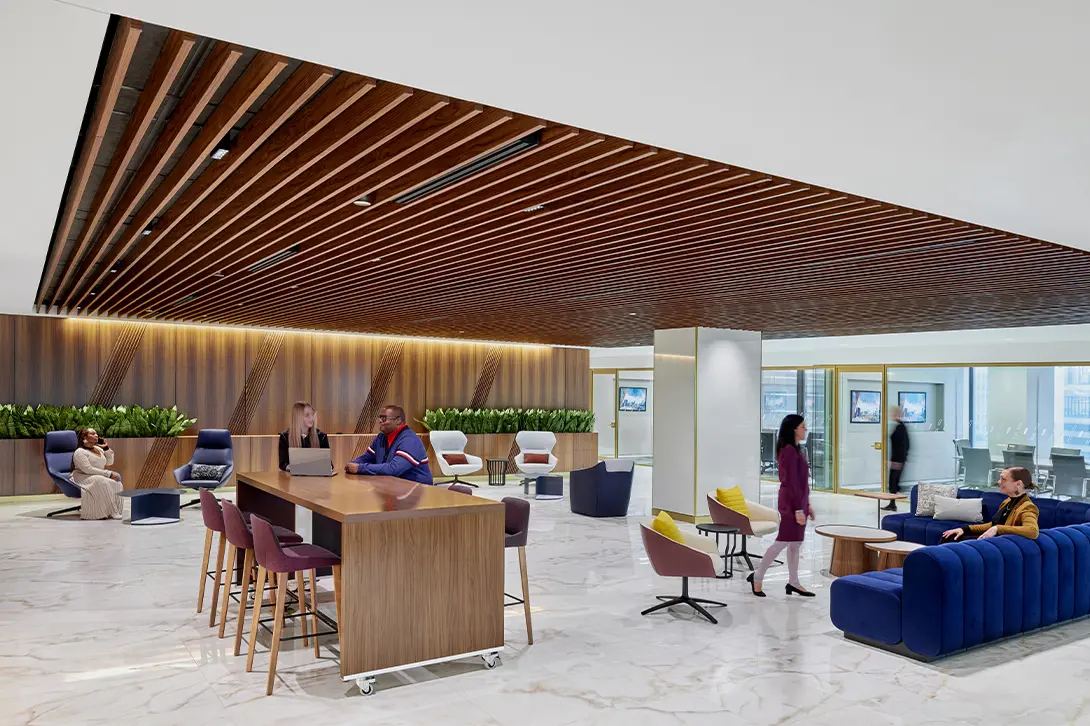
The expansion at Taft Stettinius & Hollister, LLP embodies this blend of brand identity with localized details tailored to its Chicago home.
The firm’s signature “slash” branding is reflected in both the angled flooring pattern and canted walnut paneling, while sweeping views of the Chicago River, Michigan Avenue, and Lake Michigan leverage the iconic Chicago landscape as a core piece of the firm’s Windy City legacy.
3. Agility and scalability. Hybrid work gives law firms greater flexibility to support talent acquisition and retention, but it can also create inefficiencies in legacy spaces.
A more adaptable workspace can improve space utilization while accommodating the dynamic occupancy and workforce needs of a hybrid workforce. Many national firms are moving away from assigned spaces to flexible seating arrangements, and nearly half are reducing the ratio of seats to headcount. This creates comfortable, scalable spaces without maintaining a dedicated workspace for every employee.
With premium office leasing and firm expansions on the rise, this adaptability is crucial for managing footprint and capacity over time. Smart “in-place” renovations with centralized utility and infrastructure hubs enable future flexibility instead of locking the office setup into a strict configuration.
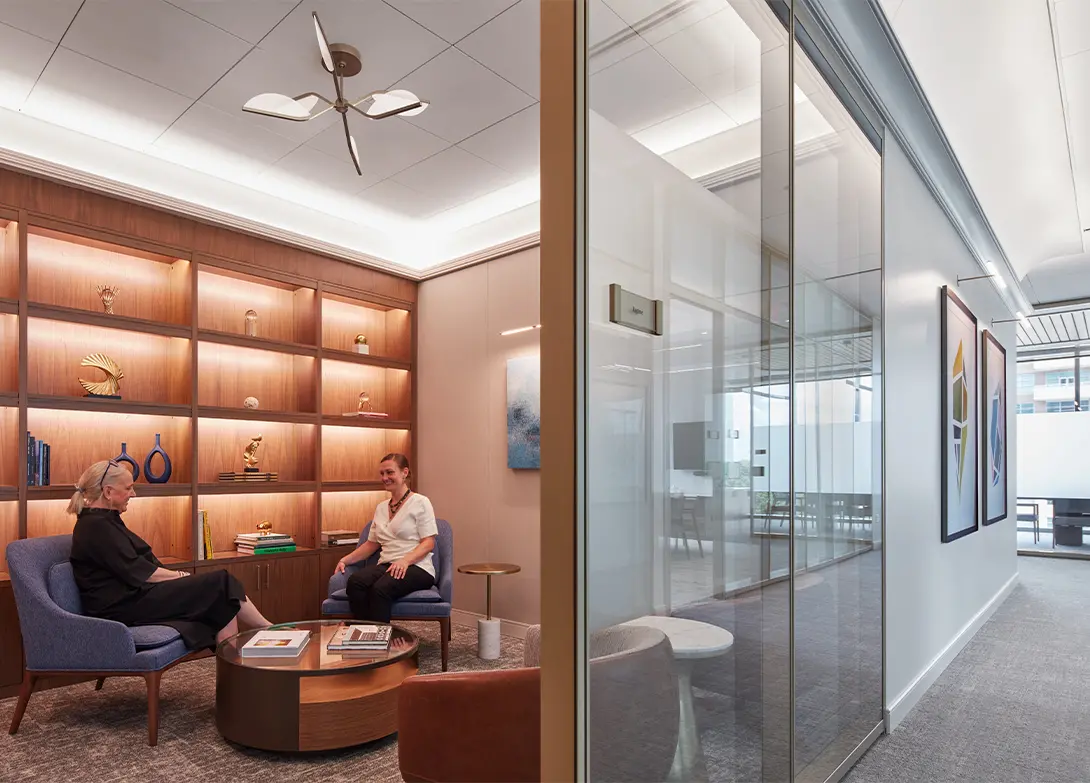
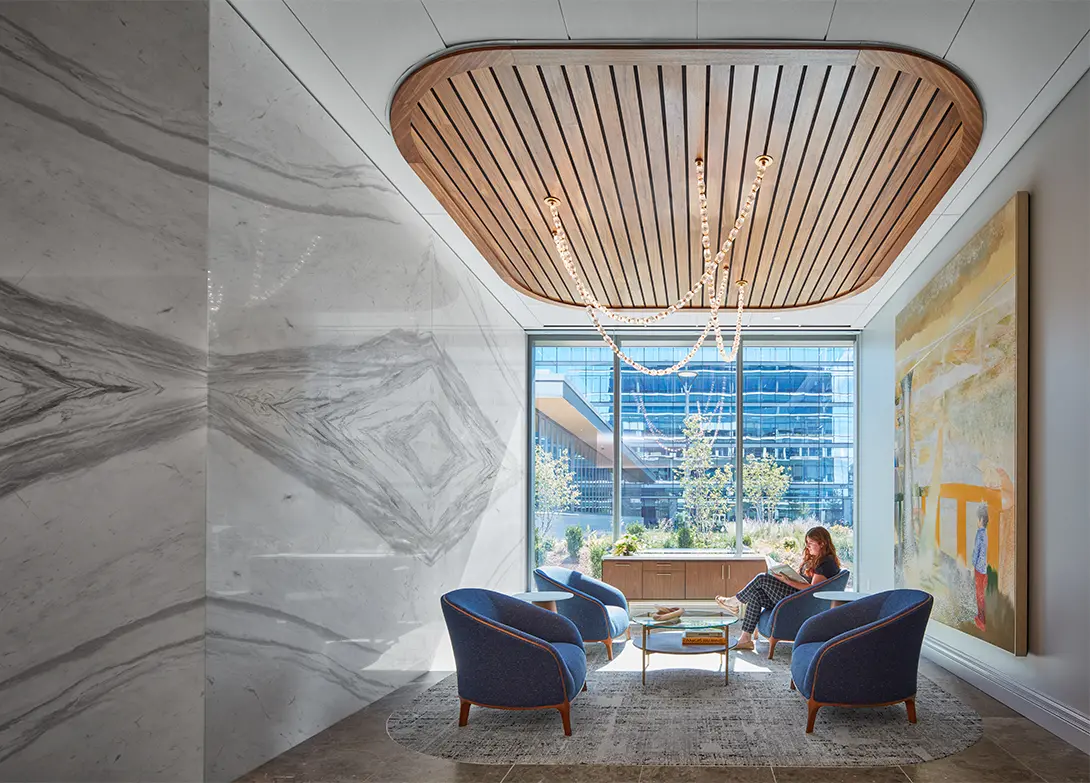
4. Collaboration and connection. Understanding your organizational workflows is key to creating an effective, cohesive spatial design.
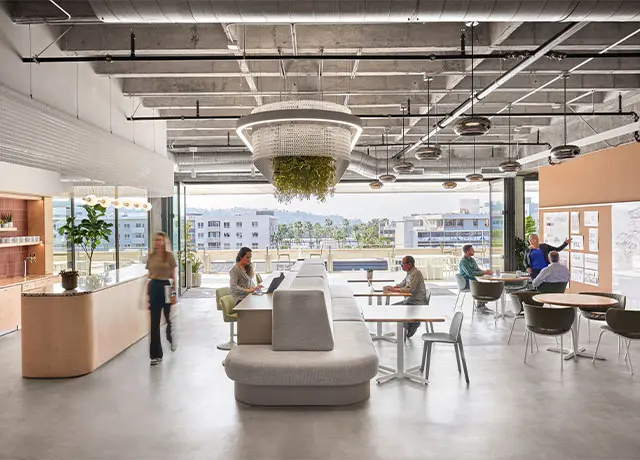
Adaptable seating and modular spaces can be designed to accommodate various group sizes, and precision acoustic strategies allow teams to collaborate without disturbing the entire office. Quiet areas provide respite for uninterrupted work, while privacy-focused design offers confidentiality in meetings.
The largescale renovation at Northern Trust is a great example of supporting adaptability at every scale in professional services. Private offices serve dual purposes as both dedicated workspaces and small meeting rooms. Focus rooms, huddle spaces, and larger conference areas support different modes of work, creating a layered strategy that provides flexibility and choice aligned with Northern Trust’s vision for an agile and connected organization.
5. Digital fluency. Digital transformation and increasing AI adoption are raising expectations for speed, connectivity, and seamless access to information. Firms need an infrastructure that can evolve with those demands.
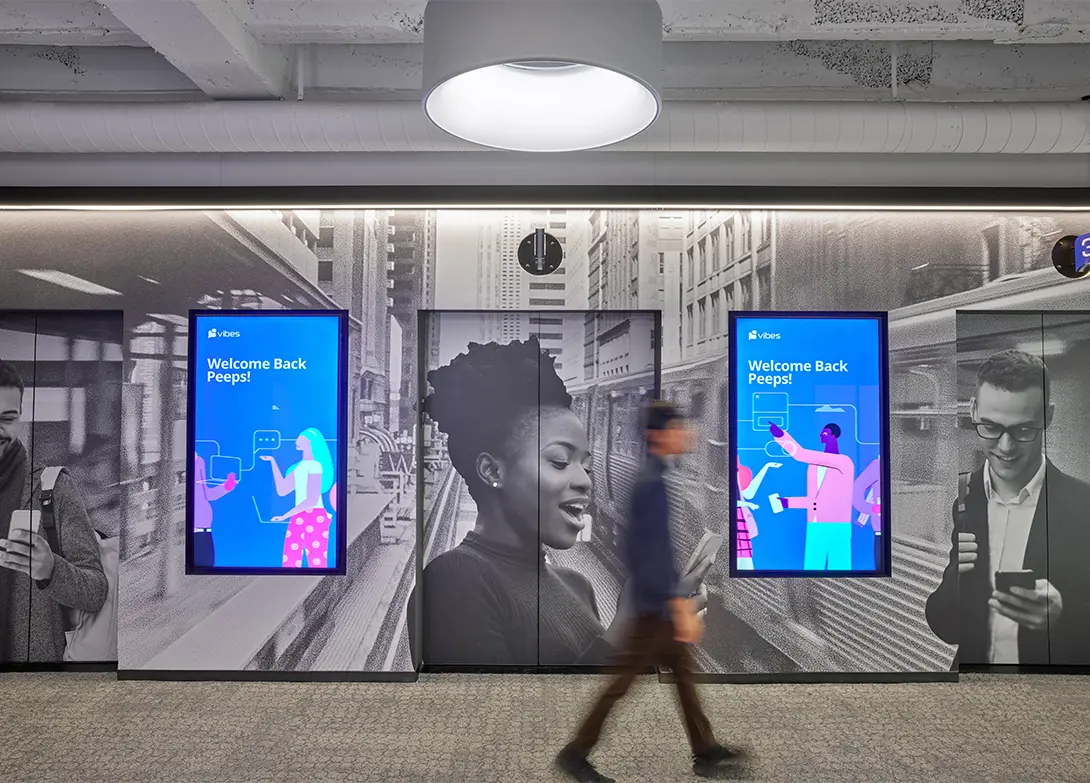
Smart, cohesive design includes seamless technology that blends organically with the space, with consistent standards to ensure easy access and reduce friction. From automated network authentication to one-touch A/V access and camera-ready backdrops for virtual meetings, firms are prioritizing the digital experience to ensure consistency and productivity for both in-office and virtual participants.
Dynamic, future-ready law office design starts with understanding your firm culture, operational needs, and goals. By considering these critical elements, law firms can create environments that serve their people today and stand ready for whatever comes next.