Sensitive Compartmented Information Facility
Advancing Secure Laboratory and Production Environments Across a Complex Defense Campus
Raytheon’s operations in Fullerton and El Segundo, California, span more than 2.5 million square feet and support some of the most sensitive work in defense and aerospace technology. Across this expansive campus, the need to modernize infrastructure, expand laboratory capabilities, and adapt existing spaces to evolving program demands created a continuous and highly complex design challenge. Over the course of a seven-year engagement, the design team partnered with Raytheon to guide this evolution, providing consulting engineering services that balanced performance, security, and flexibility.
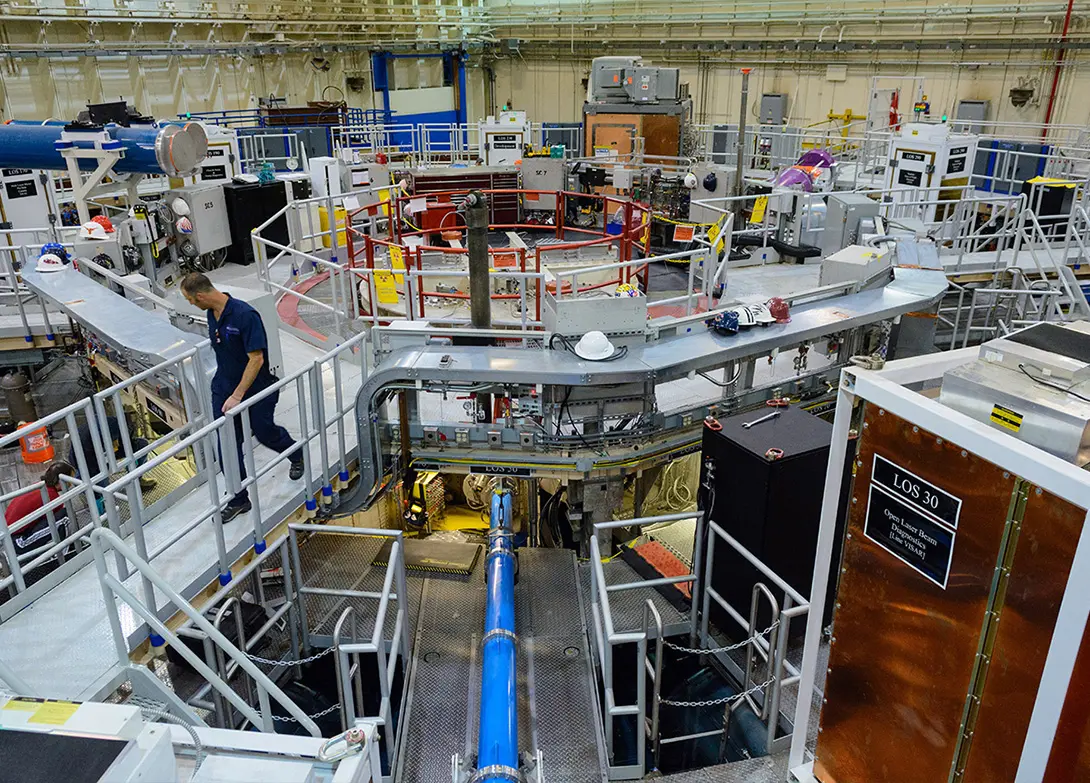
The scope of work extended across a wide range of project types, from central plant testing to highly specialized lab environments. Early efforts focused on due diligence, establishing a clear understanding of existing systems and identifying opportunities to improve efficiency and reliability. This groundwork informed a series of infrastructure upgrades and system reconfigurations that allowed the campus to support new and expanding mission requirements without disrupting ongoing operations.
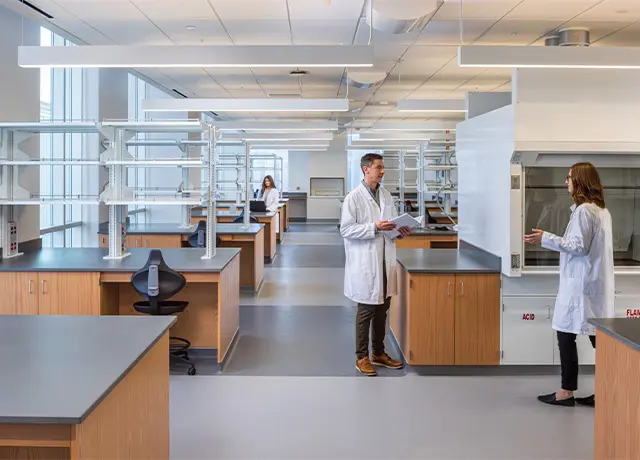
A key component of the work involved the design and adaptation of laboratory and fabrication spaces. These environments required careful coordination of complex systems, including process gas distribution, VOC exhaust, and thermal oxidizers, all tailored to support both wet and dry lab functions. High-performance computing environments and system integration labs introduced additional layers of technical demand, calling for precise environmental control and resilient system design. Each space was developed with a clear understanding of how it would be used, supporting everything from testing to low-rate prototype production for confidential programs.
Security played a central role throughout the campus, particularly in the conversion of existing office areas into Sensitive Compartmented Information Facility environments. These SCIF spaces required a high level of technical rigor, integrating architectural and MEP systems to meet strict federal requirements while maintaining functional, usable work environments. The ability to retrofit and adapt existing buildings allowed Raytheon to expand secure operations efficiently, making better use of its existing footprint.
Central utility systems also received focused attention, including combined heat and power plant testing and design. These efforts strengthened the campus’s energy infrastructure, supporting both operational resilience and long-term performance. Construction administration services helped guide each phase of implementation, coordinating upgrades in active facilities where continuity was essential.
The result is a campus that operates with greater clarity, capability, and adaptability. By aligning infrastructure improvements with evolving program needs, the work supports Raytheon’s positioning as a leader in advanced defense and aerospace systems. More broadly, the project demonstrates how thoughtful engineering and long-term collaboration can transform complex, high-security environments into cohesive, high-performing ecosystems, ready to support innovation at every scale.