Reframing Bioscience Education Through Collaborative Lab Design
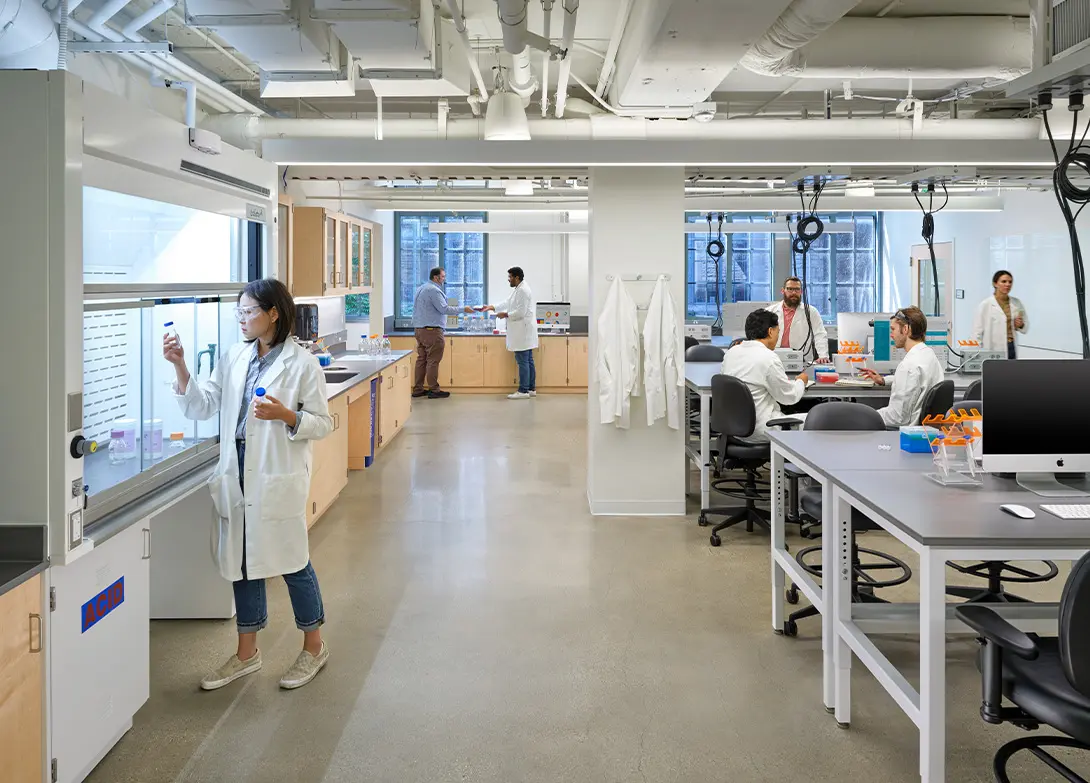
Northwestern University’s Department of Biological Sciences is widely recognized for academic rigor and teaching excellence. Yet the physical environment of its teaching labs, located within the historic Technological Institute, no longer reflected the quality of instruction happening within them. Narrow layouts, fixed benching, and limited circulation constrained movement and restricted interaction among students, teaching assistants, and faculty. The university set out to align its facilities with contemporary pedagogical models, creating a more dynamic, accessible, and engaging laboratory experience that supports how bioscience is taught today.
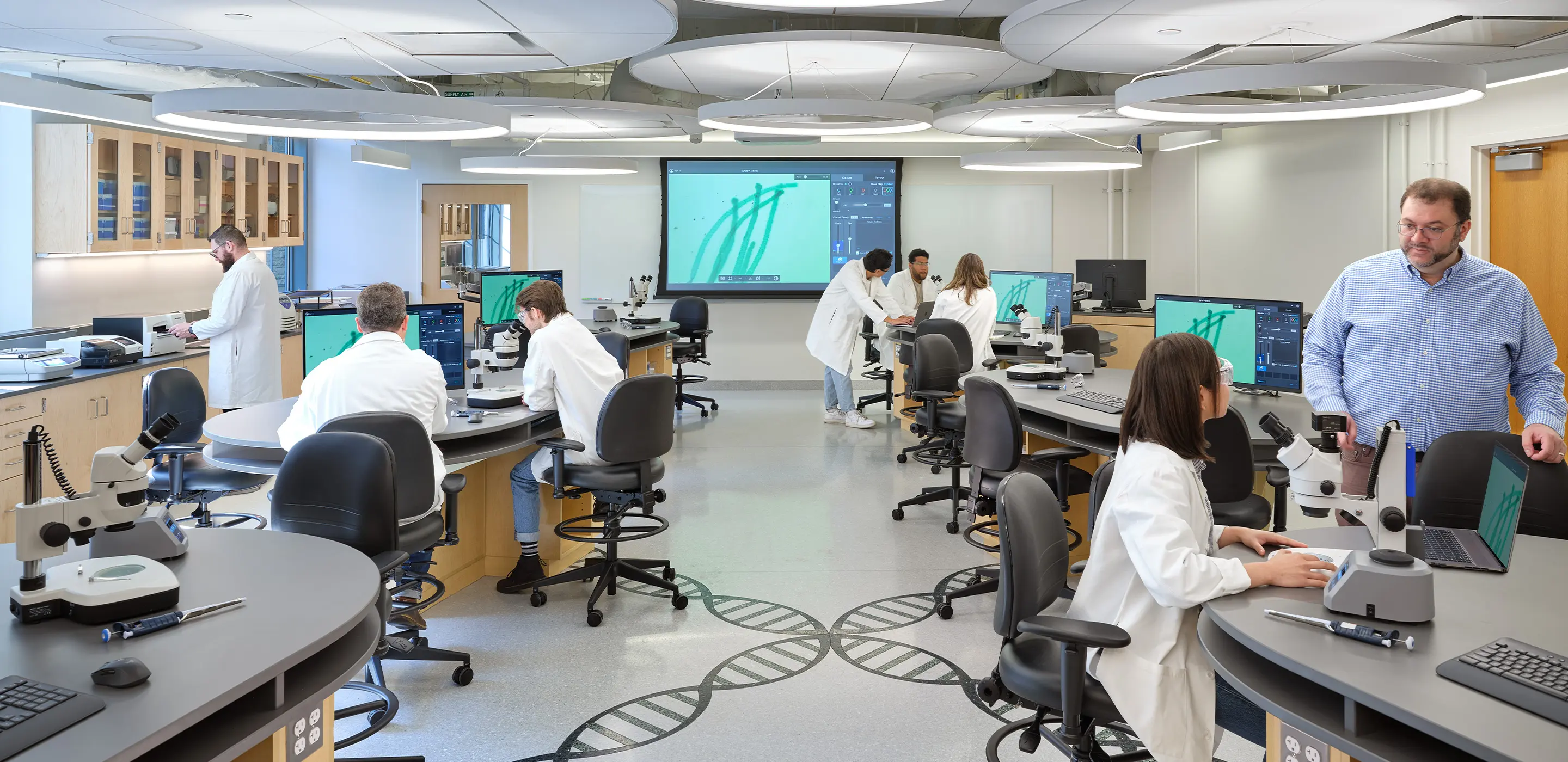
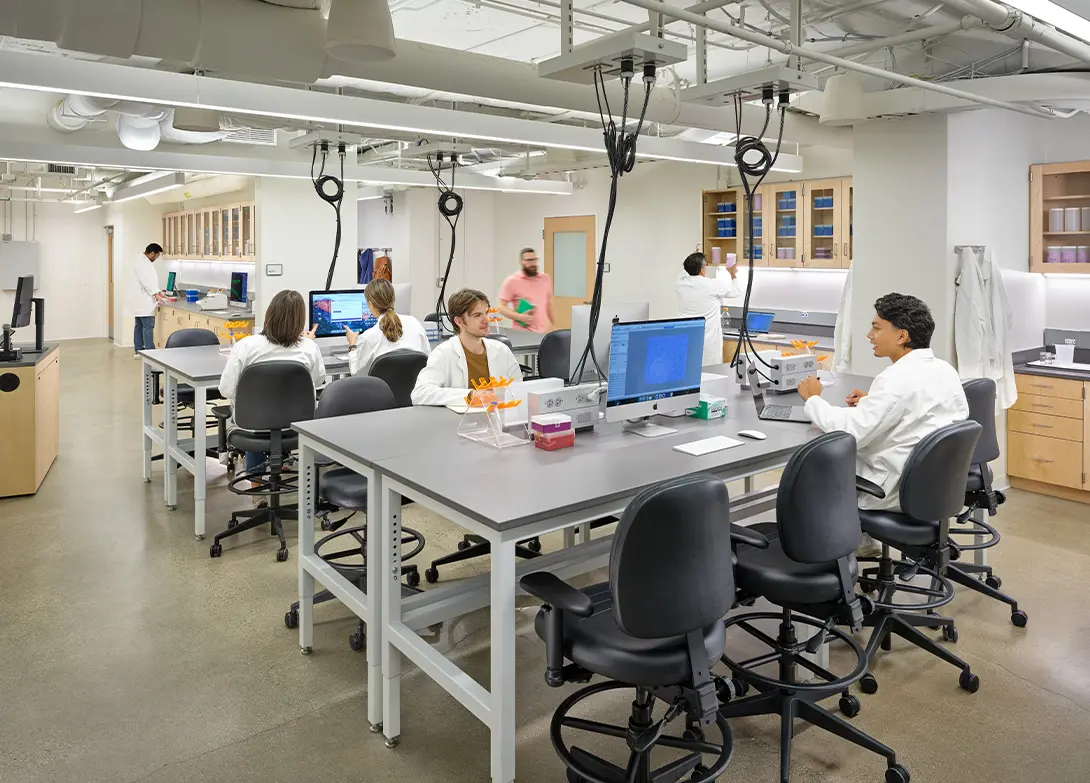
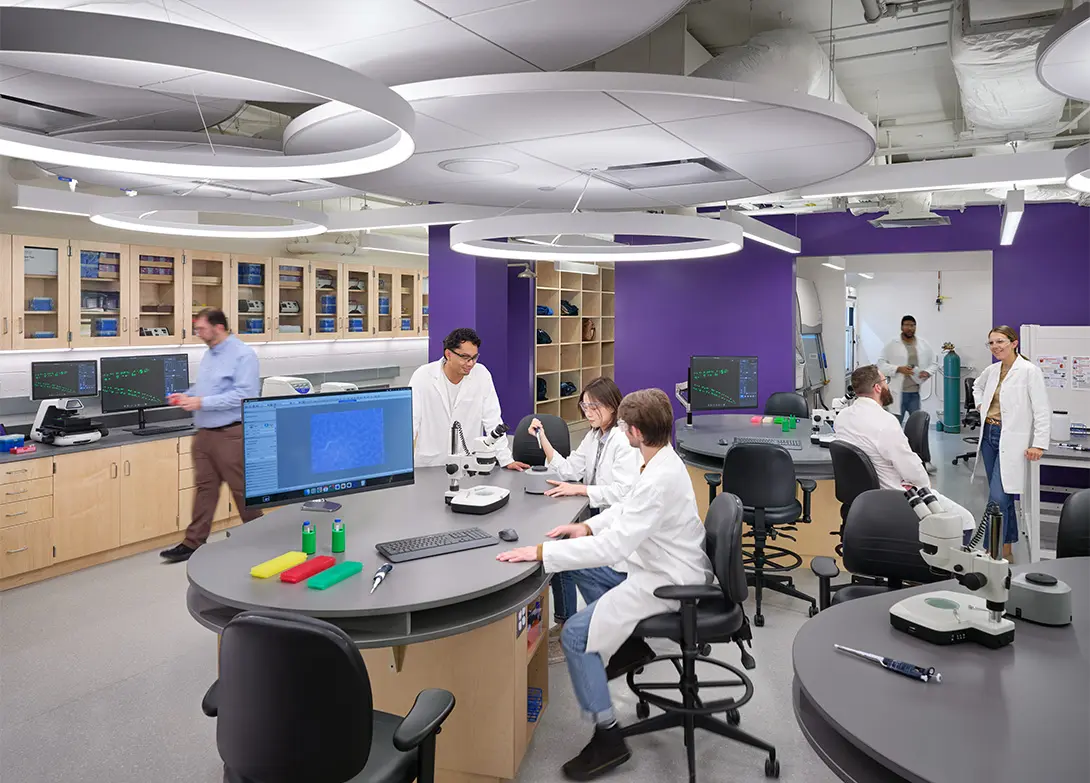
The design response centers on clarity, flexibility, and human connection. Inspired by the French culinary concept of mise en place, or “everything in its place,” the reimagined labs are organized to support intuitive movement, visual order, and efficient workflows. Each classroom accommodates 24 students, arranged in four-person pods that bring learners face to face. This configuration encourages conversation, shared problem-solving, and active participation. Clear circulation paths allow teaching assistants to move fluidly throughout the room, making support equally accessible to every student. Faculty immediately observed stronger engagement, with students more inclined to collaborate and contribute.
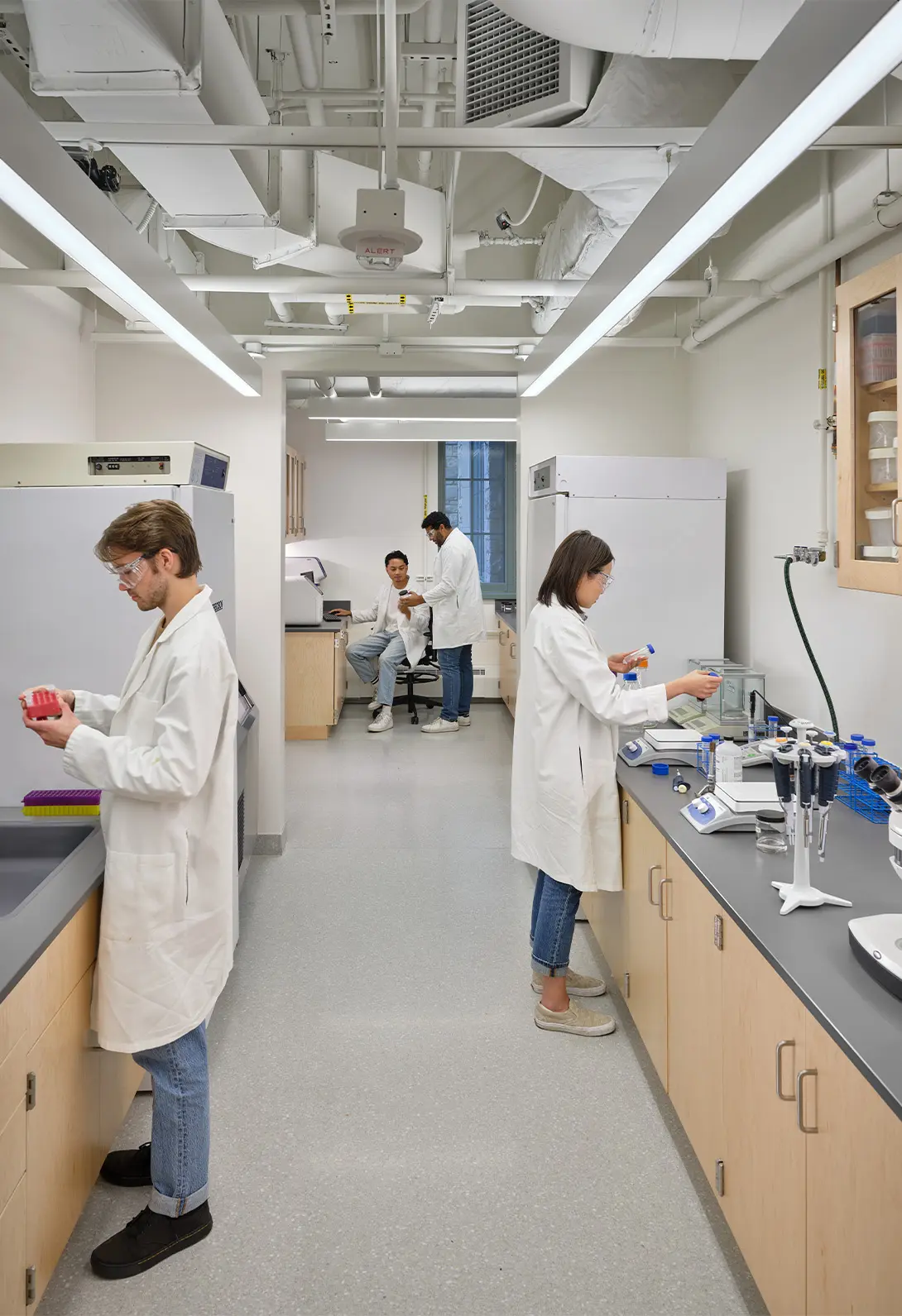
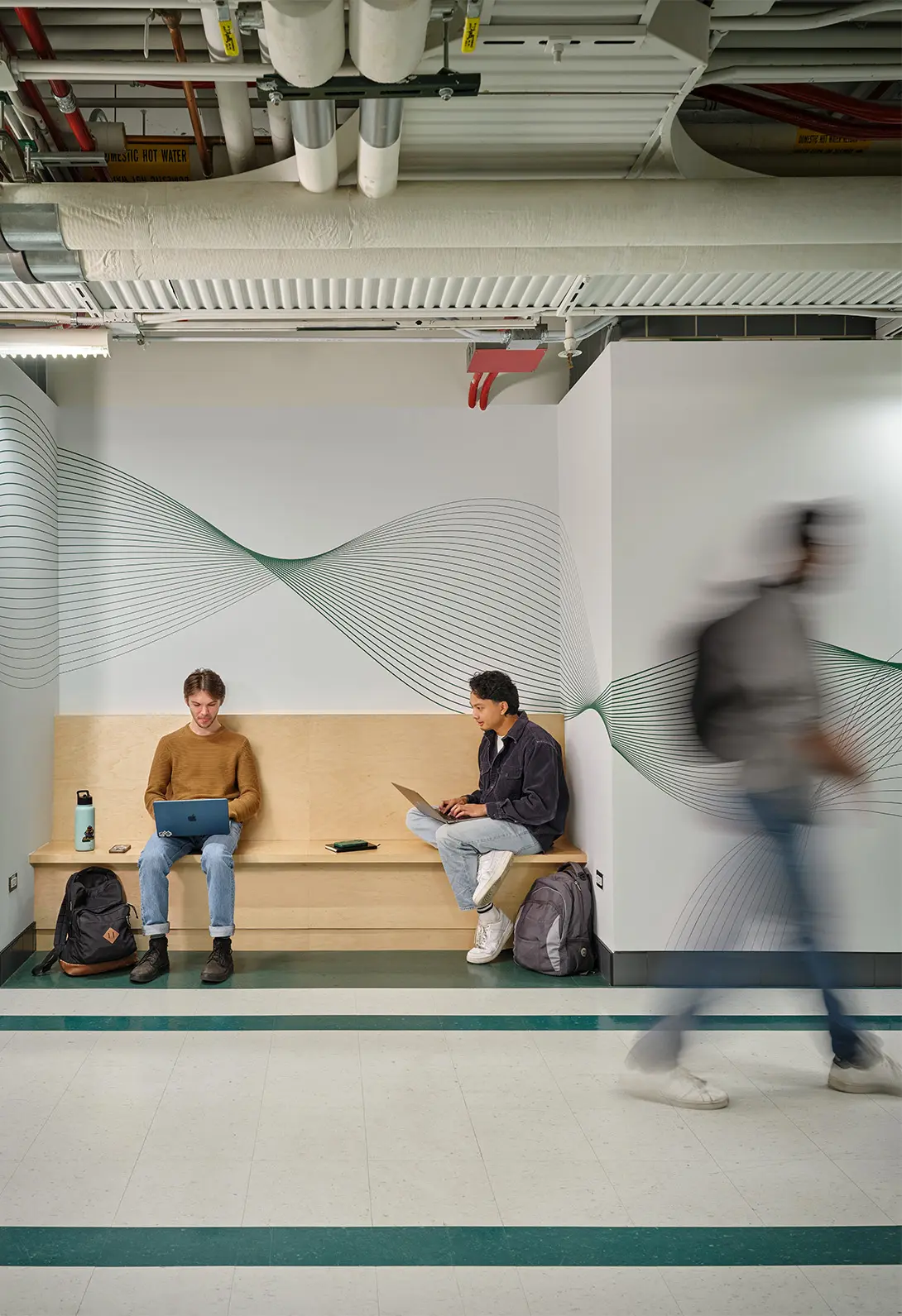
The spatial strategy extends beyond layout to create a holistic learning environment grounded in well-being and performance. Carefully selected interior materials prioritize durability, reduced environmental impact, and occupant health. Low-emitting finishes contribute to cleaner indoor air, while material transparency supports informed, responsible design decisions. Mechanical and lighting systems work in tandem to create comfortable, adaptable spaces. High-efficiency HVAC systems, paired with enhanced filtration and increased ventilation rates, support both laboratory safety and cognitive function. LED lighting with integrated controls allows users to adjust conditions based on task and preference, supporting a range of teaching and learning activities.
Energy performance was approached with equal rigor. Through detailed modeling and system optimization, the project significantly outperforms baseline standards, achieving notable reductions in energy use despite working within the constraints of an existing building infrastructure. Enhanced commissioning further strengthens long-term performance by verifying that all systems operate as intended and by equipping facilities staff with the knowledge to maintain them effectively over time.
This transformation elevates the teaching lab from a static backdrop to an active participant in the educational process. The design removes physical and visual barriers, allowing ideas, people, and movement to flow more freely. It reflects a thoughtful alignment between space and pedagogy, where the environment supports curiosity, experimentation, and shared discovery.
For Northwestern, the renovated bioscience teaching labs reinforce its positioning as a leader in higher education, pairing academic excellence with spaces that actively support student success. For HED, the project demonstrates how integrated design can translate complex goals into clear, functional environments that perform at every level. By rethinking how space shapes experience, the labs offer a smarter, more connected model for science education.