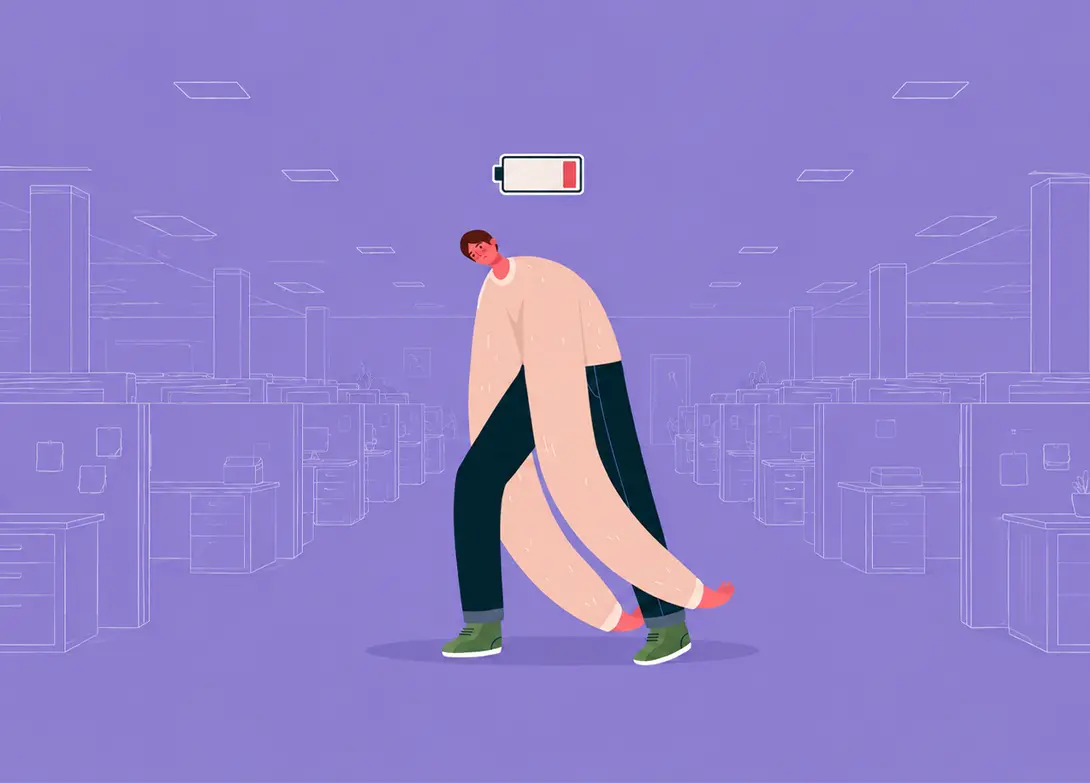
The Hidden Cost of AI: Broken Human Connection
May 15, 2026

COLLABORATION AND CONNECTION
Connections with colleagues can often seem like a superficial requirement in the working world. With the work-from-home routines we have adopted over the past few years, building and maintaining relationships with those we work with may seem unnecessary to progressing work. However, connection runs deeper than a cultural perk. It is a core driver of performance in an AI-enabled workplace. As we have explored in The Focus Deficit and The Restoration Gap, work is shifting to be more cognitively demanding and less routine. As AI absorbs tasks, human performance shifts toward what cannot be automated: how we think and how we relate.
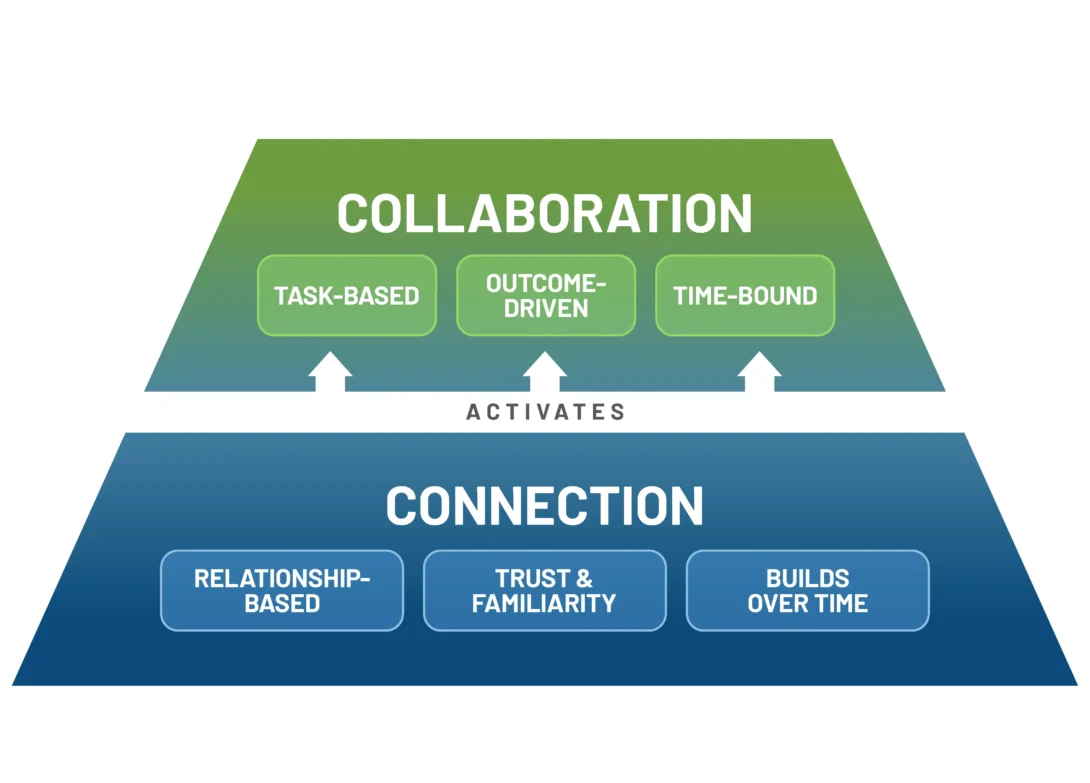
Over the years, there has been an emphasis on collaboration without the proper attention to the connection needed to make it effective.
Recently, the conversation around connection has grown, but why it matters and the vital role it plays in team success is still not discussed enough, despite its importance.
Many organizations invest substantial resources in planning opportunities to bring employees together and grow as a team. Yet they often lack a clear understanding of how to create the meaningful experiences that foster authentic connection and, in turn, unlock effective teamwork.
Collaboration is most effective when individuals have an established rapport and foster relatedness. Research has shown that success in modern workplaces is often driven by how well individuals interact with each other. When environments enable frequent and high-quality contact with others, communication improves, task-related assistance increases, and social support grows stronger.
Successful collaboration is built on a foundation of psychological safety, cohesion, and familiarity. These assets are built when individuals have the chance to genuinely know one another, beyond the transactional relationship of day-to-day work.
Connection is a powerful factor and has strong implications for an organization. Recent statistics showed that 94% of employees felt that being connected to colleagues made them:
- More productive at work
- More than 4 times as likely to feel job satisfaction
- Half as likely to leave a company within the next 12 months
The impact that people have on each other has a great influence on the way people feel and how they establish essential bonds within an organization, creating a strong environment of trust, safety, and belonging.
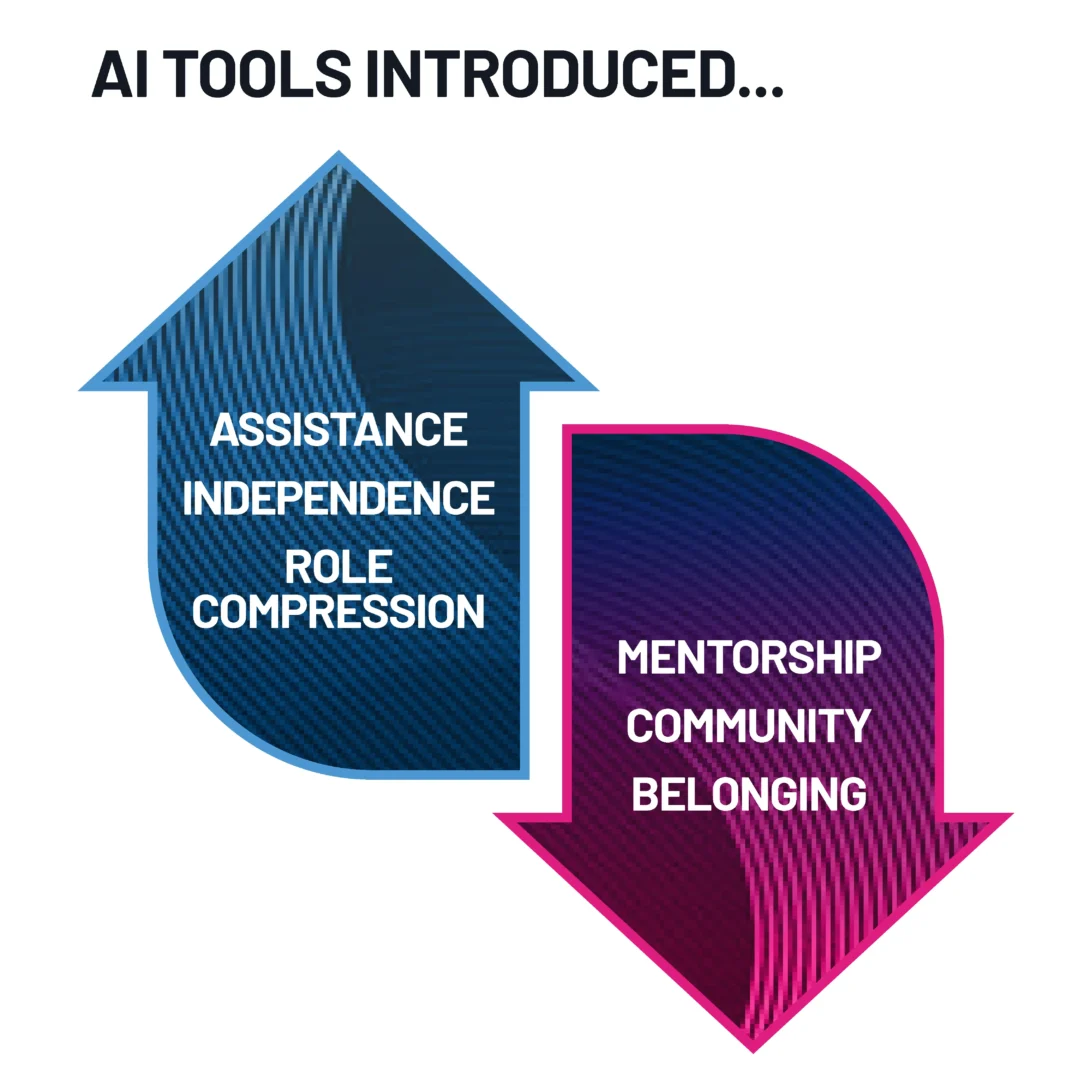
While connection is essential to successful collaboration, recent factors have eroded the foundation of connection in the workplace.
Hybrid or fully remote work has reduced the opportunity for spontaneous interactions, with individuals becoming more independent and schedules more asynchronous. And with AI, the quick questions between colleagues can often be reduced or eliminated. Mentorship, a cornerstone to both organizational culture and professional development, becomes strained.
With all these changes, connection struggles to happen organically, and now, it must be designed with intention.
THE CONNECTION PARADOX: MORE ASSISTANCE/LESS ASSOCIATION
We are entering into what can be described as a Connection Paradox. As work becomes more independent and AI-enabled, human connection becomes more critical to performance because it is less likely to happen naturally.
AI programs and tools build efficiency while diminishing the human interactions that drive creative performance. Teammates that consistently interact in authentic ways develop trust, and that trust is a prerequisite for sharing bold ideas, having the courage to take risks and to fail, which often opens the door to learning and success.
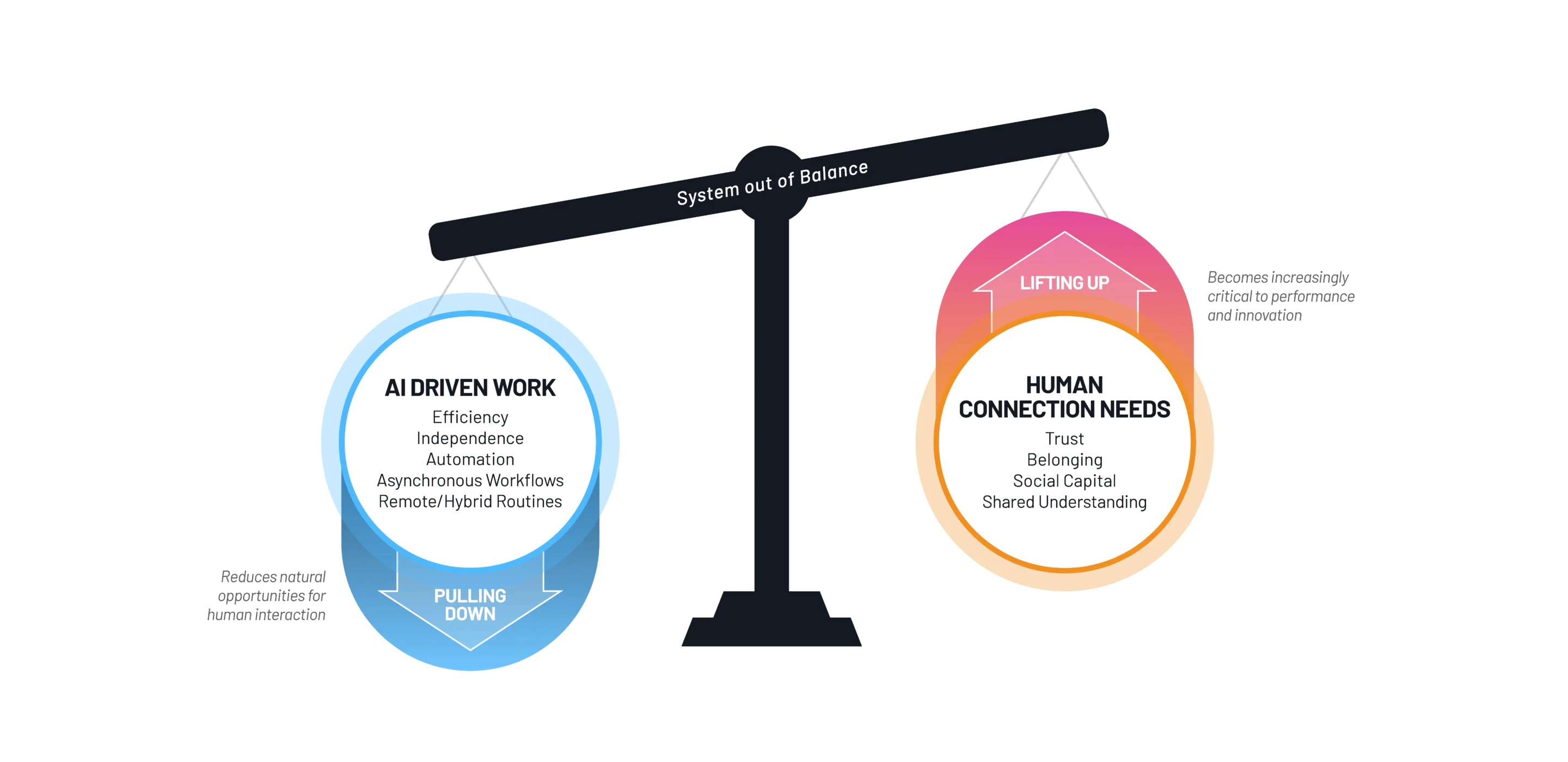
Our research suggests that there is employee intention to build the social capital that drives organizational culture and supports individual performance. 37% of respondents to our national market research survey noted that they are looking for the workplace to deliver human connection in an AI-enabled future.
We have also seen signals where high AI use leads to social drift, burnout, and a reluctance to interact with other workers, which is a concern as AI adoption continues to grow. As work becomes more centered around AI-driven solutions, connection becomes more valuable but also more at risk.
SHALLOW CONNECTION DRIVES SHALLOW WORK
The blind-spot to connection is that many approach it shallowly. The idea of adding some café tables around the gathering space in the office becomes the misguided solution to supporting connection in the office.
Connection spaces need a strategy just as meeting and working spaces do. Having spaces that influence and encourage individuals to come together serves to behaviorally reinforce the routine that will ultimately become a habit. When we think of intentionally engineering spaces that signal and nudge connection, we dive deeper into what it means to truly engage with someone and not have it happen by chance or not at all.
Designing for connection covers key angles that aggregate and become powerful levers in the workplace.
3 Mechanisms of Connections
- Proximity – physical vicinity matters, even in a digital world. This is the “out of sight, out of mind” effect.
- The Allen Curve shares that interactions drop once people move around 25-30 feet apart
- The Proximity Principle tells us that people together in a physical environment are more likely to form a relationship than those further away.
- Repetition – exposure over time builds relationships and grows connection
- Finding quality connections allows people to know one another which leads to positive social interactions
- Trust is powerful to relationships and builds with consistency
- Shared Experiences – finding synchrony with others creates a bond
- Humans are hard-wired for connection and being part of social groups is critical
- Individuals find synchrony through participating in rituals together (eating, singing, watching a movie/play, etc.)
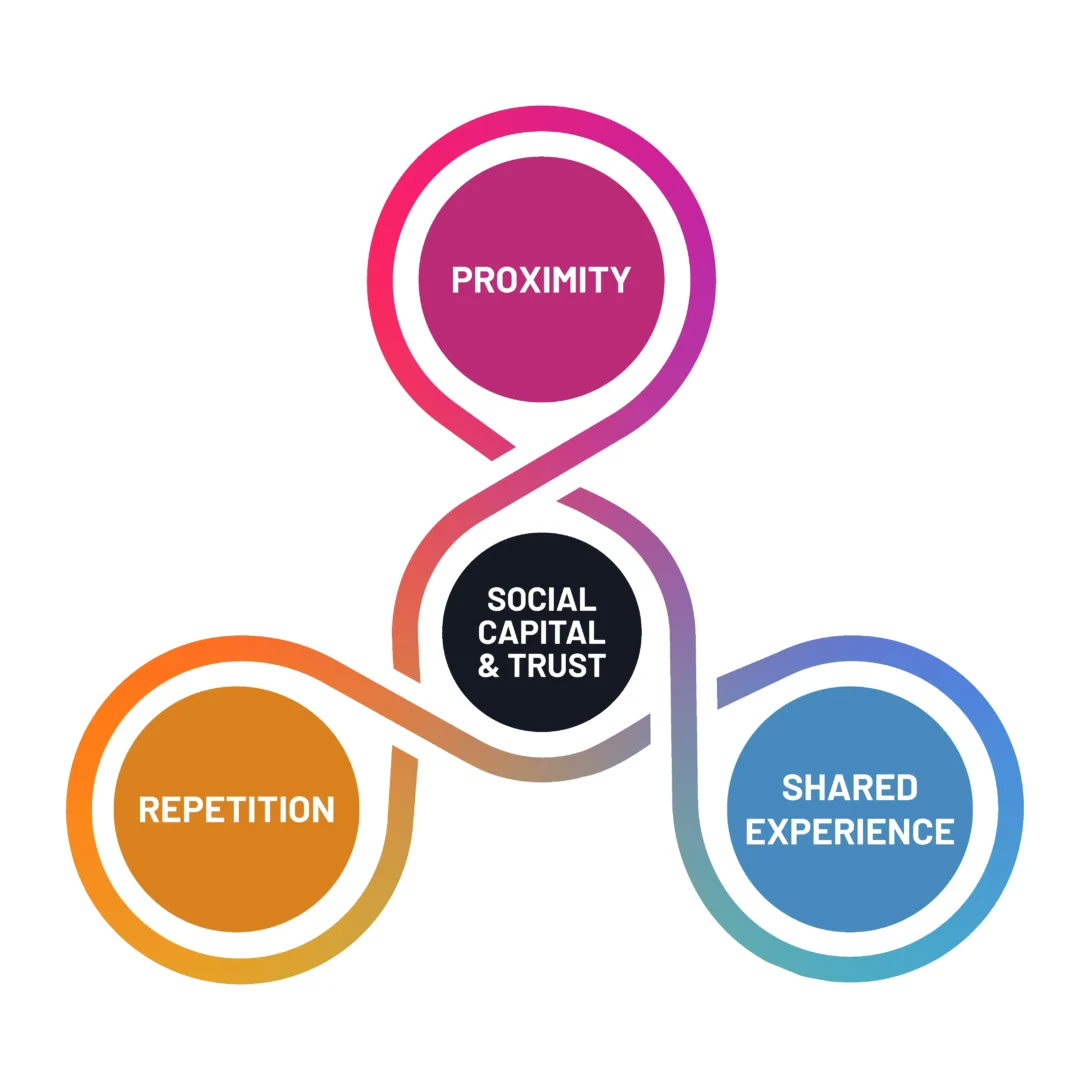
What we learn is that while connection can be spontaneous, there are ways that we can increase the salience of individual and group reactions to each other and improve the quality of bringing people together.
The workplace is one of the only remaining places where this kind of connection can be intentionally built at scale.
CONNECTION STRENGTHENS OUR WELL-BEING
Connection is often framed as cultural benefit, but its importance runs deeper. Human connection plays a direct role in regulating emotional and psychological states, and shaping how we think, feel, and perform.
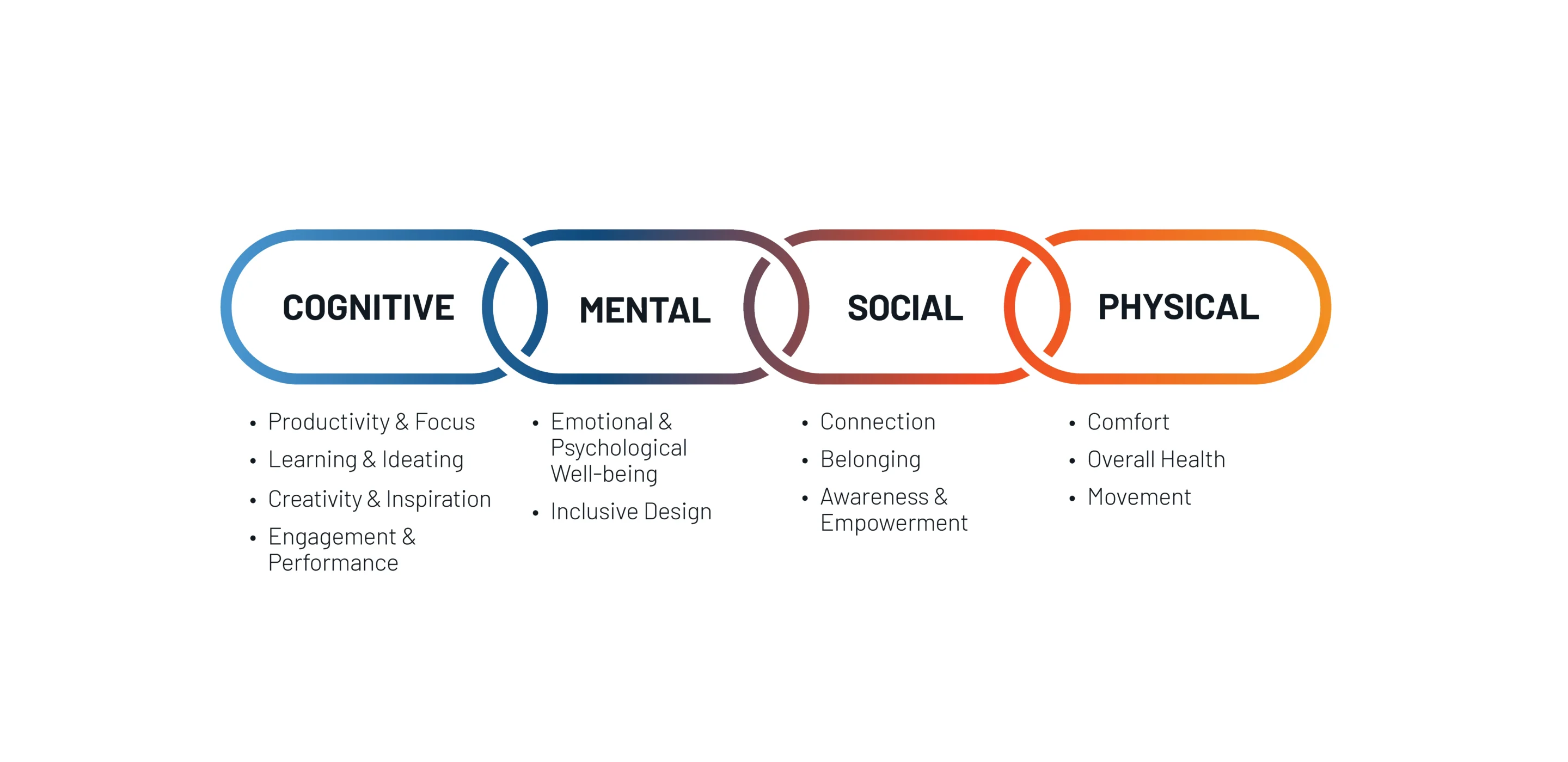
Human performance at the workplace is not driven by a singular input, but rather an interconnected system of cognitive, mental, social, and physical well-being. Connection functions as a bridge, linking social experience to mental and cognitive outcomes.
Just as environments that fail to support restoration create a Restoration Gap, environments that fail to support meaningful connection create psychological strain that undermines both mental well-being and cognitive performance.
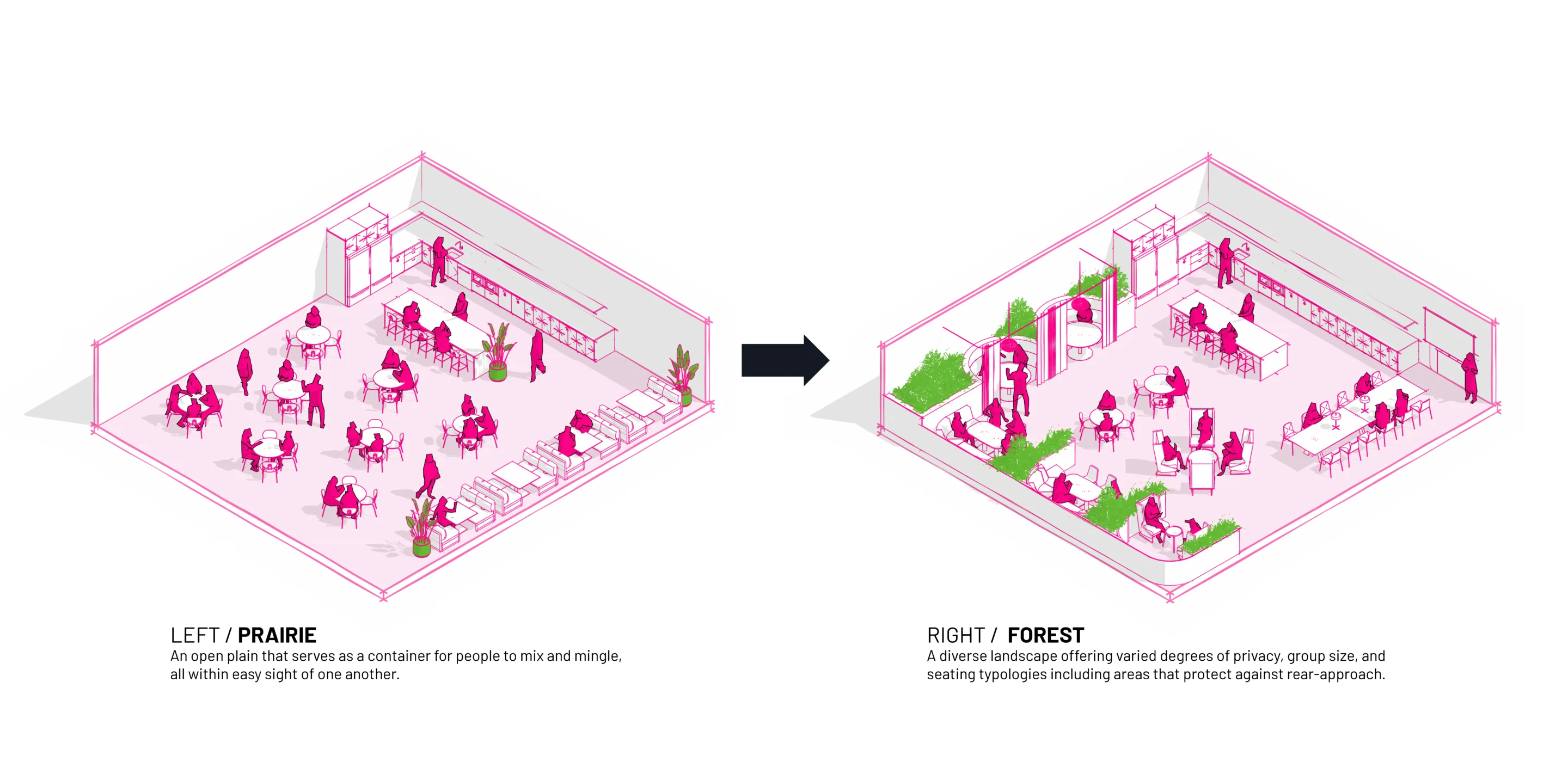
Many workplaces attempt to increase connection by introducing openness and visibility, but research suggests the opposite. Research studies have shown:
- Open plan floorplates reduce real interaction. There is a 70% drop in face-face interaction and individuals shift to using digital communication.
- People meaningfully connect in controlled, smaller settings. Individuals feel a higher sense of comfort, safety, and control.
This pattern demonstrates that connection is not driven by openness and introducing people into wide open spaces. Rather, designing spaces that intentionally connect people through proximity, repetition, and shared experience will translate into high-quality interactions that elevate relationships.
When connection is supported at the right scale and conditions, it strengthens psychological safety, reduces stress, and builds trust between individuals – all steps that drive innovation.
SIZE MATTERS
In some cases, relationship quality diminishes as group size increases. Larger teams can mean lower levels of personal rapport between each member, less awareness of each other, and greater communication complexity. Teams should be sized to appropriately address the balance between the functional needs of the work/process and the relational needs of the individual teammates to bolster community, loyalty, and trust (innovation).
The architecture itself should then be designed to support groups of the desired sizes.
Strategies to size spaces to support connection:
- Break larger floorplates into manageable, comfortably sized neighborhoods with a “home base” where teammates can feel a sense of belonging and attachment as well as familiarity/ownership
- Create “hospitable” edges of neighborhoods for sharing/cross-team mixing and idea exchange
- Provide opportunities for connection along highly traveled circulation routes, but include some that are recessed/shielded from those routes for those that cannot “socialize on display”
- Do not rely solely on large social hubs such as pantries and recreation rooms. Include smaller, more intimate settings for connection for 2-4 occupants max.
THE PROBLEM: WE DESIGN FOR ACCESS, NOT RELATIONSHIPS
Often times, offices are designed around quantitative metrics such as meeting and huddle room space ratios. Connection is seen as inevitable, a byproduct of workers being in office and having access to spaces where they can congregate. But when we start to recognize that the entire office is intended to bring people together in layers of connection, we start to reframe the purpose behind these spaces.
That way of thinking sells the opportunity of these spaces short:
- Beverage stations are built for efficiency and function
- Team collaboration spaces are optimized for meetings, not rapport
- Circulation is treated as movement, not interaction
Our nationwide survey revealed that culture is still rewarding visibility over impact in most cases. When this happens, the tendency for a worker to go through the motions and be performative wins out and leaning into relationships authentically is deprioritized. When these spaces are calibrated to promote people experiencing elevated interactions amongst themselves, the workplace promotes gathering and unity.
THE SPATIAL RESPONSE: DESIGNING FOR CONNECTION
Each relationship differs and with that the scale of connection spaces will vary across a landscape. When we think of designing relationship infrastructure, we see this scaffolding supporting the workplace holistically.
Four Spatial Strategies for Connection
Design for Lingering
- Comfortable and casual seating
- Postures that invite extended stay over brevity
- Warm, natural materials/textures
- Acoustic spectrum of spaces
- Diffused and layered lighting
- For some, motion is a way to remain engaged, consider social “walking paths” within the workspace or adjacent outdoor options
Design for Collision
- Intersections/Thresholds with niches/seating
- Visible, activated zones that draw people in
- Neighborhoods with “edges” designed for cross-team idea exchange
Design for Social Equity
- Equal seating postures to ensure universal access
- Spaces available to all and use is encouraged & modeled by leadership
- Social intensity variation (retreat, group, open)
Design for Emotional Safety
- Prospect/Refuge
- Private, semi-private, and public
- User control over privacy level (i.e. operable curtains or shielded options)
- Social areas designed for a variety of group size (not just large)
- Tech-free conditions so that participants give each other their full attention without distraction (to increase closeness & empathy)
- Rounded edges/Soft materials (builds psychological safety)
CONNECTION AND THE PERFORMANCE SYSTEM
This Connection Paradox requires real thought and strategy to overcome. We know that AI increases efficiency and can reduce human interaction. Add to that that higher AI use increases feelings of burnout and isolation and you have a trajectory that doesn’t tell a promising story. AI can absorb volume, but cannot offer empathy, establish mutual trust, or share in lived experience. The more we rely on AI, the more we must intentionally design for human connection.
The future of performance will not be defined by how intensely we work, but by how effectively we connect.
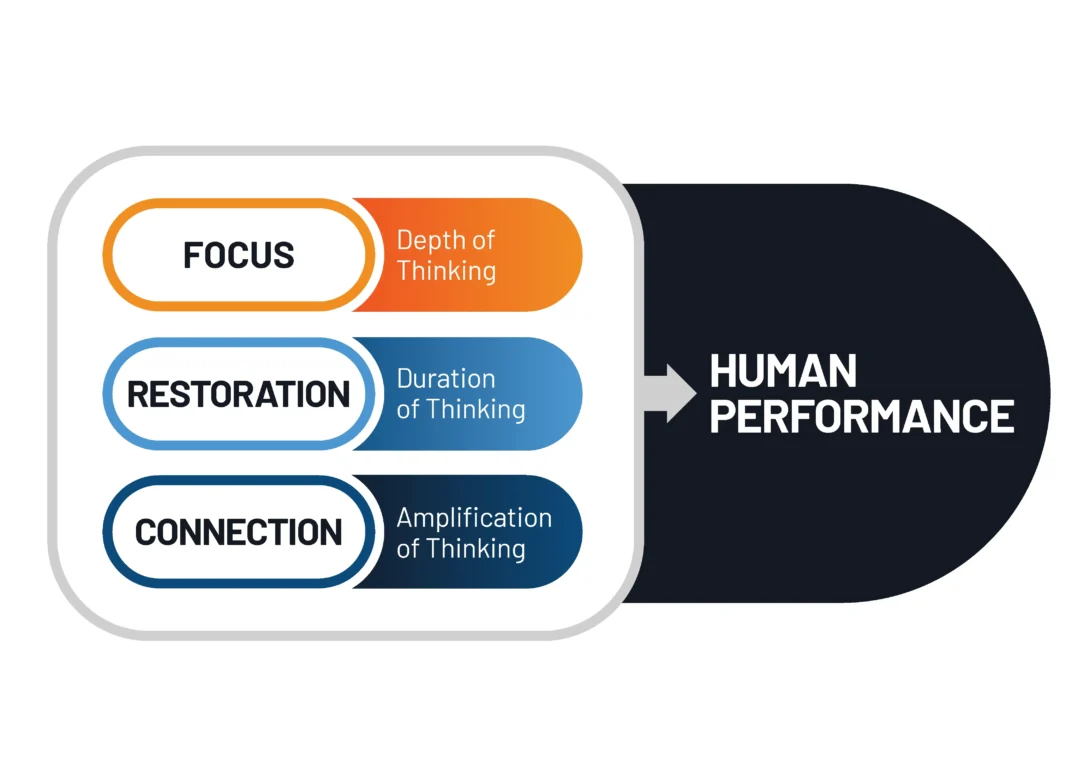
In our series, we have explored Focus and Restoration as typologies within our Intelligence in Place framework.
If Focus defines how we think and Restoration defines how long we can sustain it, then Connection defines how far our thinking can go. Ideals evolve and expand when bravely shared. Relationships ignite shared ideas and provide the spark to spread.
We know that organizations compete on the speed of learning, the quality of thinking and the depth of connection. In an AI-enabled work, connection is no longer just cultural, it is strategic. Organizations positioning themselves to reap the benefits of adopting AI solutions must consider the threat this poses to connection and design spaces that protect, promote, and inspire the critical relationships that a workplace is uniquely positioned to nurture.
THE FUTURE OF WORK IS NOT ONLY DIGITAL.
IT IS SPATIAL.
AND IT IS DEEPLY HUMAN.