Hydrogen’s Strategic Role in the Energy Transition
June 16, 2026
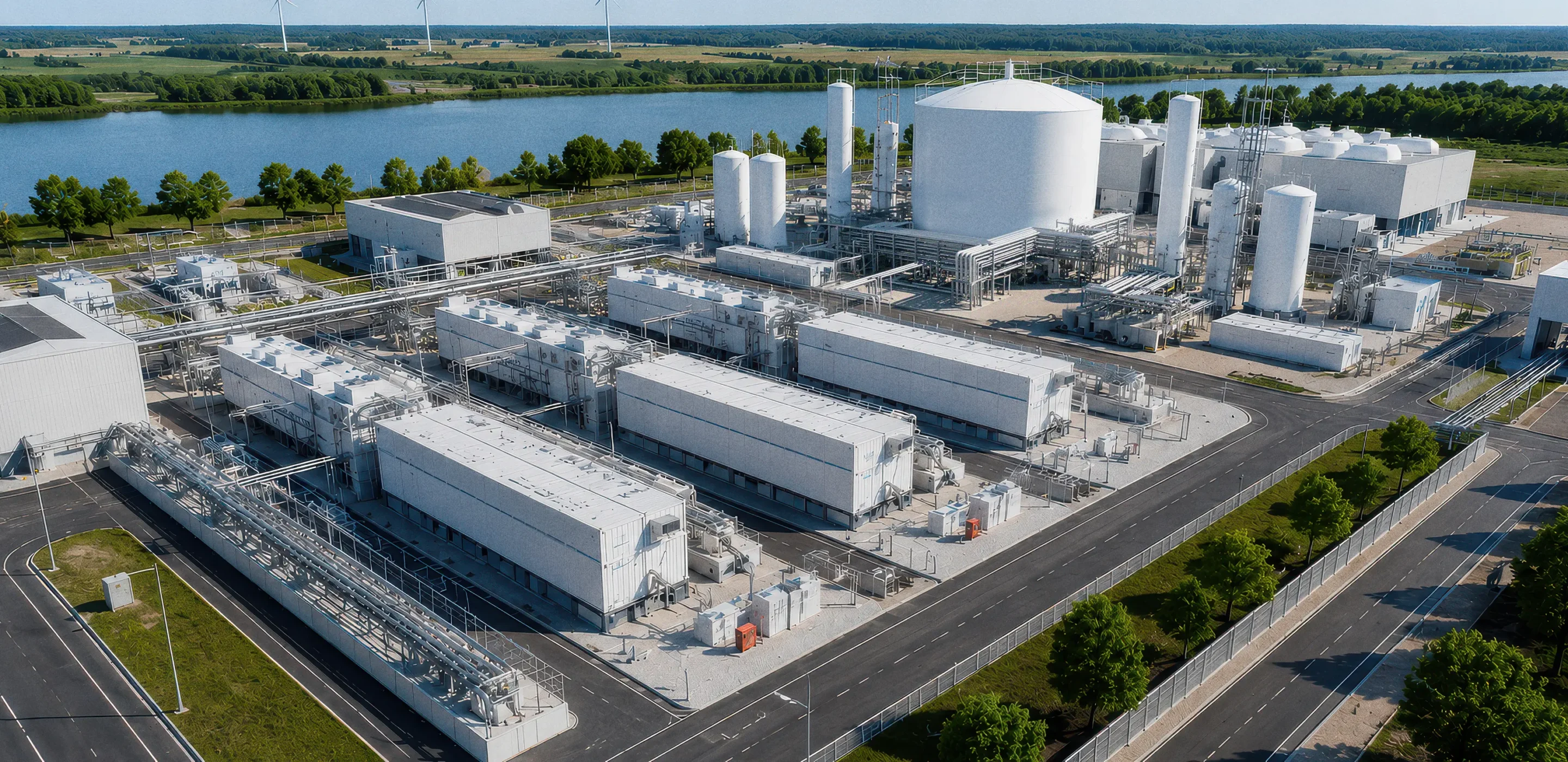
Flexibility and resilience in a changing energy landscape.
As energy demand grows, grid reliability becomes more complex, and organizations seek greater resilience, no single energy source can meet every challenge. Hydrogen’s role in today’s volatile energy environment is not about replacing existing forms of energy. It is about adding flexibility, resilience, and optionality where current energy strategies are under stress.
Hydrogen often carries an outsized perception of risk, largely rooted in historical associations and unfamiliarity rather than current engineering reality. Understanding the properties of the gas and how it interacts with other elements helps demystify the risks by clarifying the differences and how modern design addresses them.
Understanding Hydrogen
Effective hydrogen system design begins with a clear understanding of hydrogen’s fundamental properties and behavior. Hydrogen is the lightest and simplest chemical substance, consisting of two hydrogen atoms bonded together. At standard temperature, it is a colorless, odorless, highly flammable gas.
As the most abundant element in the universe, it is much lighter than air. When burned, hydrogen reacts with oxygen to produce water and release energy, making it a promising clean fuel.
Despite its abundance, hydrogen presents meaningful challenges in production and storage that must be addressed to enable broad-scale adoption.
Production and Storage Challenges
Hydrogen does not exist freely in large quantities for mass consumption, so it must be extracted:
- Green hydrogen (most sustainable) is produced by splitting water (H2O) using renewable electricity (wind, solar, or hydro) through an electrolysis process. This process can also use grid-based power generated by coal, natural gas, or nuclear energy, making it less green but still viable for mass production.
- Blue hydrogen is made from natural gas with carbon capture and storage. It has lower emissions but is not net-zero.
- Gray hydrogen is a common byproduct of various industrial processes. It is often mixed with other gases and is usually emitted into the atmosphere.
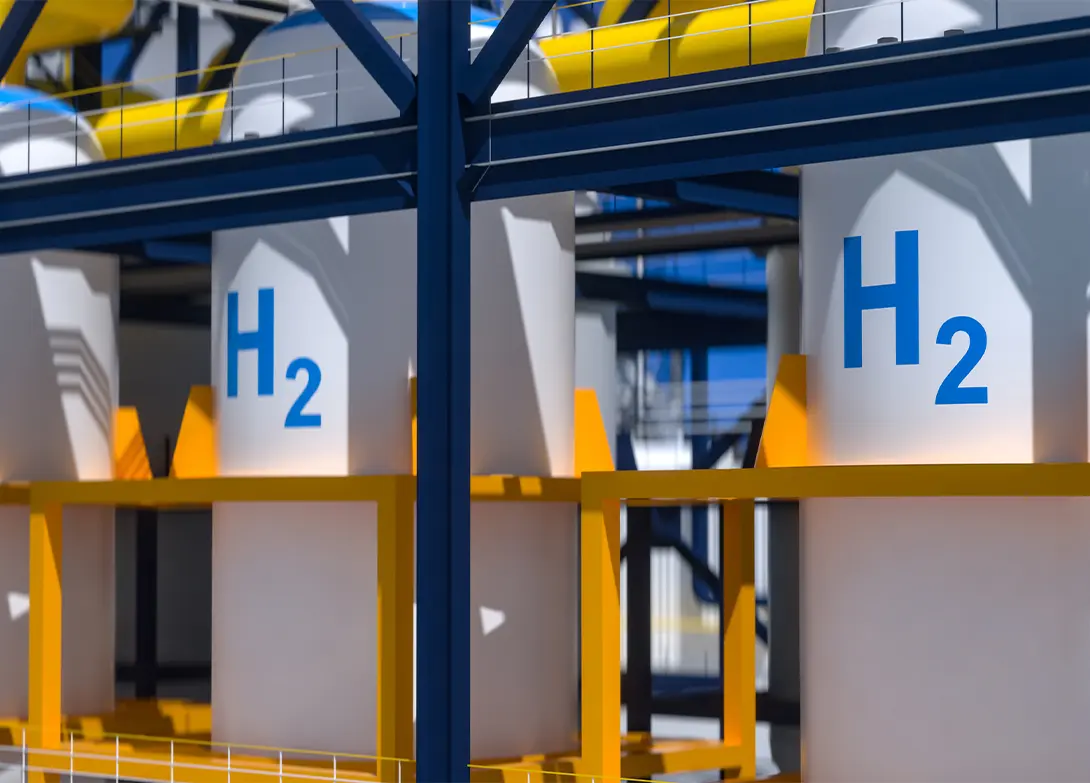
Another challenge to scaling hydrogen production is bulk storage. Hydrogen has high energy content per kilogram of mass but very low energy density by volume as a gas. Under normal conditions, enormous tanks are required to store useful quantities. To make storage more practical, hydrogen can be stored at high pressure (350–700 bar) or cryogenically cooled to extremely low temperatures (-253°C) to liquefy it. Both approaches require specific design standards for tank construction and leak prevention. Liquefaction also requires significant energy for refrigeration.
Where Hydrogen Creates Value
Once the challenges of production and storage are addressed, hydrogen can serve as a viable energy source across many sectors, including:
- Mobility, including trucking, public transportation, personal vehicles, and aviation.
- Energy storage, where hydrogen can help stabilize the power grid by storing excess energy and generating electricity later during periods of peak demand. Hydrogen storage can also serve as backup power for data centers, hospitals, and other critical infrastructure.
- Heavy industry, where hydrogen has been used for more than a century in applications requiring extreme heat, including steel production, fertilizer manufacturing, petrochemical processing, and refining operations.
Balancing Benefits and Challenge
Advantages and challenges must be evaluated when considering hydrogen as a viable energy source. Many of these risks and opportunities should be addressed early in the design process with the right design partner to avoid pursuing the wrong path too soon.
Advantages include:
- Zero emissions, and when produced as green hydrogen, it can be considered net-zero.
- High energy content by mass compared to many conventional energy sources.
- Sector versatility, including applications in transportation, industry, power generation, and energy storage.
Challenges remain, but technology, economics, and design continue to advance solutions:
- Production costs. Hydrogen remains expensive to produce, but larger-scale adoption and rising fossil-fuel costs may help drive costs down.
- Energy efficiency. Energy is lost during the conversion process required for electrolysis.
- Storage and transport. Hydrogen’s inherently small molecules make it difficult to contain and transport because it can escape through small openings and contribute to embrittlement in pipelines.
- Safety considerations. Hydrogen can ignite easily and, when compressed or present at certain concentrations, can explode. It is also odorless and colorless, making detection difficult without properly designed sensing systems.
Why Hydrogen, Why Now?
Hydrogen’s role in today’s evolving energy sector offers the potential for greater grid stability and an additional layer of energy resilience in an uncertain future. Hydrogen is not a one-size-fits-all solution, but it should be considered alongside fossil fuels, renewable energy, and nuclear power as part of a diversified energy strategy.
As organizations evaluate long-term energy strategies, hydrogen offers another pathway to improve resilience, support energy diversification, and address evolving operational demands. The opportunities and challenges associated with hydrogen are most effectively addressed through thoughtful planning, integrated design, and a clear understanding of how hydrogen fits within a broader energy ecosystem.
How Can HED Help Introduce Hydrogen Alternatives in Your Energy Transition?
- Provide master planning for long-term, scalable strategies
- Design test-cell environments, storage systems, and generation infrastructure
- Deliver infrastructure integration and technical coordination
- Serve as a trusted partner with experience engineering and delivering safe hydrogen projects for clients