Designing the Divergent Lab for Space
September 2, 2026
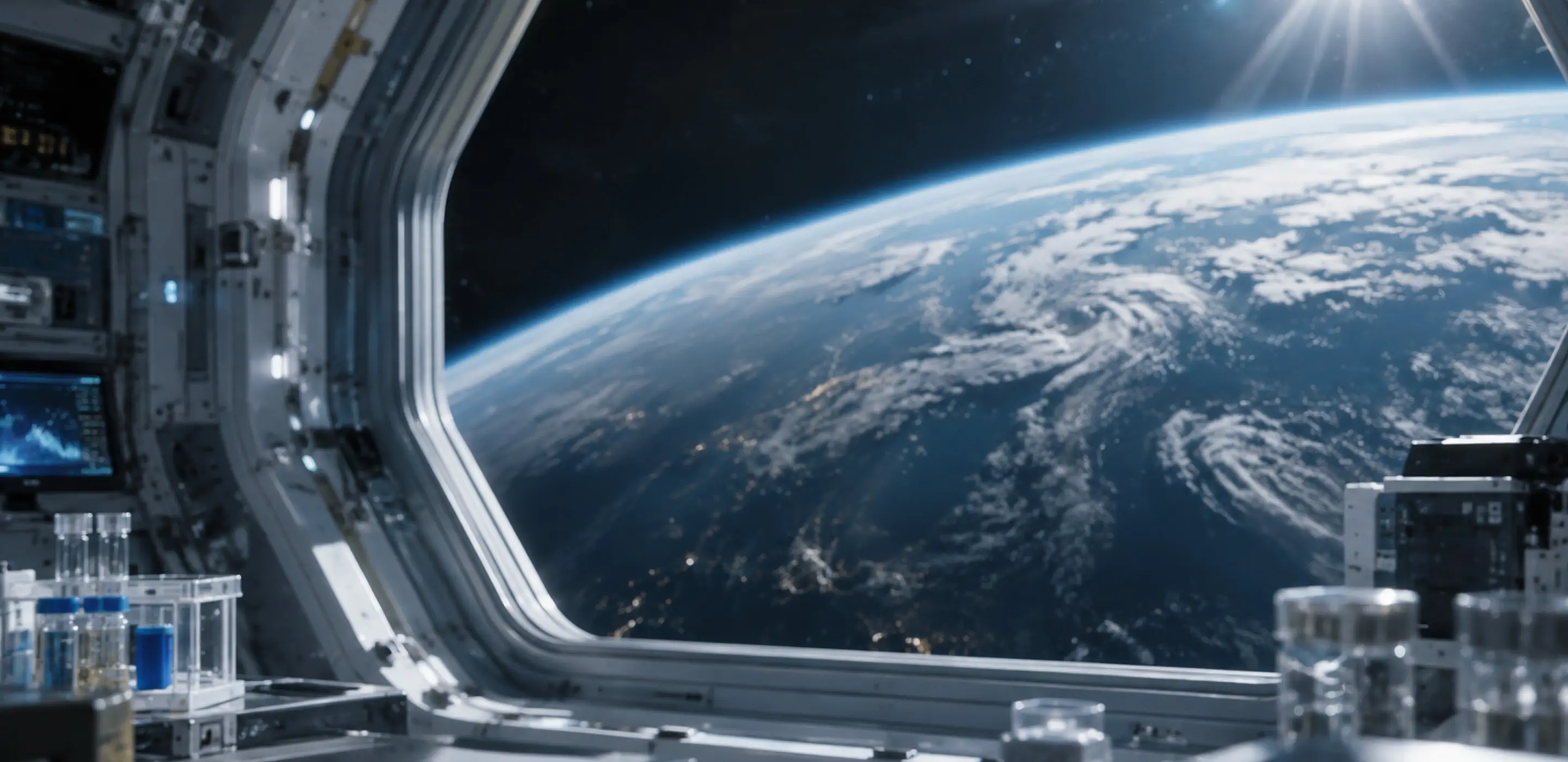
Spaces designed for an environment beyond Earth
The renewed focus on space travel and research is opening fascinating new directions for scientific discovery. The potential for groundbreaking research in physics, materials science, and biomedical science is significant. Having developed facilities in each of these fields on Earth, we’re now exploring how the Divergent Lab platform could extend into non-terrestrial environments.
What is changing is the growing focus on prolonged research in low-gravity, partial-gravity, and microgravity environments. At HED, writes Marilee Lloyd, AIA, National Laboratory Planning Leader, we are tracking several emerging research areas, considering how their environments might be configured and how the work itself may be transformed.
Biomedical Research Beyond Earth
Organ Chips, Organoids, and Precision Health
Organ-on-chip, tissue-chip, organoid, and precision-health research represent compelling near-term directions. The National Center for Advancing Translational Sciences reports that spaceflight can help researchers model mechanisms associated with aging-related diseases over a compressed period. NASA’s AVATAR investigation will use organ chips containing cells from Artemis II astronauts to study the effects of radiation and microgravity, with potential implications for personalized medicine. The European Space Agency is also cultivating partnerships among health, life sciences, biomedical, and space-technology organizations.
Pharmaceutical Formulation and Biomanufacturing
Orbital pharmaceutical formulation and biomanufacturing may form another important commercial research cluster. Aurelia Institute’s proposed Orbital Biolab centers on protein crystallization, biologic medicines, and microgravity tissue growth. Varda Space Industries is similarly exploring microgravity as a variable in pharmaceutical crystallization and formulation, followed by the return of those materials to Earth for analysis.
Automated and Fast-Turn Laboratory Operations
Automation, sample preparation, and fast-turn laboratory operations may be less visible than the research itself, but they could become some of its most important market enablers. Orbital laboratories will need to function more like laboratories on Earth, with thoughtful systems for cargo, storage, scheduling, analysis, and sample return.
NASA’s Commercially Enabled Rapid Space Science initiative is intended to increase the pace of research by supporting commercial capabilities, scientist-led missions, and automated experimental hardware beyond low Earth orbit. Commercial research platforms are also being developed around more predictable launch and reentry schedules, allowing researchers to iterate more quickly. Varda, for example, describes its reentry platform as a way to complete the logistics chain and support more frequent research flights.
Plant Research and Space Crops
Partial-gravity plant research and space crops may be more strategic than immediately revenue-generating, but they remain essential to long-duration exploration. NASA’s Space Crops program connects plant research directly to future Moon and Mars missions. The planned Lunar Effects on Agricultural Flora experiment will study photosynthesis, plant growth, and stress responses on the lunar surface under radiation and partial gravity.
This work makes controlled-environment biology, crop systems, and bioregenerative life support important long-term opportunities for research organizations and the companies supporting them.
Materials Science and Physics
Lunar Resource Utilization and Regolith Processing
Lunar in-situ resource utilization, commonly known as ISRU, and regolith processing represent significant low-gravity research areas. NASA considers the identification, extraction, and processing of local resources central to sustained exploration. Target outputs include oxygen, drinkable water, propellants, and materials that could support construction and other lunar operations.
Developing these capabilities could reduce the quantity of material transported from Earth while creating new research opportunities in excavation, processing, manufacturing, energy storage, and material performance.
Robotics and Autonomous Lunar Operations
Robotics and autonomous lunar operations are another major company-facing direction because a serious lunar laboratory will also function as a logistics and maintenance system. NASA plans to acquire its Lunar Terrain Vehicle as a commercial service. The vehicle is being developed for crewed use as well as autonomous and remote operation, allowing it to transport scientific payloads and support exploration between crewed missions.
NASA has tested commercial rover concepts from Intuitive Machines, Lunar Outpost, and Venturi Astrolab. Its CERISS initiative also identifies automated experimental hardware beyond low Earth orbit, including the lunar surface, as a long-term research priority.
Reduced-Gravity Materials and Physical Sciences
Reduced-gravity research involving materials, fluids, combustion, and thermal systems will remain important, although the commercial paths may be more specialized than those emerging in orbital biotechnology or lunar resource utilization.
NASA continues to study materials science, fluids, and combustion in microgravity. Its research facilities also support investigations involving thermal management, spacecraft fire safety, in-situ fabrication, repair, and advanced life-support technologies. These investigations support both fundamental science and practical applications, from spacecraft safety and thermal performance to advanced material production.
A New Range of Laboratory Typologies
Taken together, these research directions point toward a broad new range of research and laboratory typologies. Supply management and sample control, information and data transfer, human life support, and long-term operational independence will all be fundamental.
Recognizing the scientific springboard that orbital, lunar, and microgravity environments can provide is only the first step. The next is developing robust systems that support both the research and the people conducting it.
Designing for Human and Robotic Work
The relationship between human and robotic work is a fundamental question in the development of space-based laboratories. Some operations will be handled autonomously. Others may be remotely directed from Earth. Still others will require researchers and robotic systems to work together on site.
This interaction is already emerging in forward-looking laboratories on Earth. Beyond Earth, however, it will influence circulation, equipment access, visibility, maintenance, safety, communications, and the spatial relationship between people and machines.
Extending the Divergent Lab
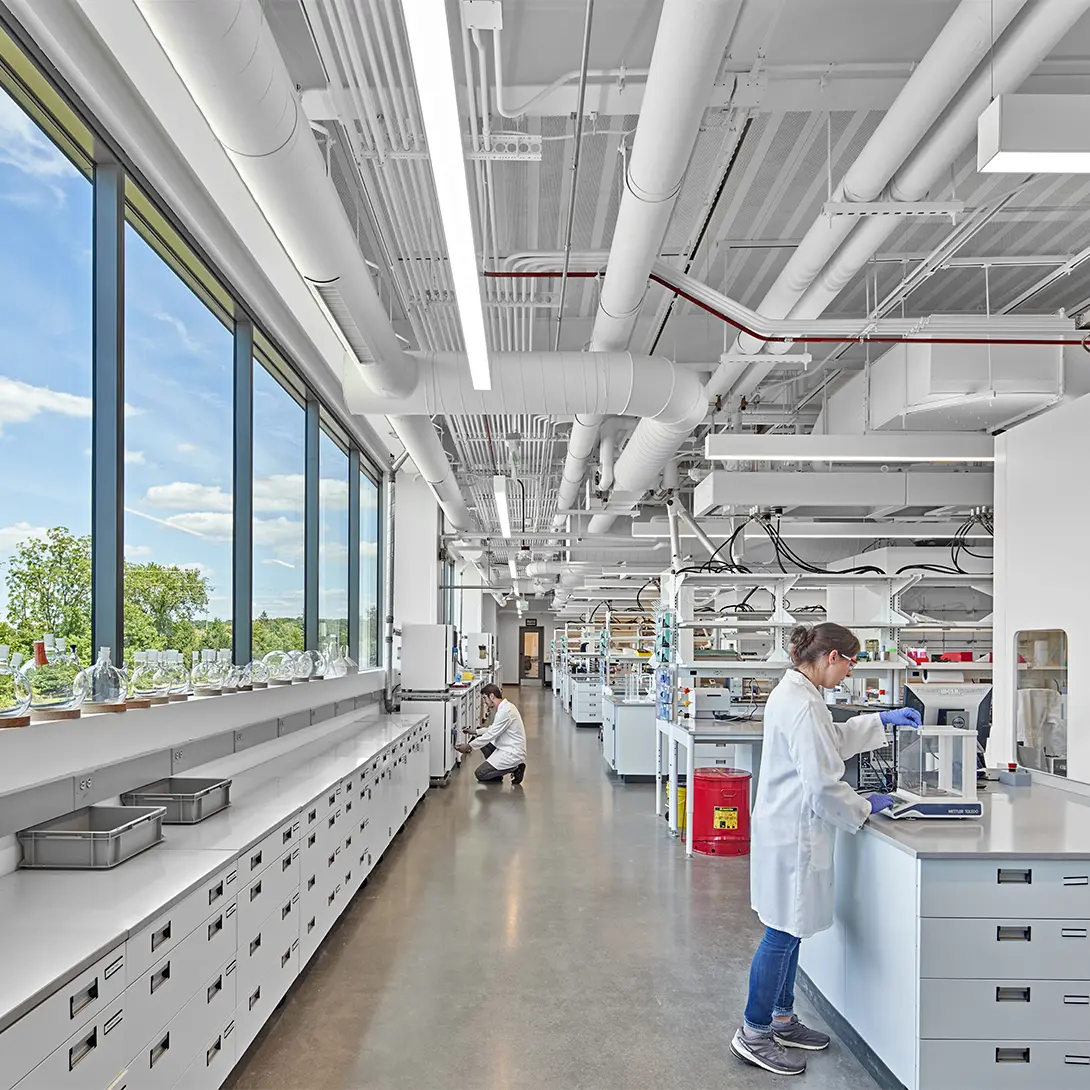
HED’s Divergent Lab framework supports the agile environments these emerging sciences will require. The concept treats the laboratory as a dynamic setting where modular systems, adaptable spaces, technology, collaboration, and resilient infrastructure can respond to changing research needs.
Adaptability and modularity become even more consequential in non-terrestrial environments. Initially, complete systems and their enclosures will need to be fabricated on Earth for transport and deployment. Over time, established facilities may serve as bases for constructing additional spaces and manufacturing or refining components locally.
Technology and resiliency, also central principles of the Divergent Lab, will be vital in the harsh realities of space. A research facility may need to sustain itself for extended periods, continue critical operations during disruptions, and support scientific programs that change faster than the physical environment surrounding them.
Designing for Human Discovery
Humans remain pivotal to research, and they will need many of the same modes of work they rely on here on Earth. The body requires movement and sustenance. The mind requires engagement with both the science and the surrounding environment.
As architects, engineers, and designers, we consider the experience of an environment as more than the ability to perform a task. The places where people conduct research should also help them think, connect, thrive, and innovate.
Research laboratories in space may offer windows onto some of the greatest views in the universe. Their design should respond to practical needs while making room for delight, reflection, and human connection. These qualities are not secondary to discovery. They may help give rise to the new ideas and thoughtful research that take us farther.