Transforming Vacant Space into a Collaborative Space for Interdisciplinary Research
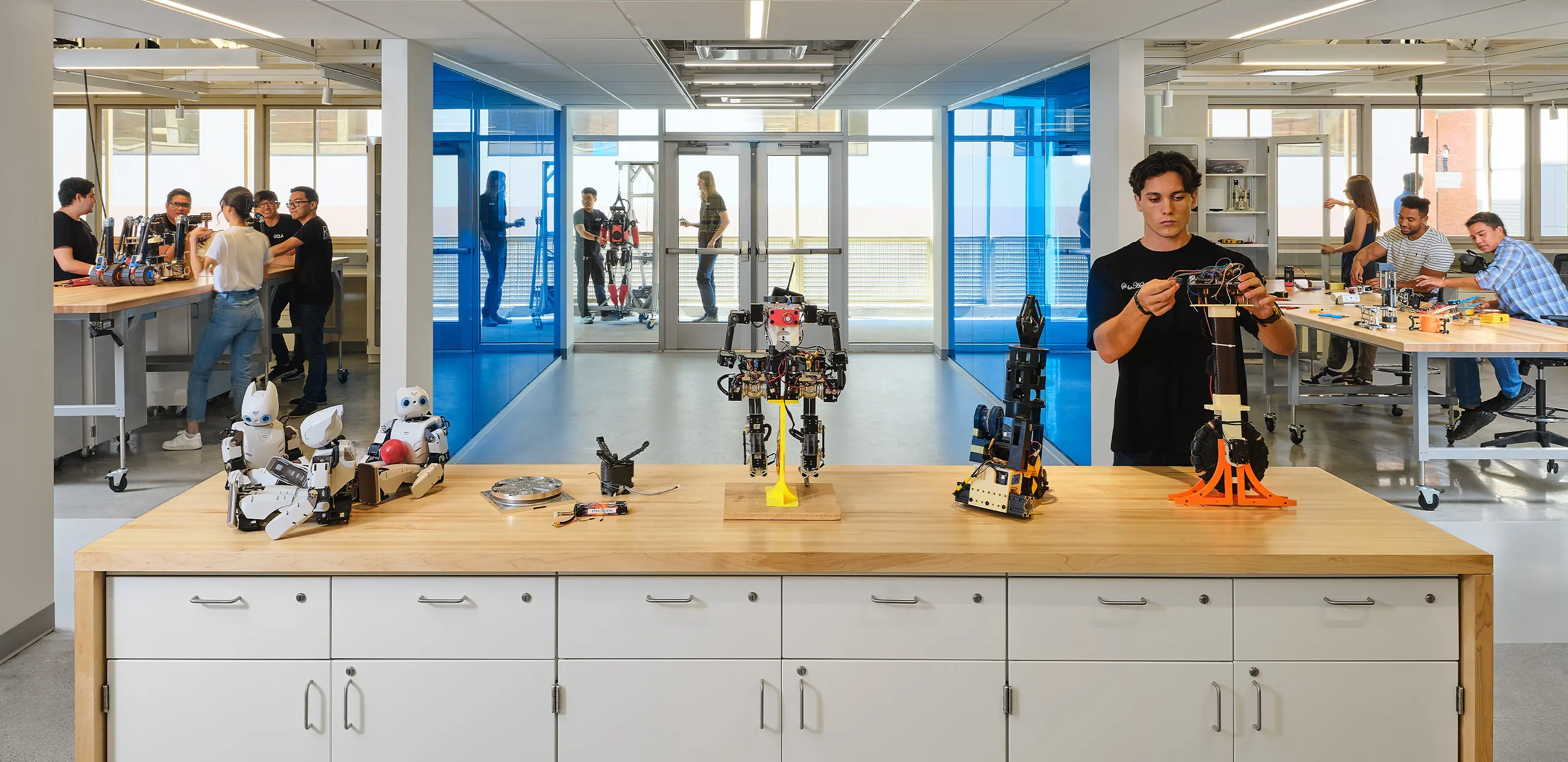
HED partnered with the Henry Samueli School of Engineering and Applied Sciences at the University of California, Los Angeles (UCLA) to transform 8,465 square feet of vacant space in Boelter Hall West into a new Robotics Collaborative Space. Once occupied by the computer science department, the vacated third-floor suite presented a rare opportunity to consolidate faculty and students from mechanical and aerospace engineering, electrical and computer engineering, and computer science into a single collaborative hub.
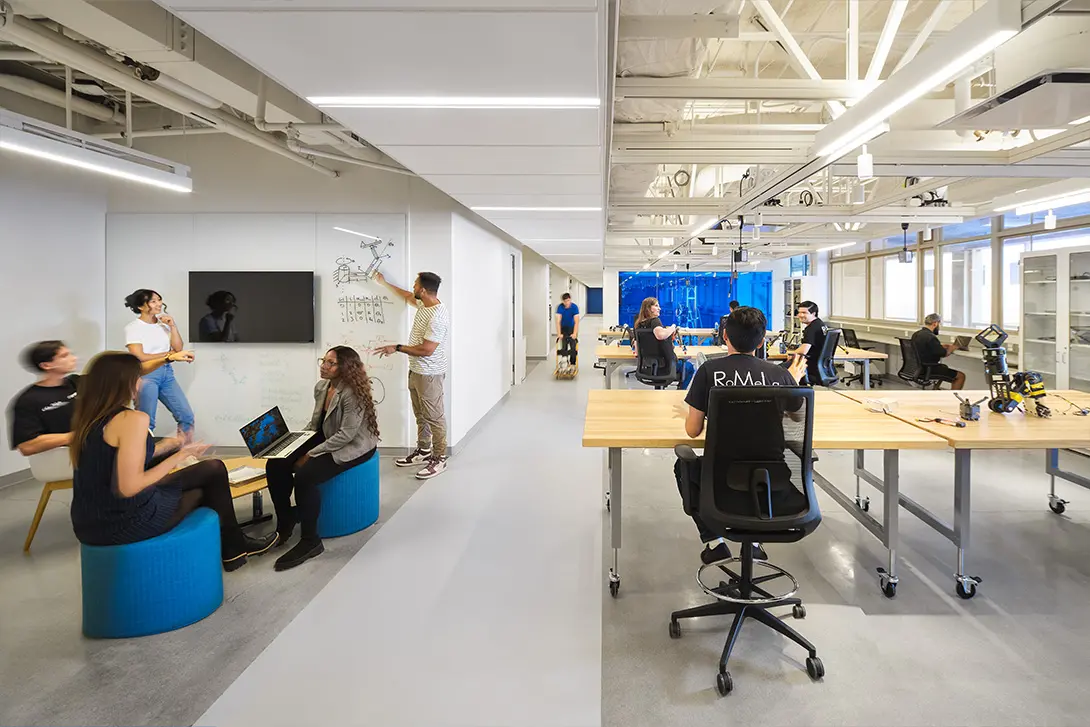
The new space was designed to accelerate interdisciplinary research and maximize shared resources. By co-locating faculty and students from related programs, the facility enables the sharing of expensive equipment, provides access to technical staff, and creates a resource-rich training environment. This approach enhances recruitment for both faculty and graduate students while giving students hands-on opportunities to collaborate across disciplines.
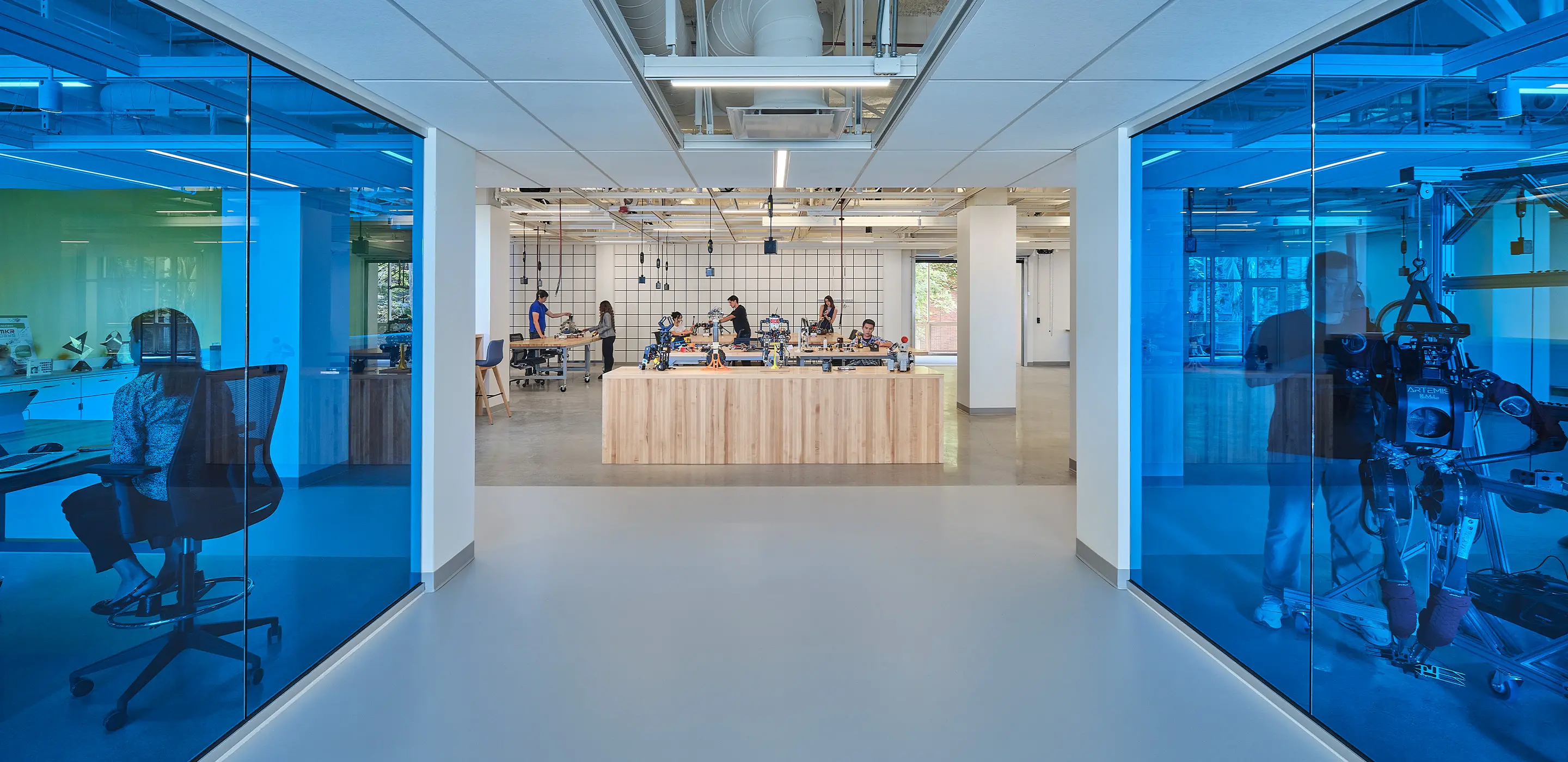
The design team employed several strategies to make the Robotics Collaborative Space a future-focused environment. A dramatic entry defined by colored glass panels and branded graphics establishes a clear point of arrival and reinforces UCLA’s identity as a leader in robotics research. A central “Main Street” circulation pathway connects this entry to a series of open workshop zones, establishing a loft-like environment where transparency and visibility encourage chance encounters and knowledge sharing between researchers.
Flexibility and openness guided the layout. Storage was integrated along the west balcony below existing windows to preserve light and maximize floor area for research activity. To the east, a netted enclosure was added on the balcony, providing dedicated testing space for both walking and flying robots. An open and accessible 4’ x 6’ ceiling grid framework supports flexible connectivity for power and data, while also accommodating lighting and supply air diffusers in a clean, consistent pattern. This framework allows adaptability for evolving research needs while giving the space visual rigor and clarity.
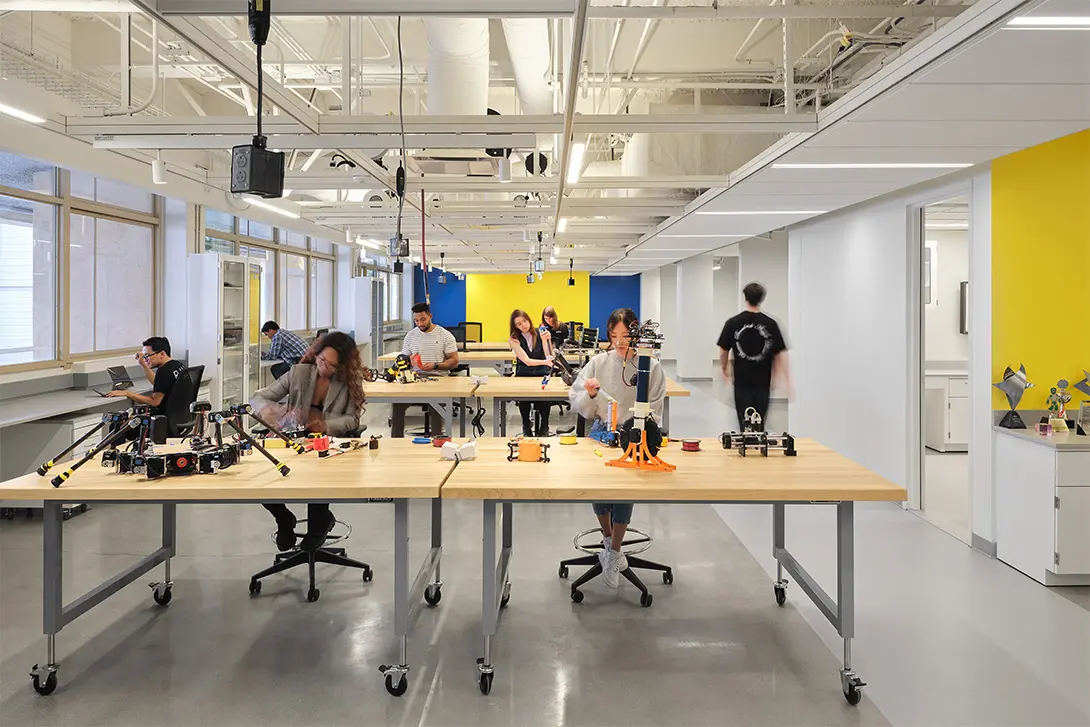
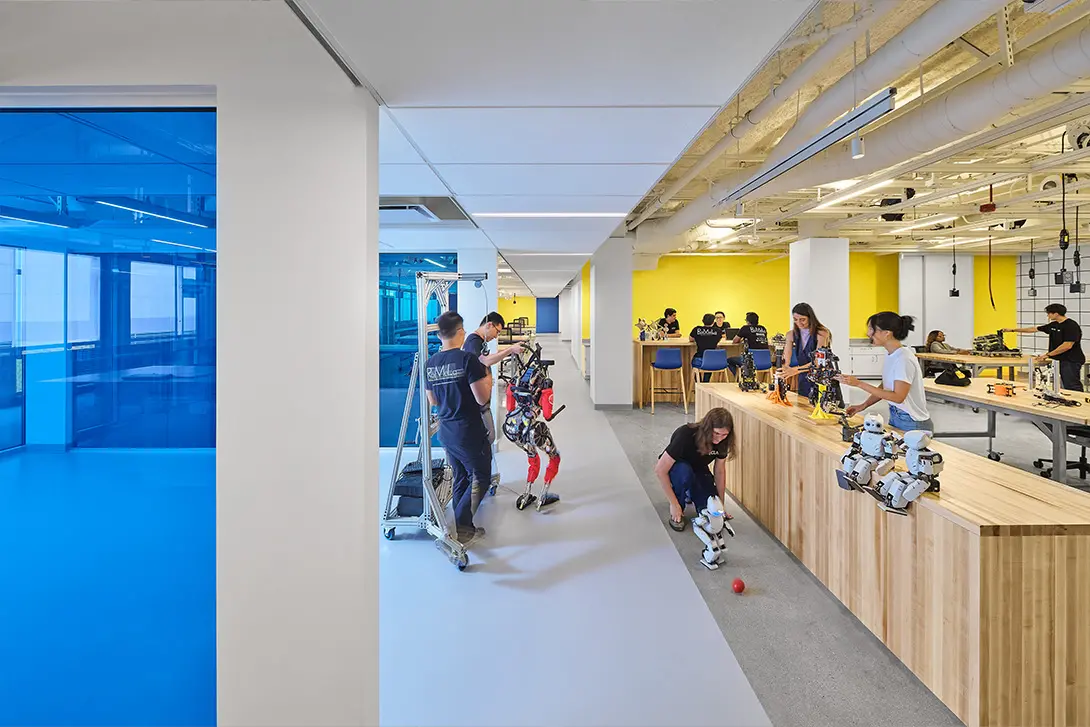
The design also emphasizes sustainability and wellness Daylight and a sense of openness promote team engagement and creativity, while simple, ordered systems allow the facility to adapt as robotics research continues to evolve.
Through this transformation, HED and UCLA created the Robotics Collaborative Space not only as a home for interdisciplinary research, but as a catalyst for innovation, exploration, and discovery, an environment where the future of robotics can take shape.