
Creating Identity Through Dramatic Design and Experiential Graphics
The Chicago School partnered with HED to create its Washington, D.C. campus, a 30,000-square-foot environment that reflects the university’s national identity while celebrating its local community. Designed to support 35–40 staff and hundreds of students, the campus blends branded graphics, sculptural design elements, and biophilic strategies into a cohesive environment that reinforces The Chicago School’s mission and culture.
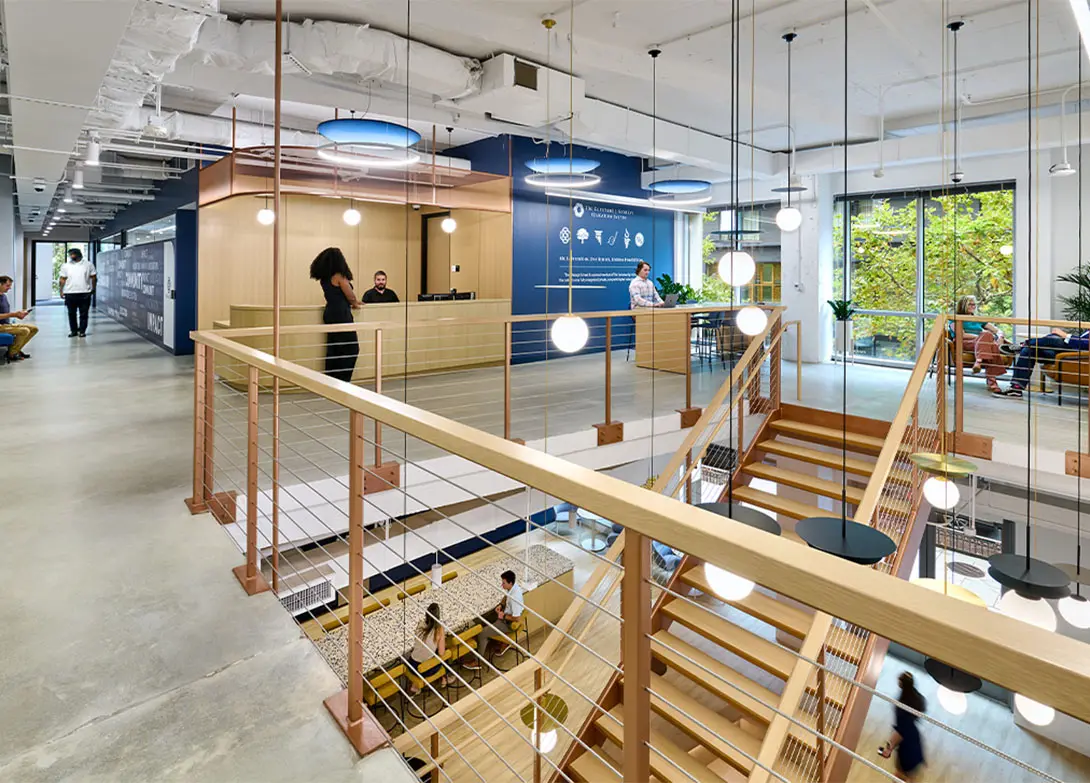

A defining architectural feature is a dramatic copper-toned open staircase positioned near the main entry. Linking the student coffee bar at the lower level with the IT help desk and collaboration zone above, the stair is both a physical and visual connector. Its placement makes movement through the building an active, social experience, encouraging interaction among students and staff. Integrating the stair into the existing post-tension slab required advanced structural coordination and precise detailing, underscoring HED’s integrated design approach.
Brand storytelling was another priority. HED’s experiential graphics team designed custom installations honoring key donors and reinforcing The Chicago School’s identity. At the reception desk, the school’s signature “Knott” motif is rendered in backlit copper tones over ivory acoustic fabric, becoming a standout feature. The piece functions as both a visual anchor and a sound-absorbing element, exemplifying how branding, functionality, and design intent come together seamlessly.
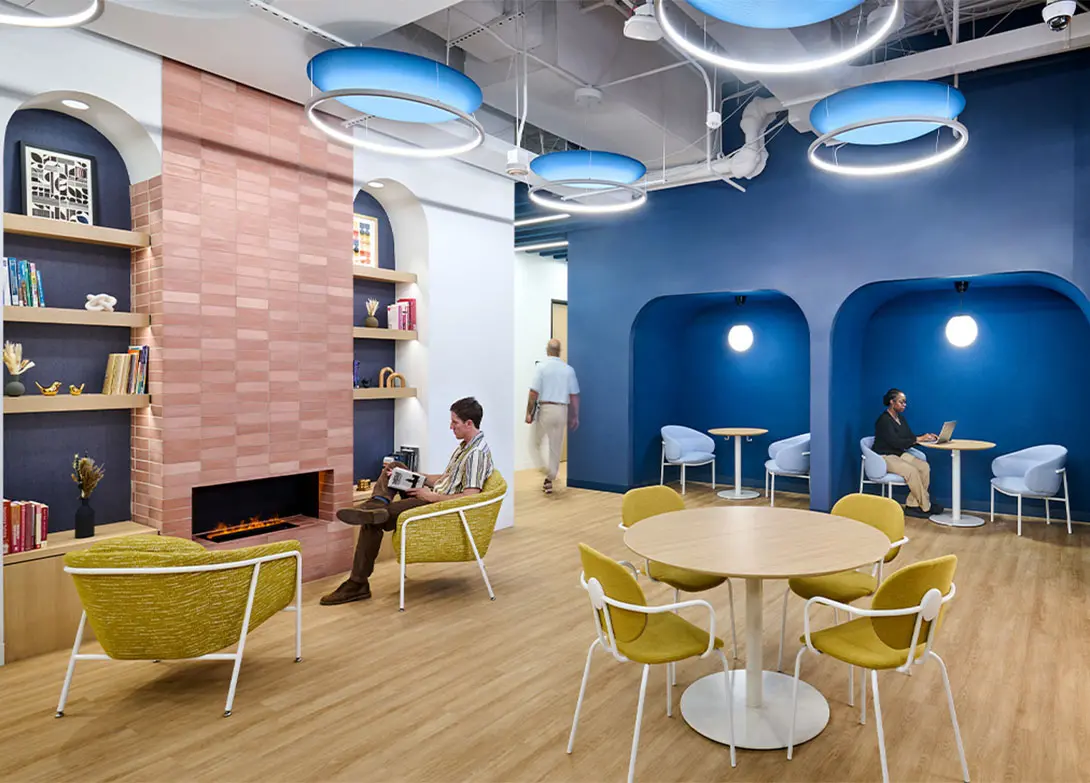
Inside, biophilic design principles establish a sense of wellness and calm. Lush plantings punctuate the interior, softening edges and connecting students and staff to natural elements even in an urban context. In the central collaboration area, curved fabric-wrapped niches provide acoustic control while doubling as sculptural elements that add character and dimension. These design moves create an environment where wellness is supported not just by services, but by the physical environment itself.
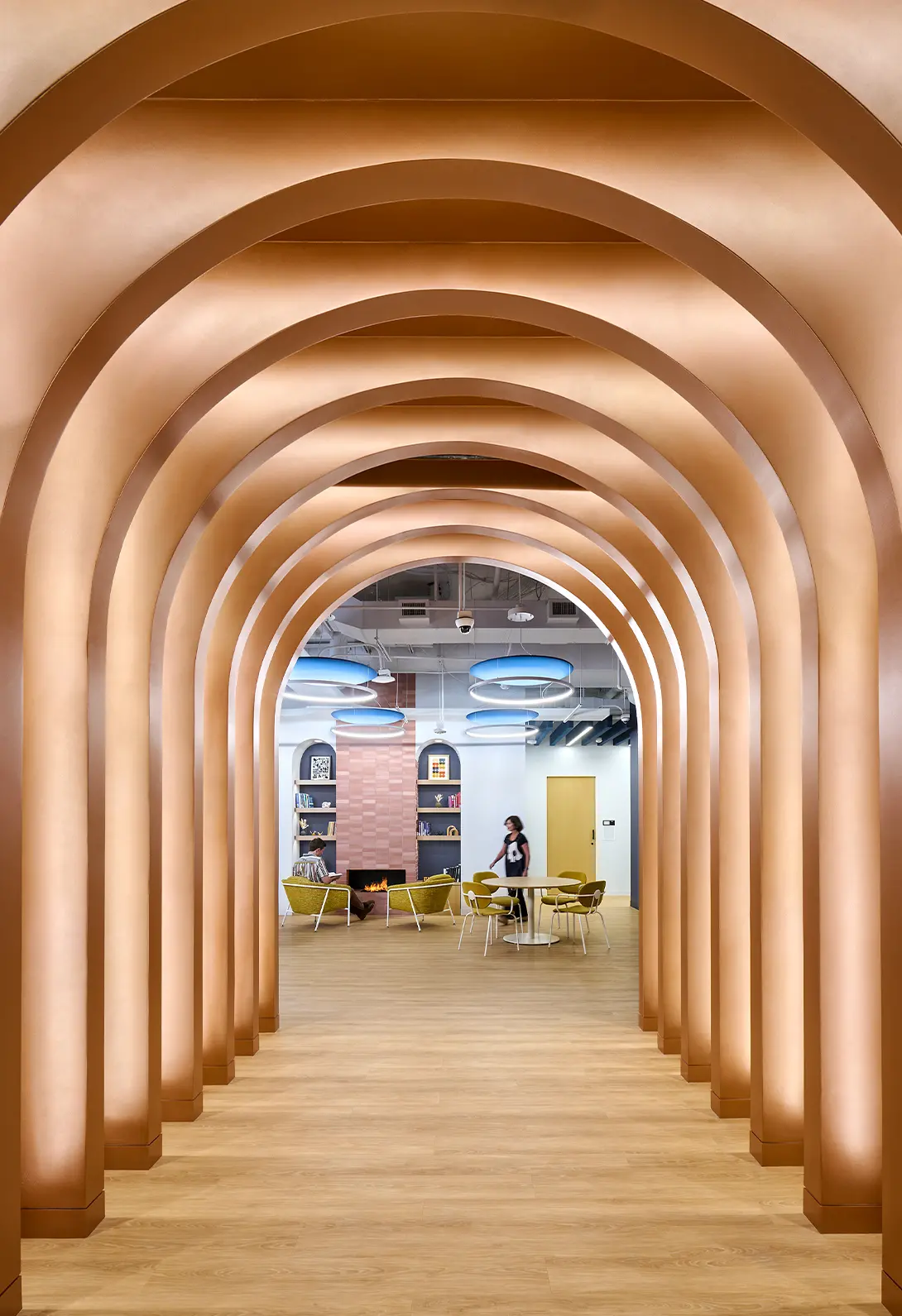


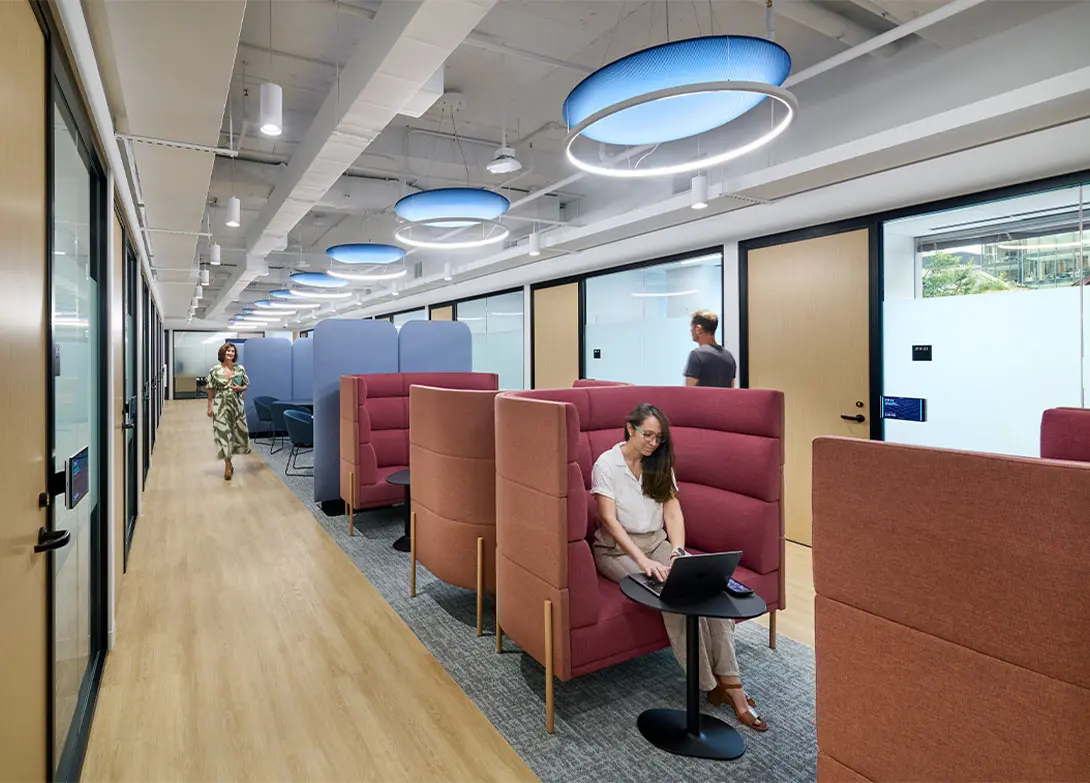
Lighting design plays an equally important role. Carefully selected fixtures enhance the ambiance, highlight architectural details, and contribute to noise mitigation throughout the space. The result is an interior experience that balances energy with calmness, supporting both focused work and social engagement.
Operational efficiency was also embedded into the design. With a workstation-to-private office ratio of 14:16 and a meeting room ratio of 35:7, the layout provides the right balance of private and collaborative environments for faculty and staff. Workspaces were planned to be flexible, scalable, and consistent with The Chicago School’s brand standards nationwide.
The Washington, D.C. campus stands as an environment that embodies The Chicago School’s values: a place where branded identity, integrated design, and student-centered experiences converge. With its copper-toned stair, biophilic elements, and immersive graphics, the campus makes an immediate impression, both a welcoming space for students and a proud extension of the university’s national presence.