Mechanical Engineering Building (MEB)
Merging Tradition and Innovation to Shape a Modern Engineering Hub
The Mechanical Engineering Building (MEB) has stood as a central presence on the University of Illinois Urbana-Champaign campus since 1947. For decades, its brick and limestone walls housed generations of engineers, but the building’s aging systems, outdated layouts, and lack of accessible entries limited its ability to support modern pedagogy. With engineering education shifting toward active, team-based, and technology-rich learning, the university partnered with HED to reimagine the facility for the future while preserving its historic presence.

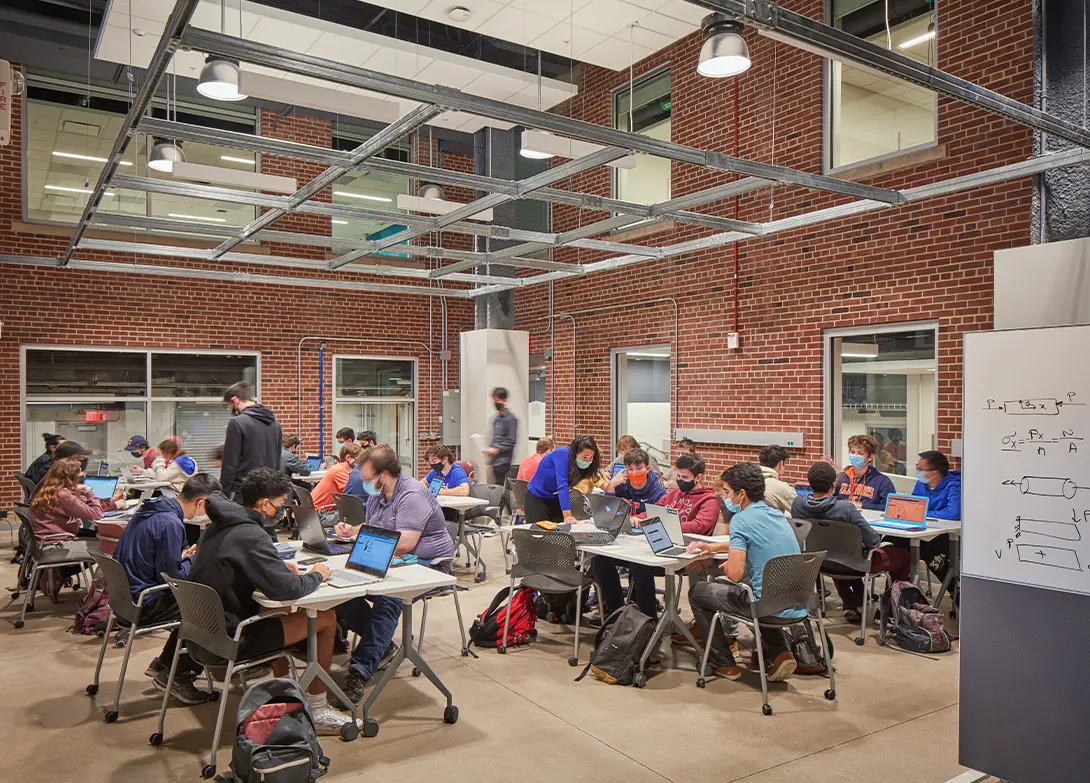
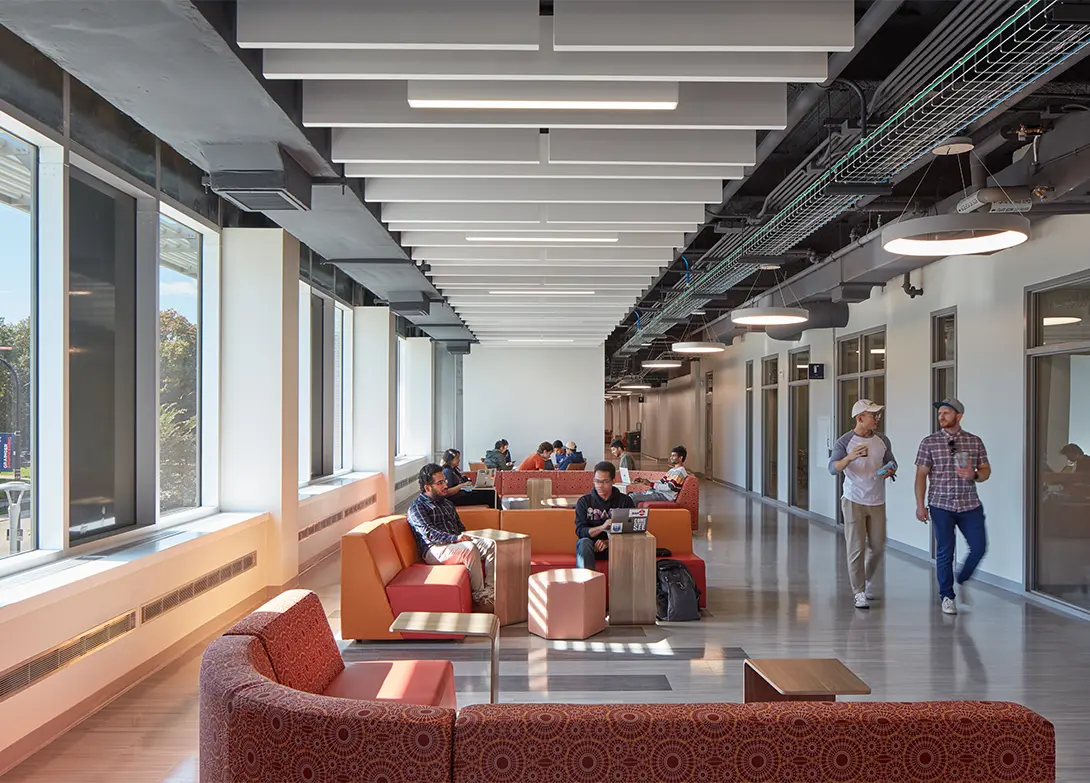

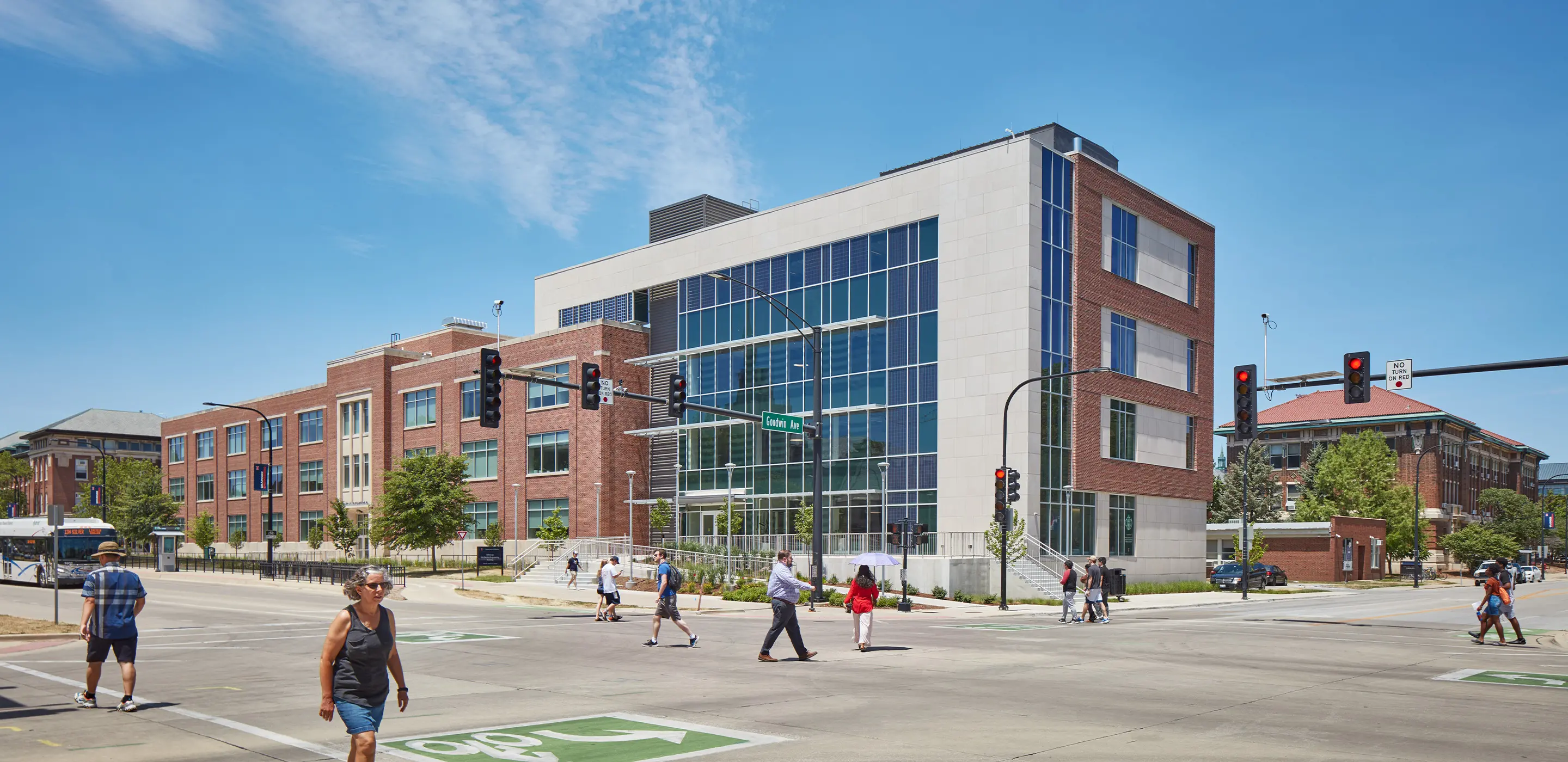
The project transformed the 66,000-square-foot original structure with renovations and paired it with two major additions. A five-level, 36,000-square-foot expansion introduced state-of-the-art instructional facilities, including active learning classrooms with adaptable audio-visual systems designed to evolve with future teaching methods. A second addition infilled the building’s courtyard, creating innovative project laboratories that expand the building’s footprint and support the hands-on, collaborative work central to mechanical engineering.
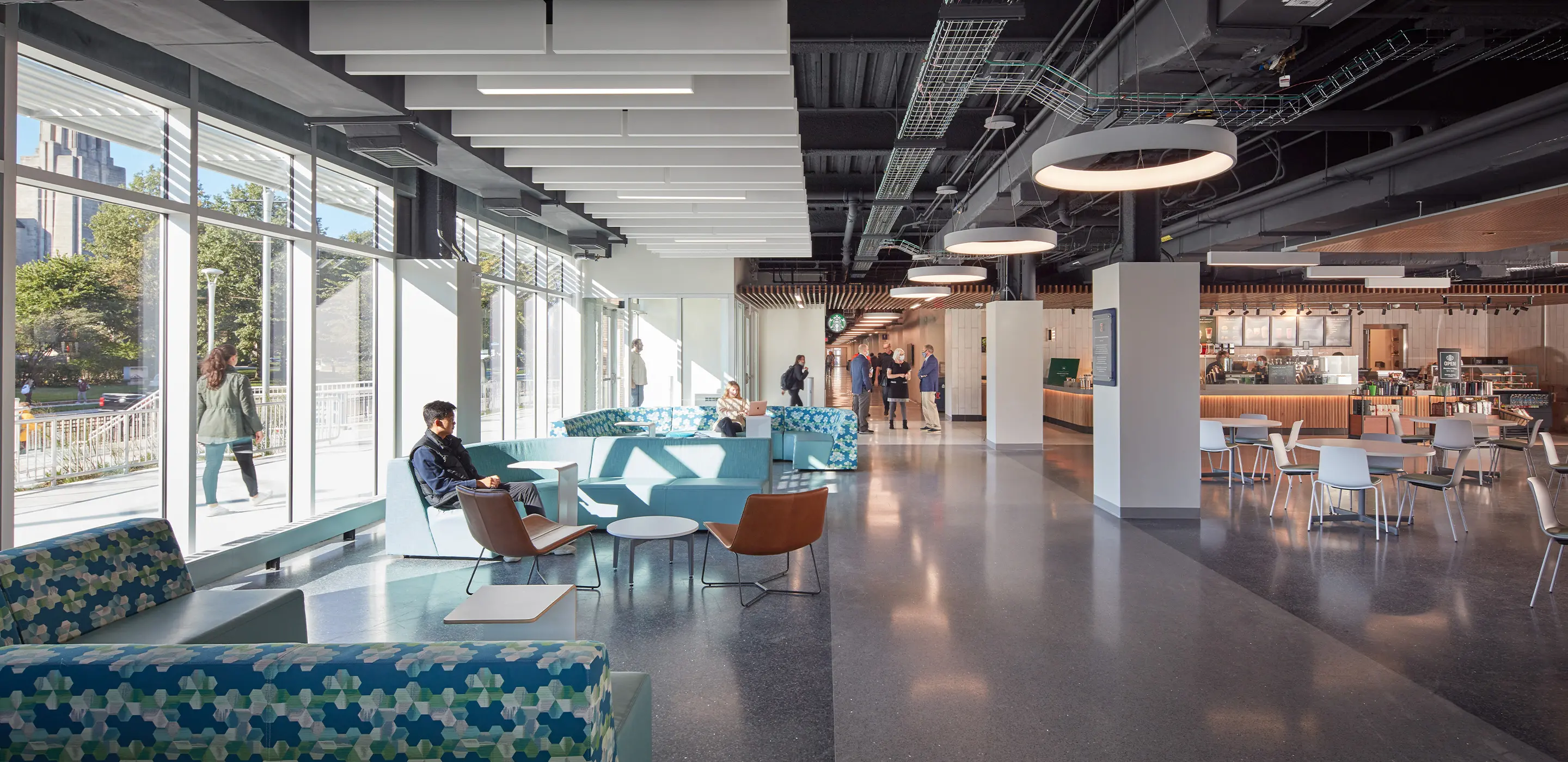
The architectural approach balances old and new. The additions draw from the existing palette of brick, limestone, and glass, while introducing larger ribbons of glazing that increase natural light and transparency. These broad openings showcase activity inside the building and enhance the identity of the Mechanical Engineering Department, turning the MEB into a visible hub of learning and research on the central campus.
Accessibility was a guiding priority. A new raised entry plaza at the southeast corner now offers a universally accessible front door, and upgrades throughout the renovated structure provide accessible restrooms, circulation, and classrooms. A new elevator connects all five levels for every user, removing barriers that once limited access.
Sustainability is deeply embedded in both renovation and addition. The existing envelope was upgraded for efficiency, while new construction features a high-performance thermal envelope, native plantings, and thoughtful stormwater management. Mechanical systems employ innovative strategies, including a VRF-driven system for efficiency and a heat recovery chiller that produces hot water as it generates chilled water. Photovoltaic-ready façades and daylighting strategies further reduce the building’s energy profile.
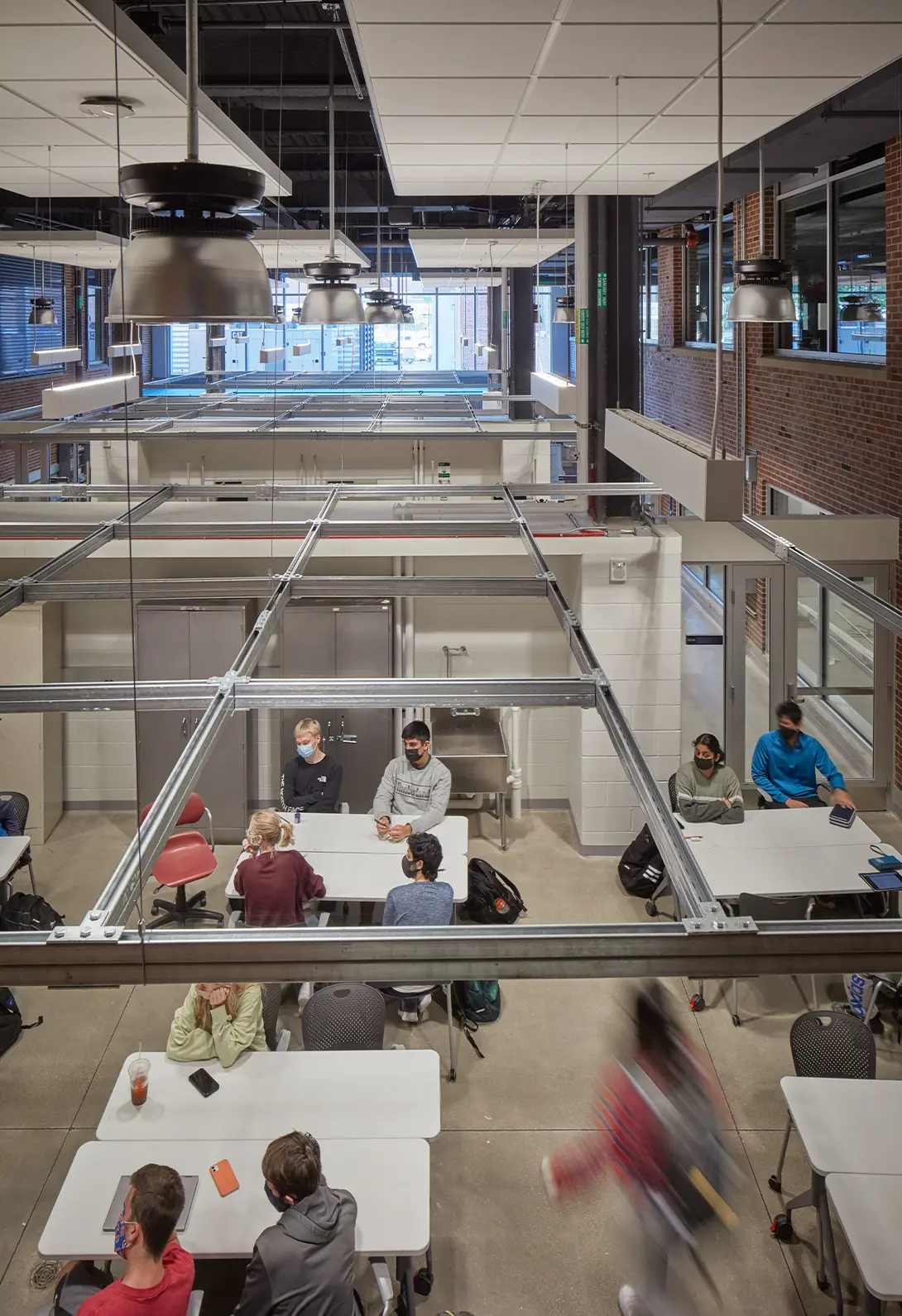
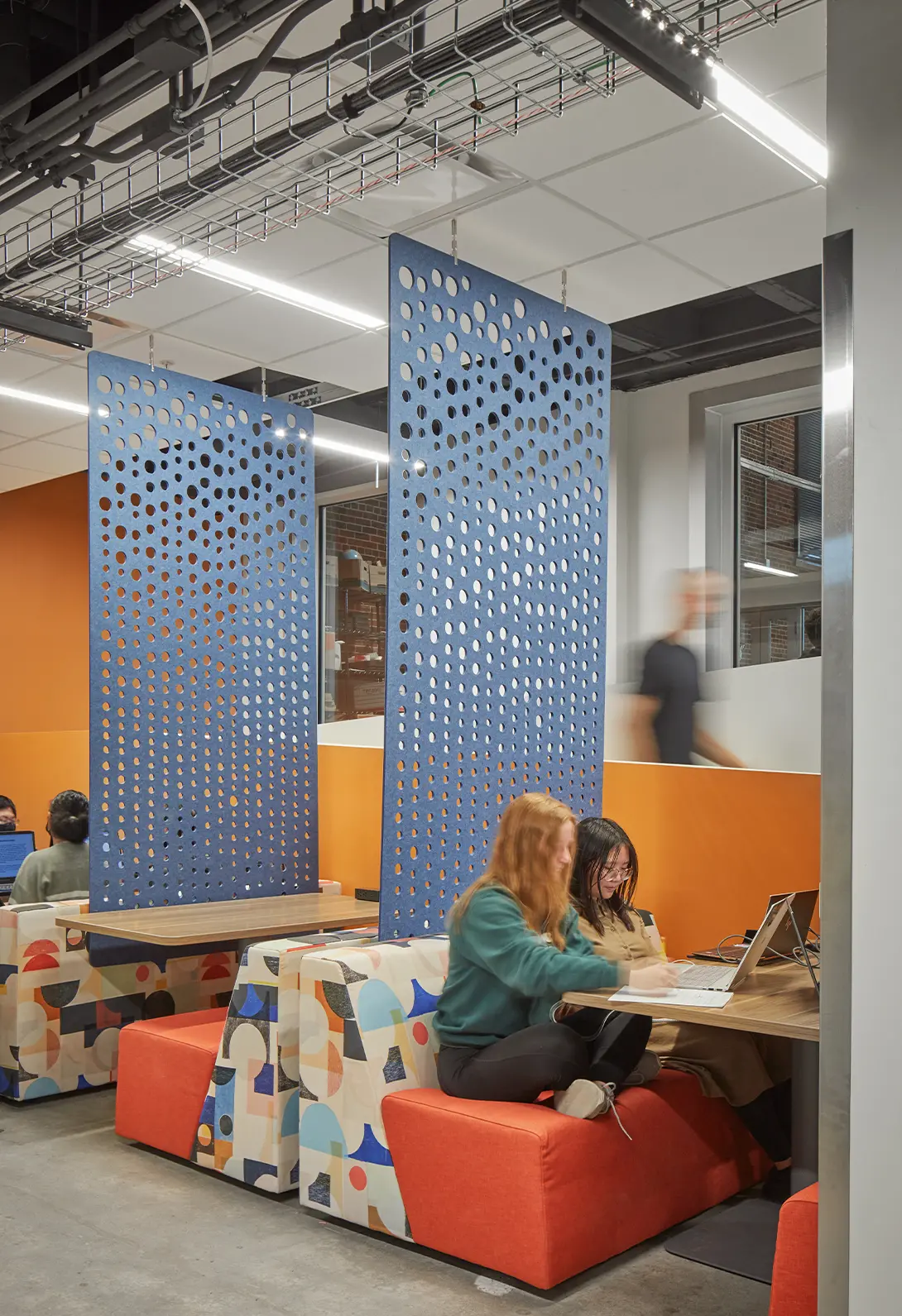
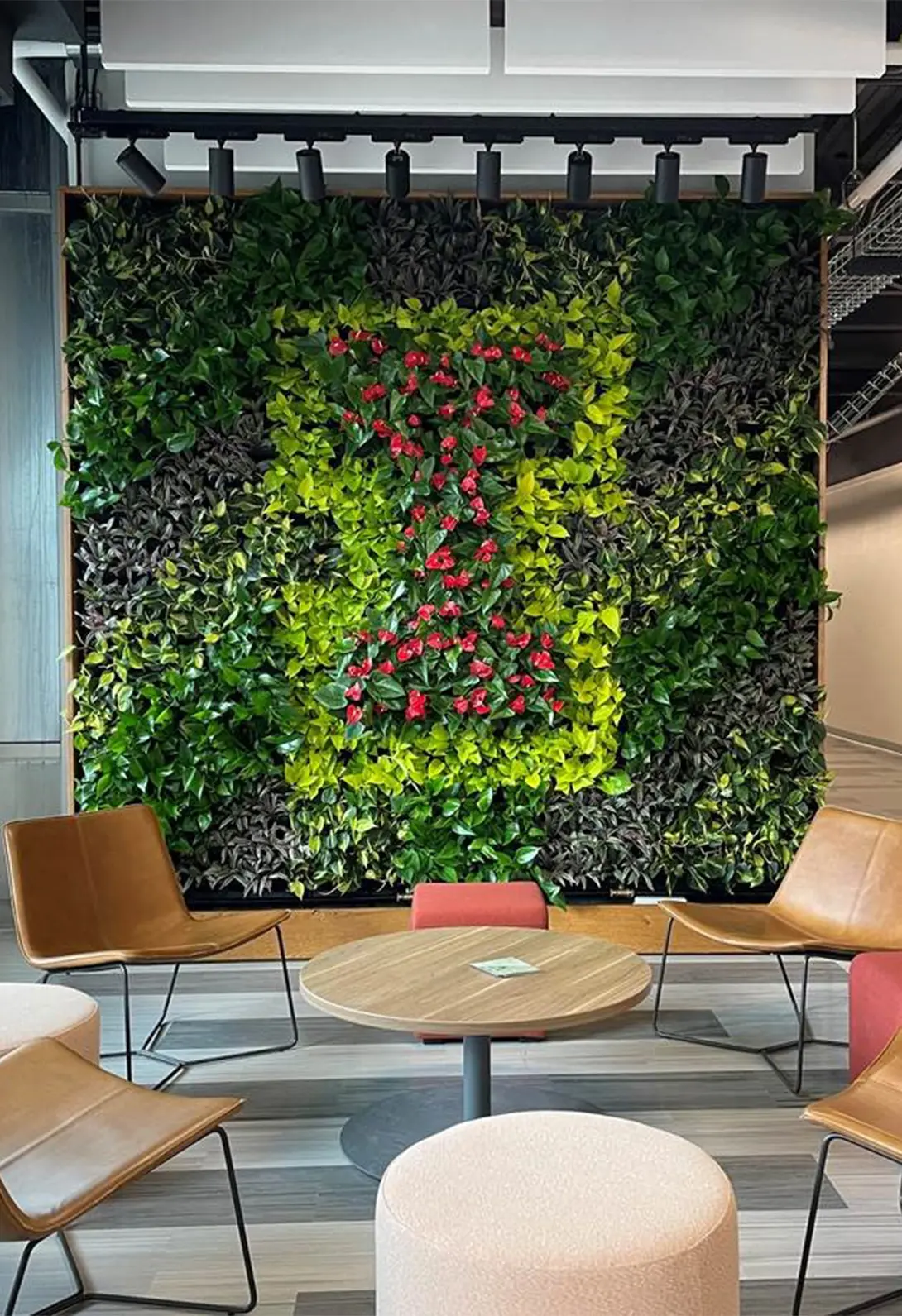
Inside, classrooms and labs embody technical innovation. Spaces are designed around active learning, flexible enough to accommodate new pedagogies and technological advances. Laboratories feature modular layouts for project-based work, while upgraded infrastructure supports advanced research and collaboration.
By uniting historic preservation with forward-looking design, the renewed MEB strengthens both the campus fabric and the Mechanical Engineering program. It provides a new front door for the department, dramatically expands instructional and research capacity, and sets a benchmark for how the university can extend the life of its historic facilities while aligning them with contemporary academic goals.