H-STEM Engineering & Health Technologies Complex
Research On Display
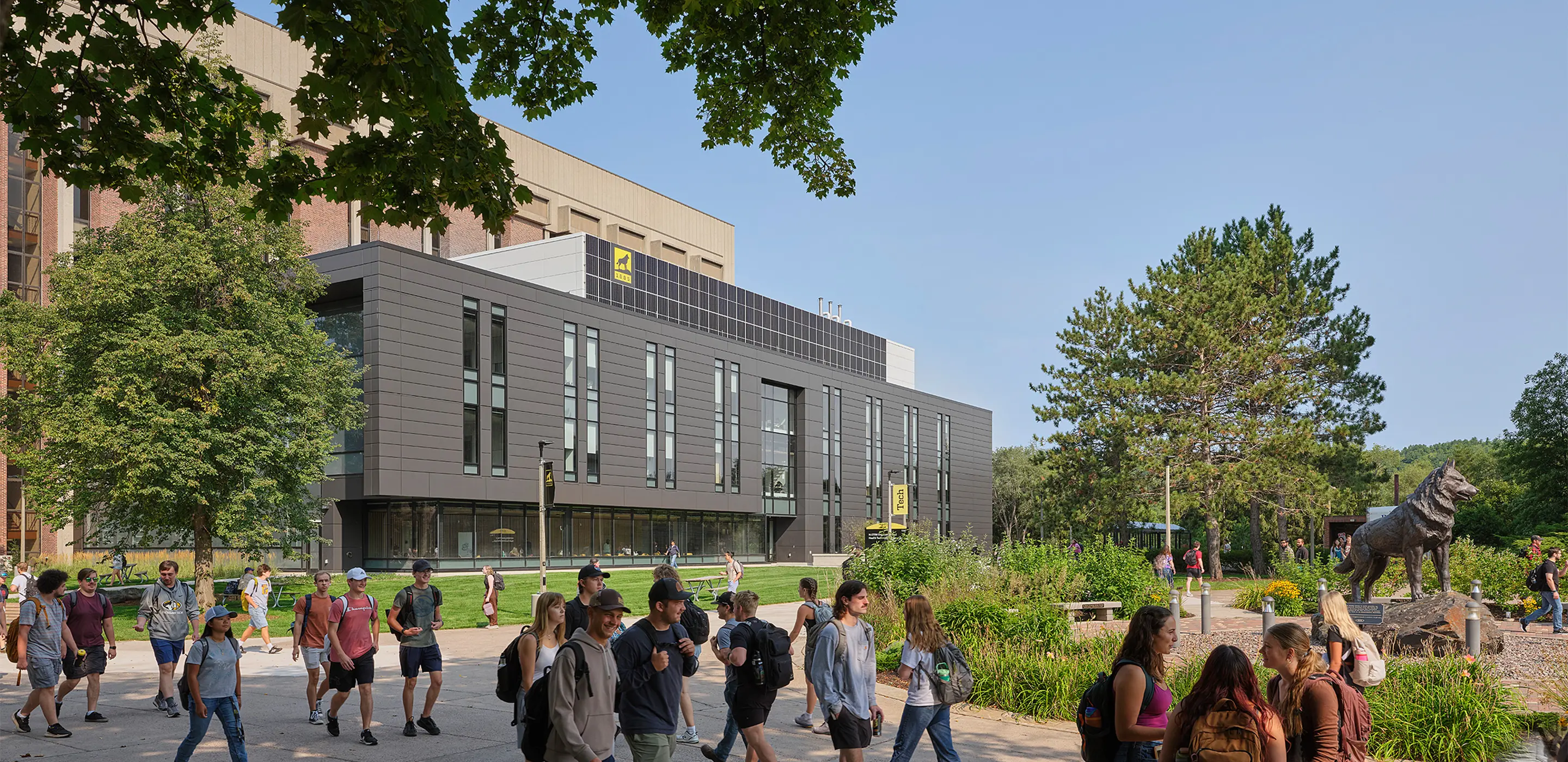
At the center of Michigan Technological University’s (MTU) Houghton campus, the new H-STEM Engineering and Health Technologies Complex signals a bold investment in the future of research and learning. Responding to rapid growth in health-related and human-centered STEM programs, the university set out to create a facility that would bring engineering, health sciences, and technology together, providing adaptable space for discovery, collaboration, and education.
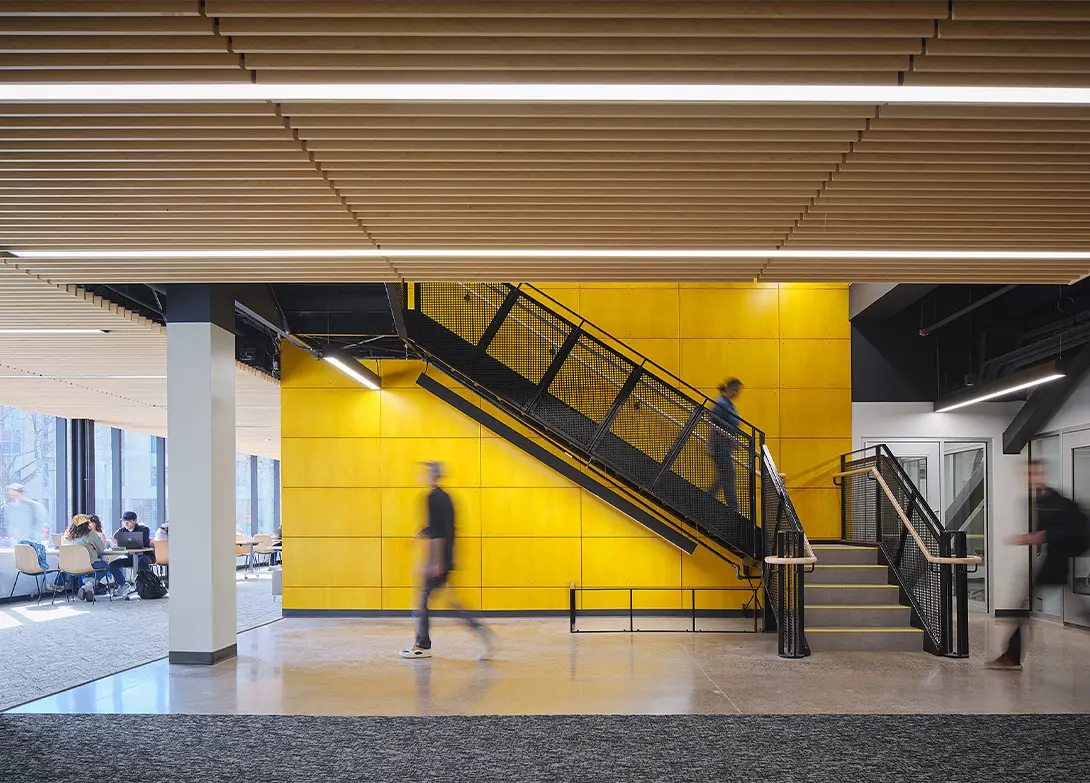

MTU partnered with HED to create the new space, a transformative interdisciplinary hub that advances both education and research.
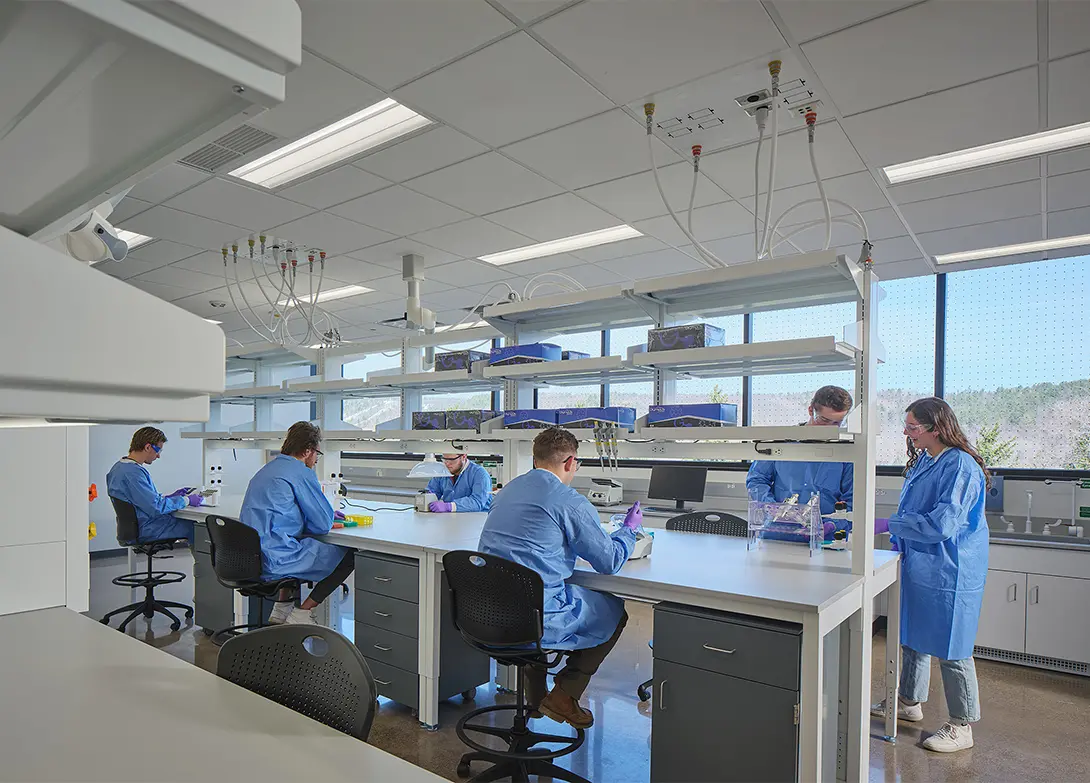
The facility brings together multiple departments—including biology, biomedical engineering, chemistry, chemical engineering, and kinesiology/integrative physiology—alongside the Health Research Institute. Co-location was a central goal, placing researchers, students, and faculty in proximity to one another within shared spaces designed for flexibility and collaboration.
MTU saw the project as a tool to drive discovery, prepare a future-ready workforce, and strengthen the state’s economy through new technologies and increased research funding.
The complex is organized around a simple but powerful idea: flexibility. Primary programmatic functions are grouped into uninterrupted “bars” of space. Research labs, support zones, graduate workstations, and faculty offices are aligned in parallel, allowing utilities and infrastructure to be clustered efficiently while keeping spaces adaptable for future use. As programs grow or shift in response to Michigan’s evolving economy, these bars can be subdivided, expanded, or reconfigured without disruption.
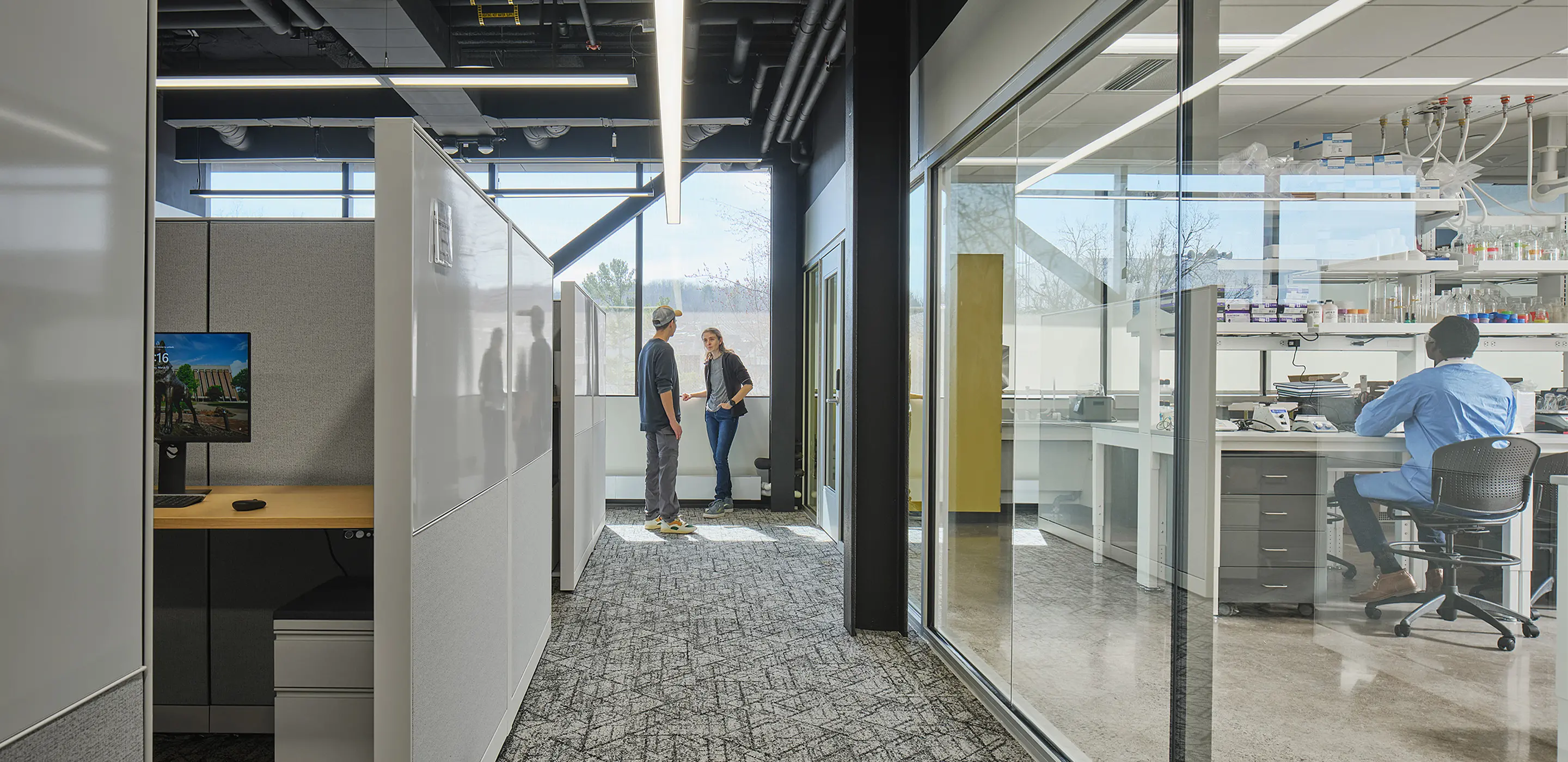
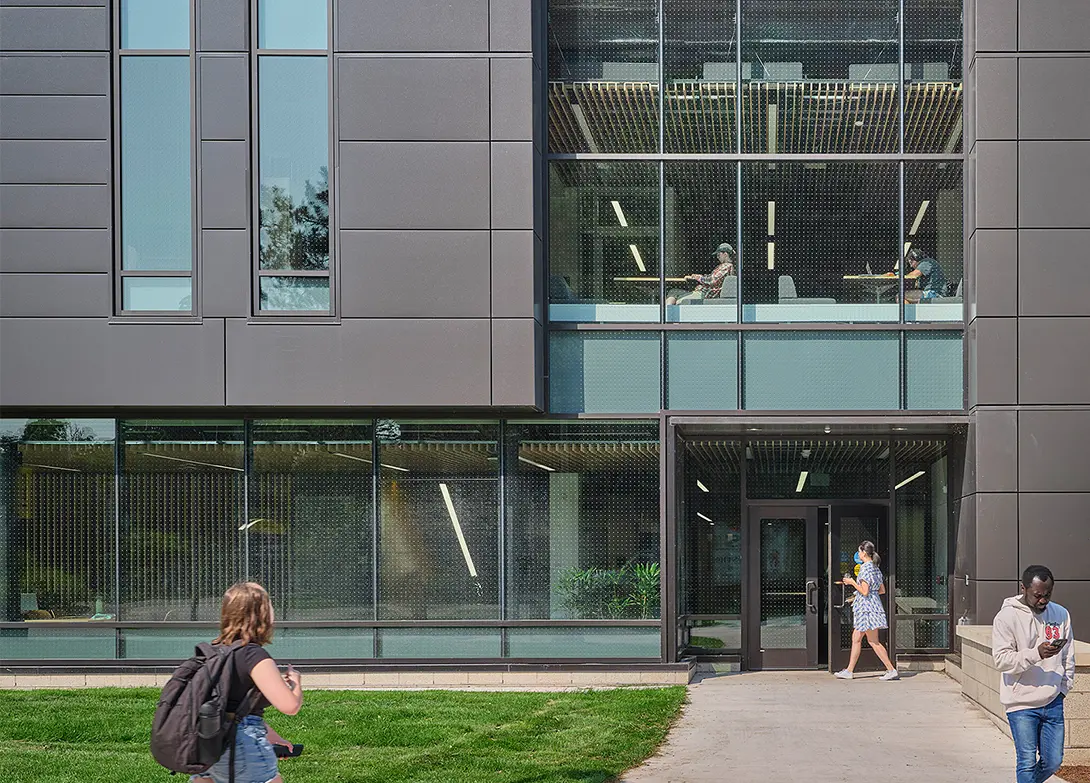


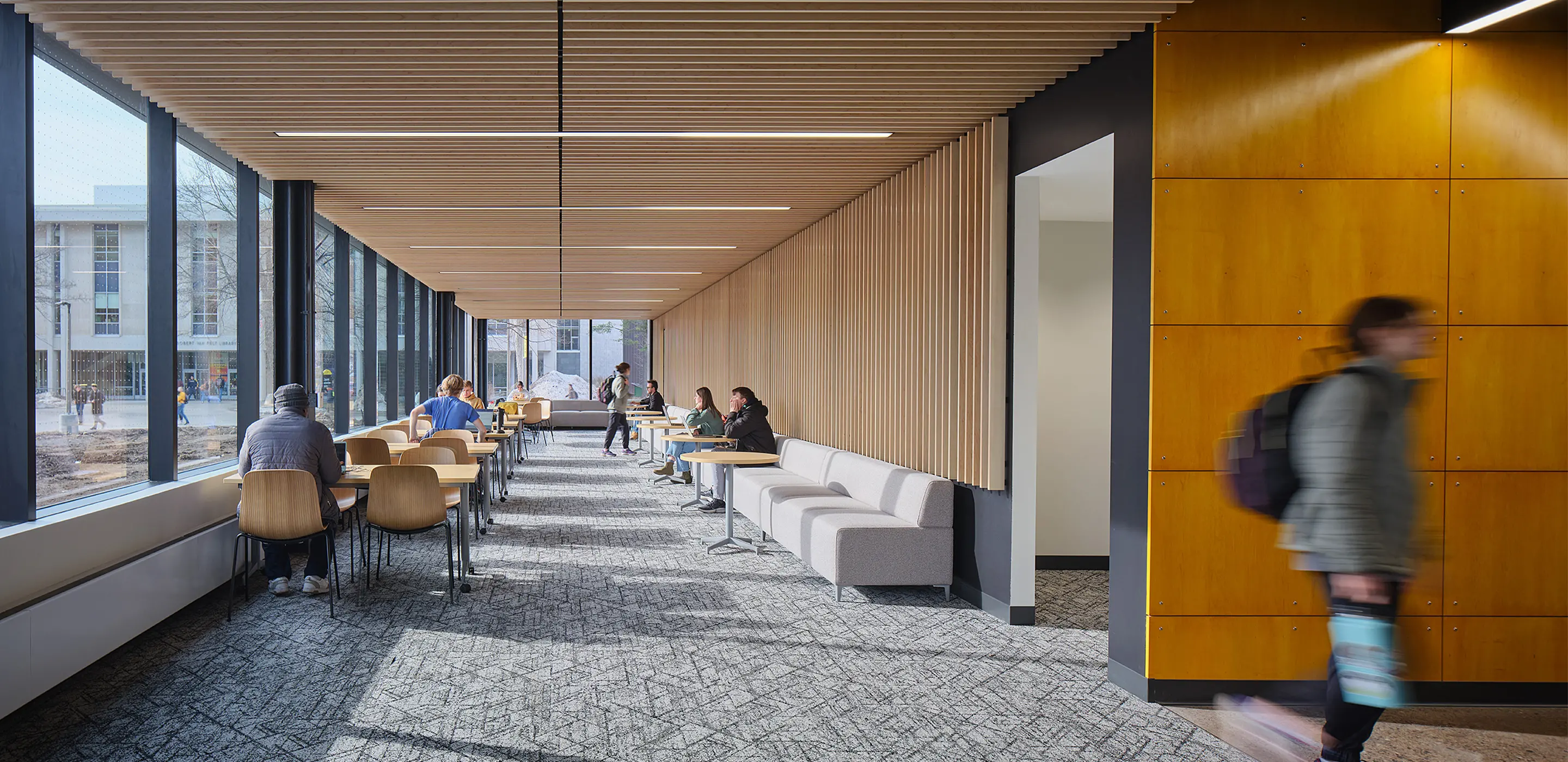
Transparency is a defining characteristic. Research and teaching labs are enclosed in glass walls both inside and out, creating a sense of openness and putting “research on display” for students, visitors, and alumni. Graduate student spaces are intentionally located adjacent to labs, maintaining strong visual and physical connections to faculty and research activity.
Large expanses of north- and south-facing glass bring natural light into key learning areas, while careful solar orientation of offices shields against glare and heat gain. The result is an environment that is bright, welcoming, and tuned for both performance and wellness.
The new facility also reshapes the campus experience. A new entry sequence aligns with major pedestrian pathways, strengthening the connection to existing academic zones and positioning the complex as a crossroads of activity. Rooftop terraces and outdoor areas further extend learning beyond the walls, providing spaces for collaboration, reflection, and engagement with the natural setting of Michigan’s Upper Peninsula.
Sustainability was embedded in the design process. The complex supports MTU’s long-term goals for health, energy efficiency, and occupant well-being, so the building not only advances research but also models responsible stewardship.
The result is a facility that accelerates MTU’s “speed to innovation.” By placing research, teaching, and collaboration in contiguous, flexible spaces, the H-STEM Complex fosters the kind of interdisciplinary breakthroughs that strengthen MTU’s reputation and impact. With backing from organizations including the American Heart and Lung Associations, NIH, and NSF, this facility not only supports discovery but also builds the state’s workforce and economic resilience.
This project has been the recipient of several notable awards including:
- 2025 ACEC Michigan Honorable Conceptor Award Recipient
- 2025 ACEC National Recognition Award Winner
- 2025 ESD Construction & Design Award
- 2025 CAM Achievement Award
- IES 2025 Illumination Award for Lighting Control Innovation