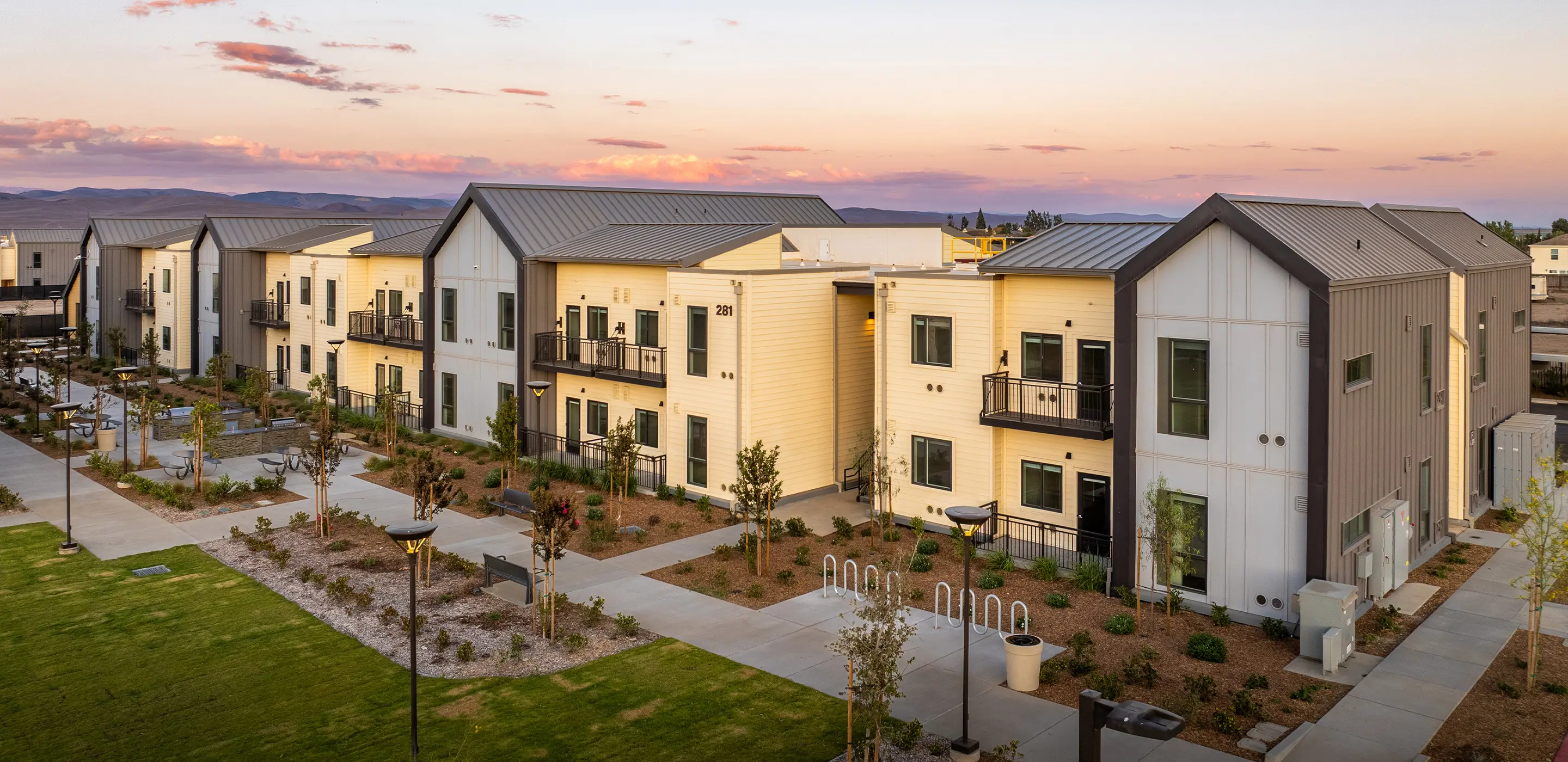
Modular Affordable Housing Designed for Community Connection
In the agricultural heart of Monterey County, Greenfield Commons introduces 222 new affordable homes, designed to reflect the rural character of Greenfield while advancing the community’s goals for sustainability, community, and livability. Developed for EAH Housing, the project is conceived as three clusters of two-story buildings organized around landscaped courtyards, an arrangement that balances density with a neighborhood feel and responds directly to the city’s planning vision.
The client’s goals were ambitious: create high-quality affordable housing that serves farmworkers and families, shorten delivery schedules, and reduce costs without sacrificing design. HED responded with an integrated design approach that coordinated architecture, landscape, and engineering to work seamlessly with the construction team. Modular delivery, provided in collaboration with Factory OS and Swinerton, became a key strategy allowing the project to achieve efficiencies in time and cost while maintaining a design that looks and feels permanent and contextual.
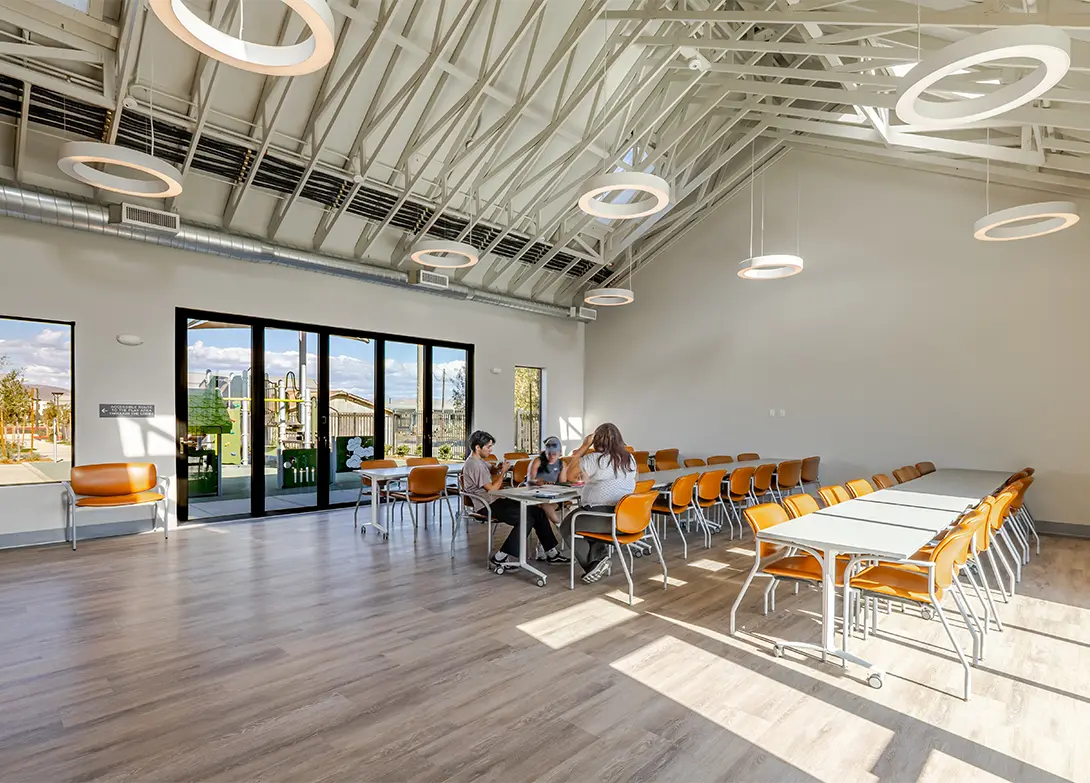
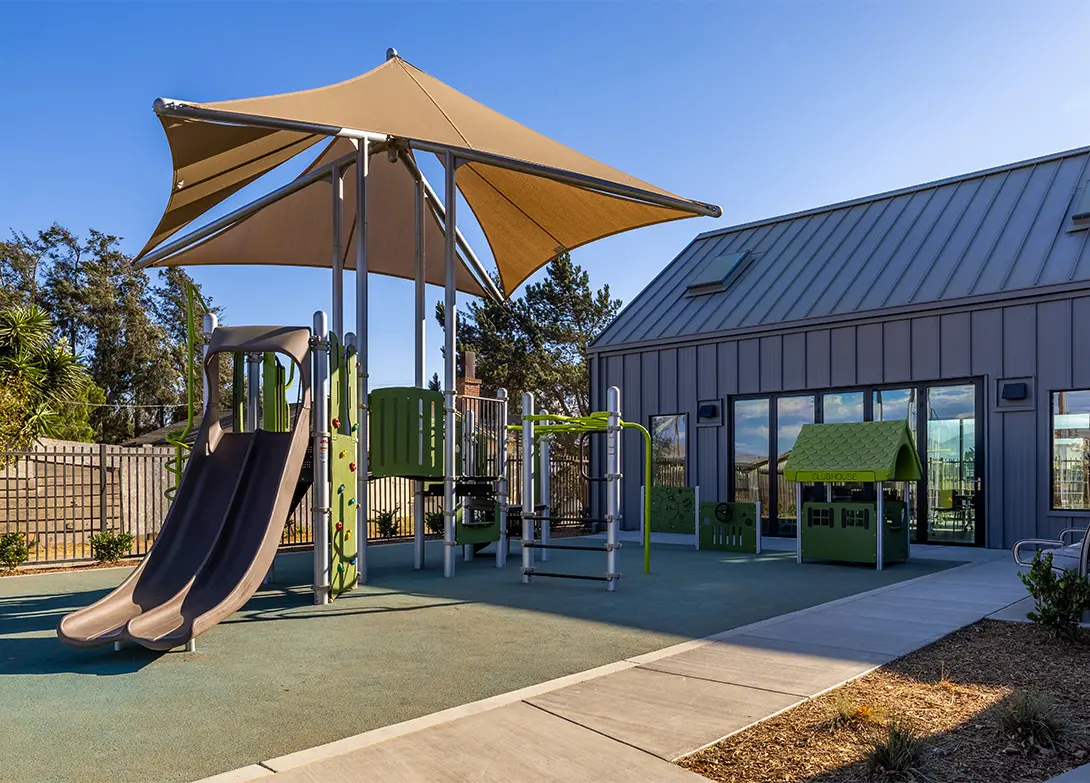
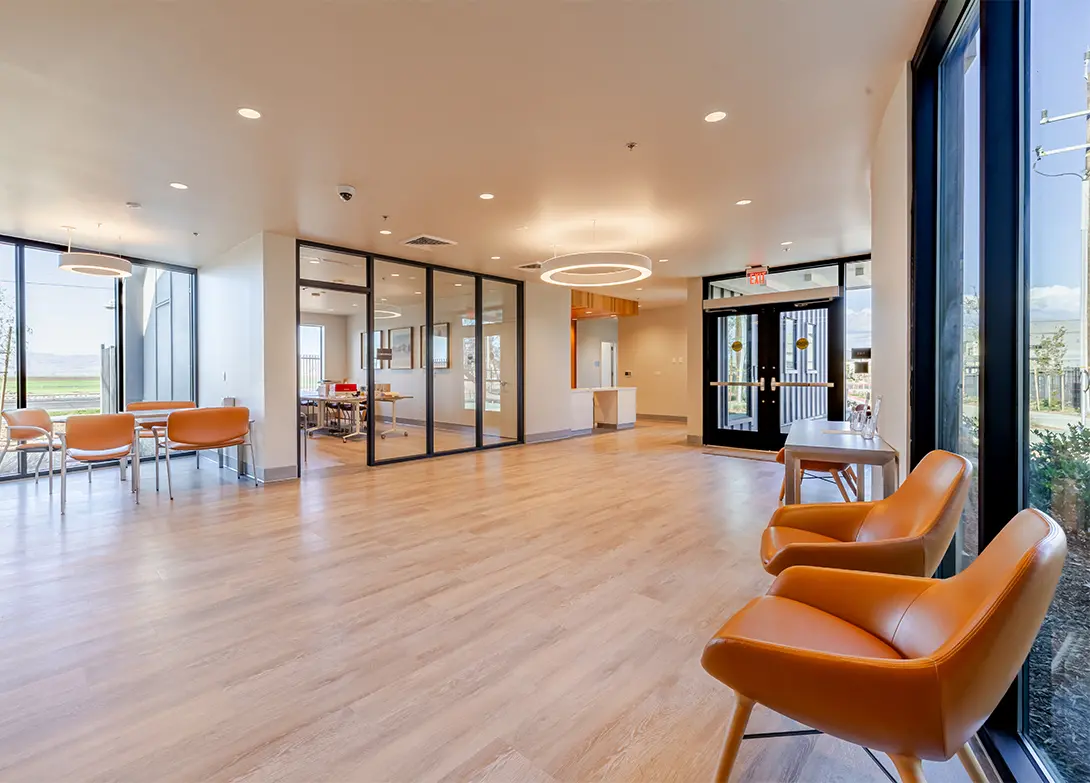
By fabricating units off-site and assembling them on-site, the project reduced construction time and controlled costs while minimizing disruption to the surrounding community. The modular approach also enhanced quality control, as units were built in a factory setting with consistent oversight. Importantly, the design team worked to disguise the modular nature of the buildings, using varied rooflines, textures, and courtyards to break up massing and create the sense of a traditionally constructed neighborhood.
Architectural decisions were guided by the goal of making the development feel like a neighborhood rather than a housing project. Each cluster is framed by a courtyard that acts as its heart, programmed with recreation areas, playgrounds, and gardens. Building massing was deliberately kept low, with two-story forms that transition smoothly from the downtown edge to adjacent single-family homes. At the corner of Third Street and Walnut Avenue, a distinctive community building was placed as a landmark, housing multipurpose rooms, fitness space, laundry, leasing, and secure bicycle storage. This not only provides needed amenities but also signals to the wider community that Greenfield Commons is a place of pride and permanence.
The modern farmhouse aesthetic reflects another of the client’s goals: to create a housing type that honors the region’s agricultural heritage. Sloped and flat roofs, stepped massing, and textured siding give each building a scale and character that feels familiar, while durable materials like metal roofing and siding provide long-term resilience. The design avoids the repetitiveness often associated with modular construction, proving that efficiency and contextual sensitivity can coexist.
Sustainability is woven throughout with photovoltaic panels, advanced framing techniques, and efficient building systems. These strategies lower long-term operating costs, directly benefiting residents. Beyond buildings, the integrated site design incorporates landscaped frontages, pedestrian pathways, and water quality systems that improve livability and reinforce the residential nature of the development.
Even transit was addressed in alignment with client goals. The owner has also committed to purchasing unlimited bus passes for all residents, a move that not only reduces transportation costs for families but also spurred the transit authority to increase bus frequency to every 30 minutes, improving mobility across the region for the entire community.
Greenfield Commons creates a neighborhood with courtyards that build connection, buildings that respect context, and sustainable strategies that serve both residents and the city for decades to come.
