Designing Consistency and Local Character for a Global Consulting Leader
For this confidential consulting client serving the public sector, the workplace carries two responsibilities at once: perform at the pace of client work, and reflect a culture built on trust and discretion. Across a long-term partnership, HED supported this global professional services organization through a series of interconnected efforts spanning a new corporate headquarters in the Washington, D.C., an office relocation in New York City, ongoing renovations and expansions across North America, and a space utilization study across five offices in India. Each location posed a variation of the same question: how can a workplace operate as part of a cohesive global system while remaining grounded in the rhythms, expectations, and character of its local city?
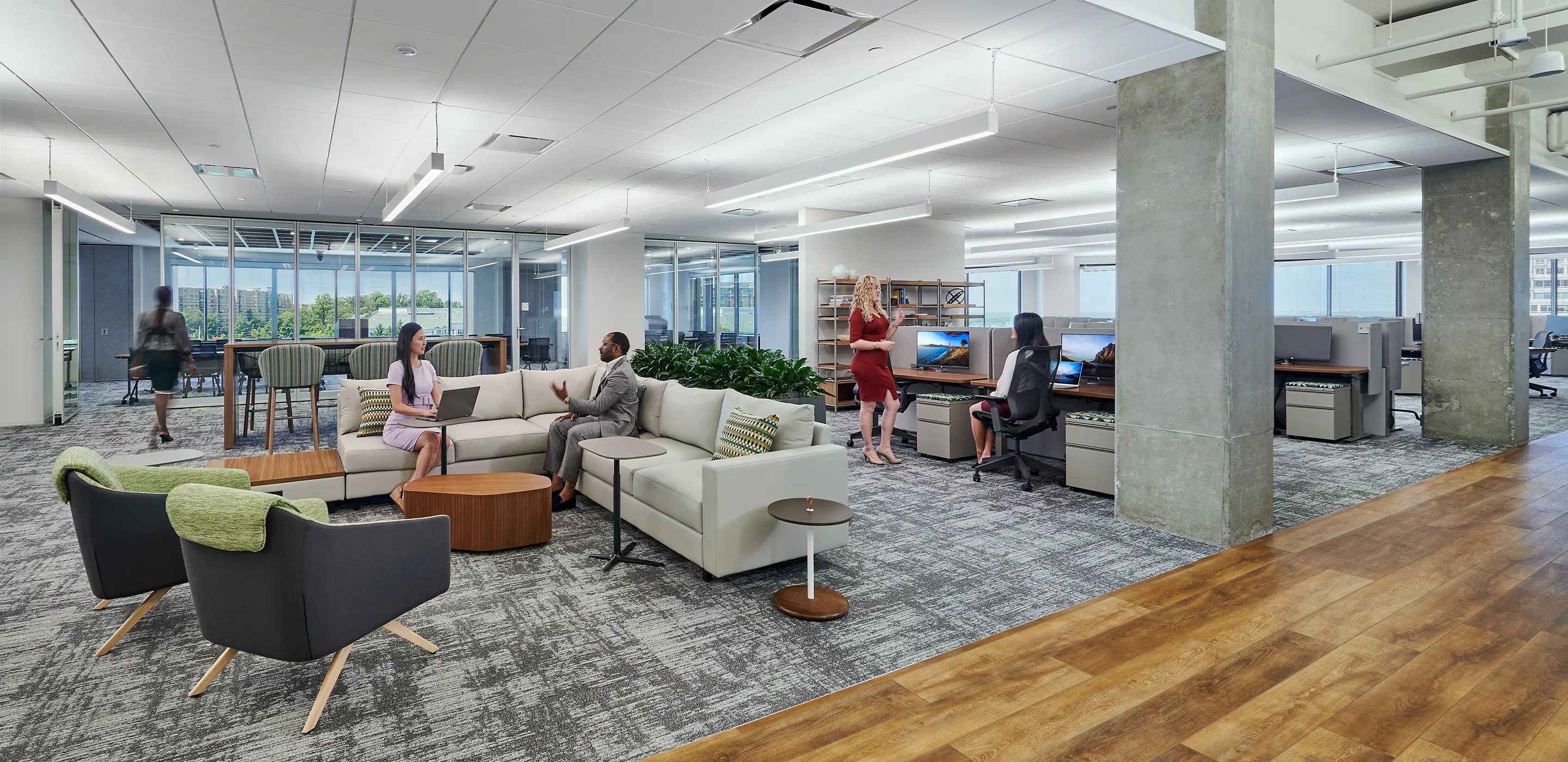
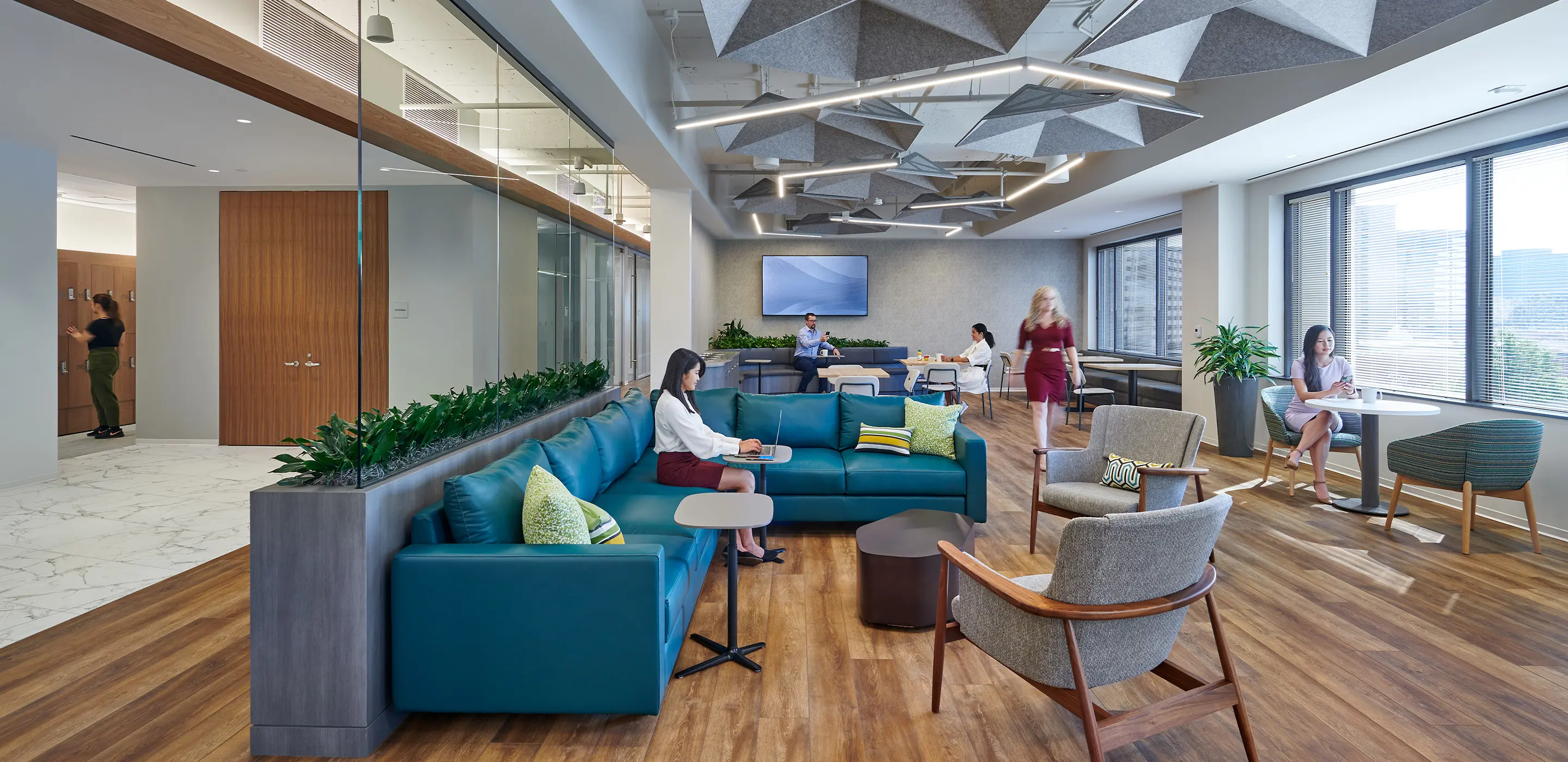
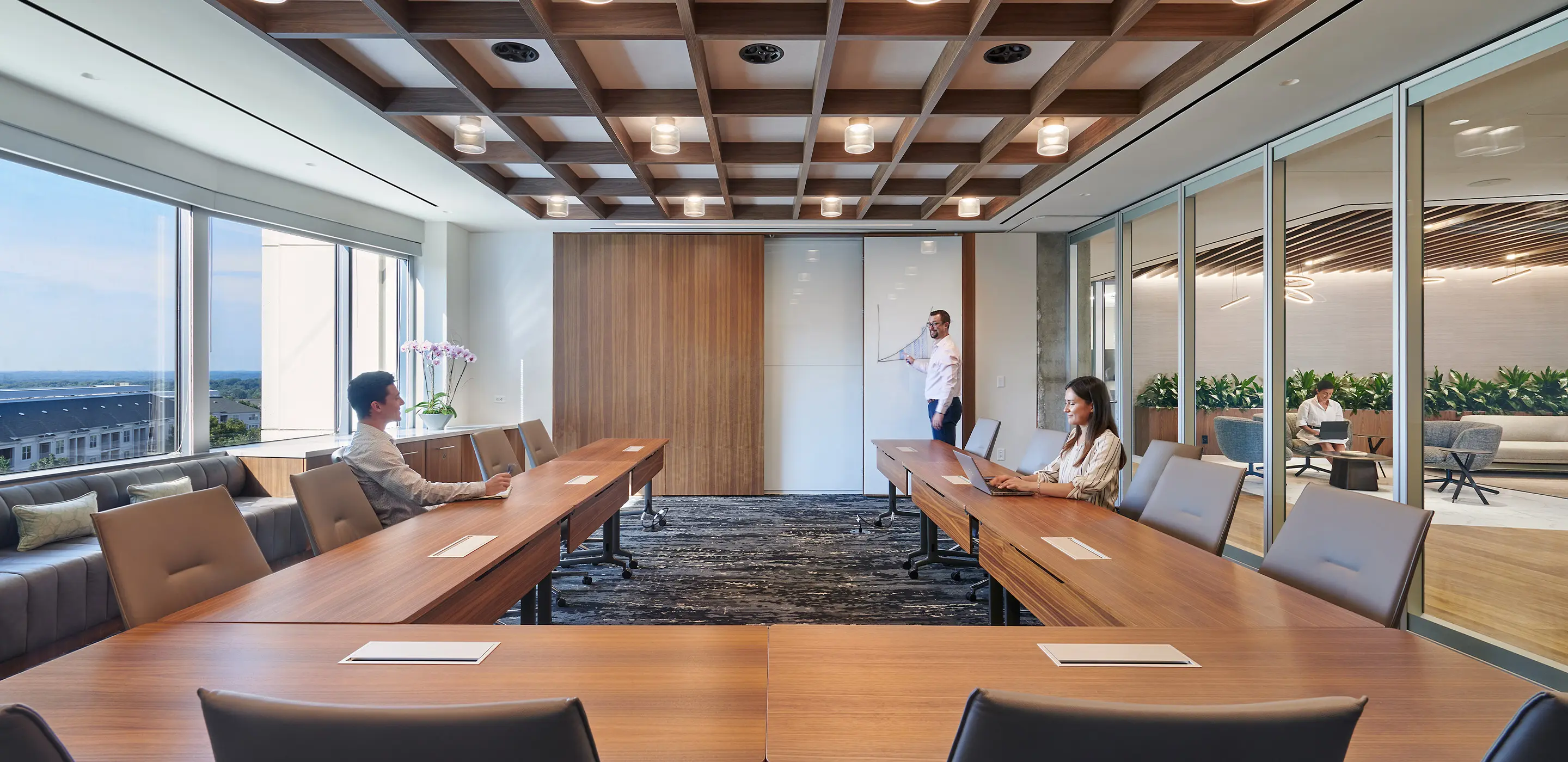
That question took its first full expression in the client’s new corporate headquarters near Washington, D.C. The project began with a practical constraint: identifying a location that could best support the firm’s government-facing work. Once secured, the design shifted toward building range and adaptability into the environment. Two full floors were organized to support multiple work styles and levels of engagement, balancing formal presence with a more relaxed, familiar atmosphere for both clients and staff. Technology integration anchors that flexibility. Staff can connect a laptop to any display or monitor throughout the space, allowing work to move easily between focused tasks, team sessions, and client-facing conversations.
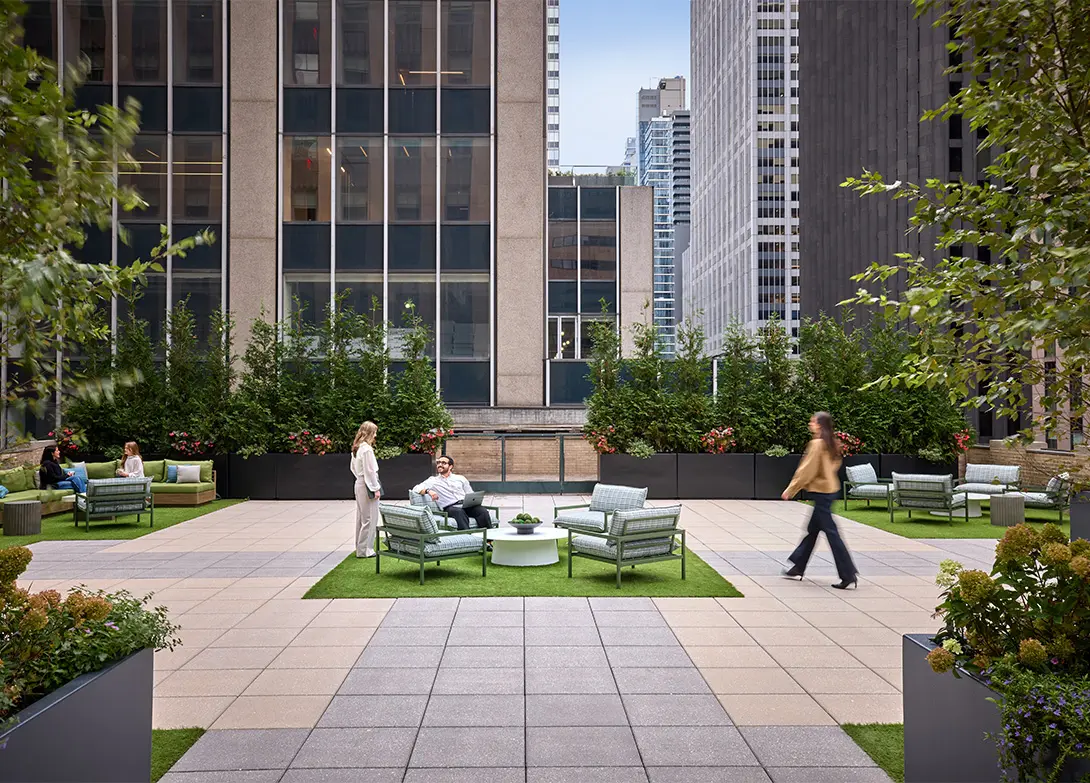
In New York, those same principles are translated into a denser, more vertical context, where the workplace becomes part of a broader North American rollout. Here, HED worked closely with the client’s local leadership and real estate team to align the space with global standards while capturing the energy of the city. The result is a flexible, tech-enabled office that supports a wide range of work modes. A client-focused conference center combines intuitive technology with a hospitality-forward experience, while a café anchors daily interaction. An 11,000-square-foot outdoor terrace extends that activity outward, offering space for informal work, gathering, and client events. Near the entry, a branded arrival sequence incorporates interview rooms that support recruiting and talent conversations, positioning the workplace as both operational hub and front door.
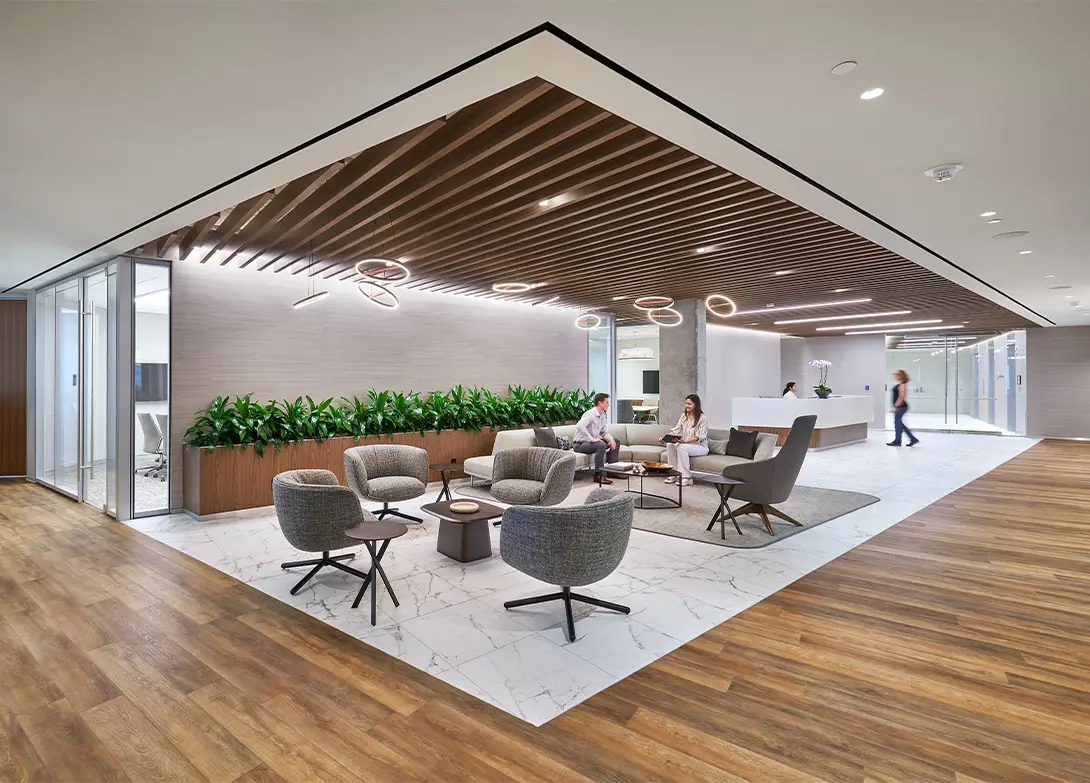
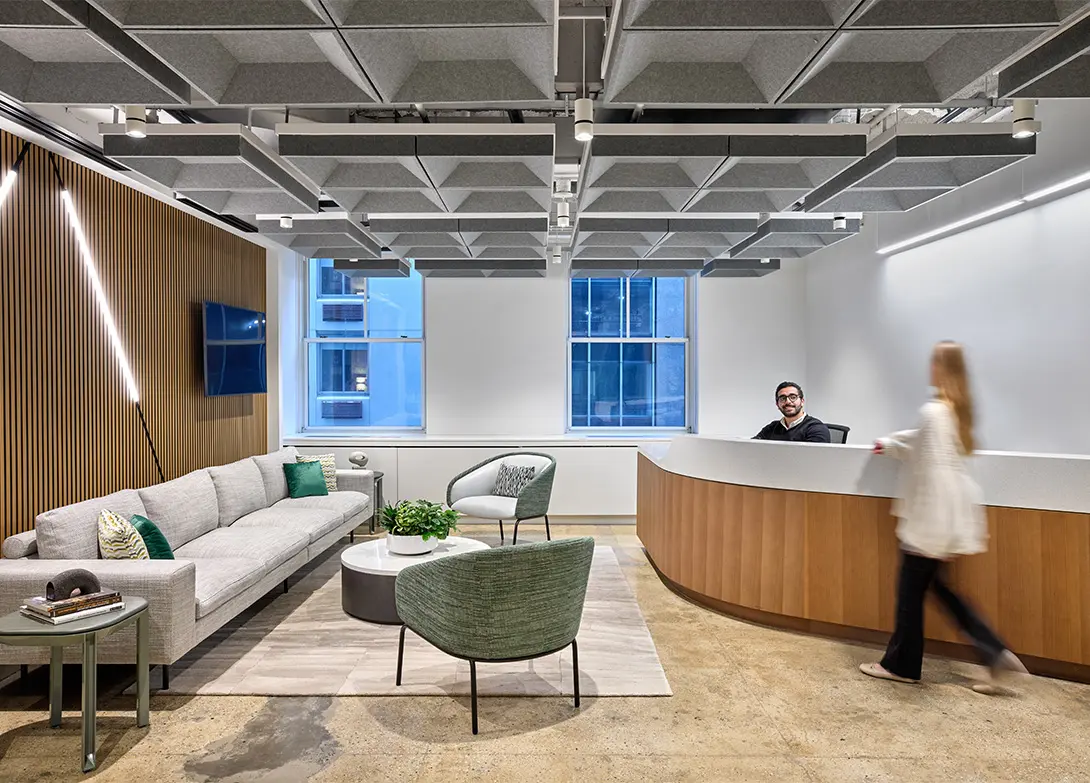
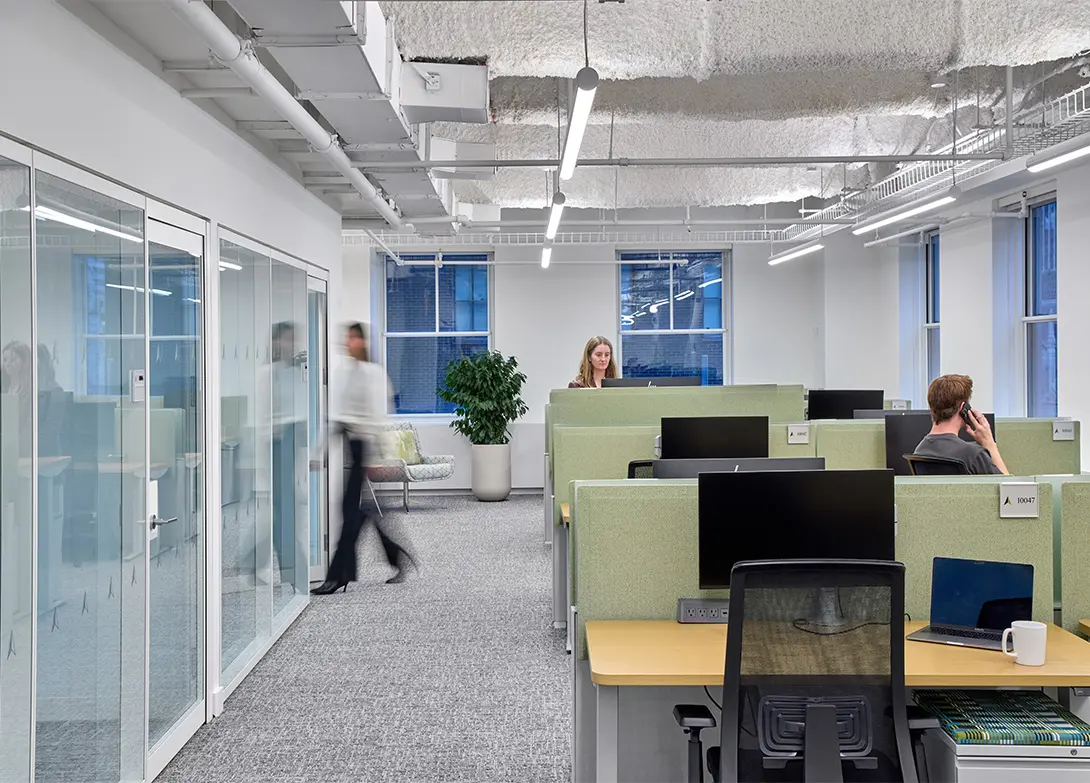
As the work extended across North America, the focus shifted from individual projects to a repeatable approach.
Office expansions and interior renovations were guided by the same underlying framework: align with Global Workplace Standards while allowing each location to take on the character of its region through input from local leadership. A Chicago-based team supported this effort, helping the client move with consistency across markets while responding to the pace and nuance of each site.
That consistency is not only spatial but operational. To better understand how space was being used at scale, HED conducted a utilization study across five offices in India, representing more than 2,400 staff across Kerala and Tamil Nadu. By analyzing employee key card data alongside peak occupancy patterns within a three-shift workday, the team identified where space could be reduced and where it fell short. The findings informed recommendations that align real estate decisions with actual behavior, reinforcing the same principle seen across every location: a workplace performs best when it is both measured and responsive.
Taken together, these efforts define a workplace strategy that is neither rigid nor ad hoc. It is structured enough to support a global organization, yet flexible enough to reflect local conditions. By getting it right early, the client is able to make smarter real estate decisions, reduce risk across markets, and shape environments that support both the demands of public sector work and the people carrying it forward.