Connecting History, Campus, and Sky at the University of Michigan
Perched on a hill at the edge of the University of Michigan’s campus, the Judy and Stanley Frankel Detroit Observatory has long been a symbol of the university’s history of scientific discovery. Built in 1854, it was the university’s first dedicated scientific research laboratory and remains its second-oldest standing structure. While a 1999 restoration carefully preserved the original building, the Observatory’s dramatic siting created accessibility challenges, its limited amenities restricted use, and its potential as an educational and cultural resource remained largely untapped. Fewer than 400 people visited each year, leaving the historic landmark underutilized.
To address these challenges, the university partnered with HED to design an addition that could expand access and programmatic potential while respecting the historic character of the original structure. The goal was to create a welcoming, functional, and modern support facility that would enable the Observatory to host educational programs, community events, and public sky viewings, all without compromising the integrity of the historic building.
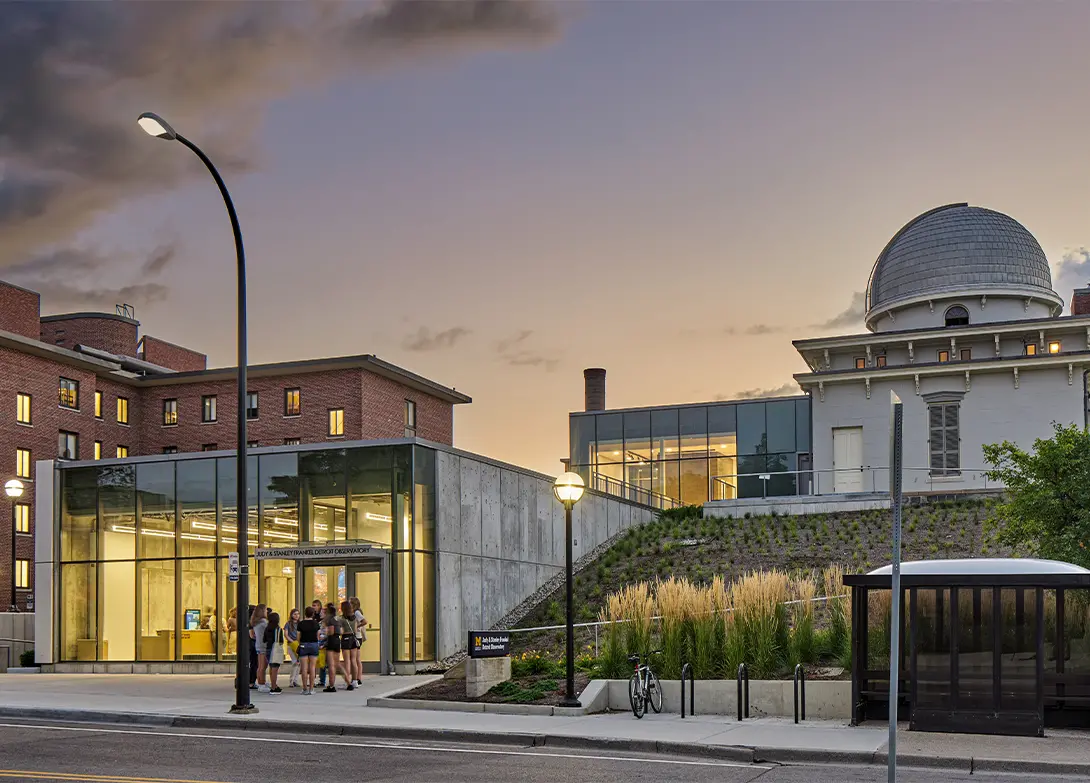
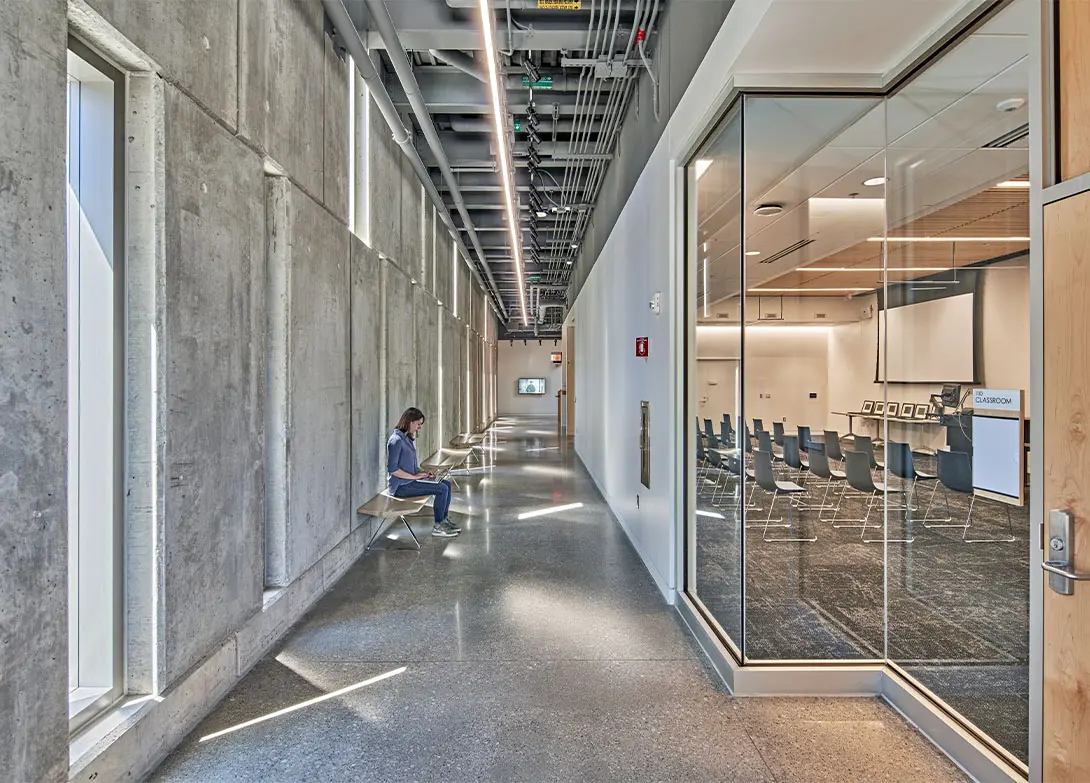
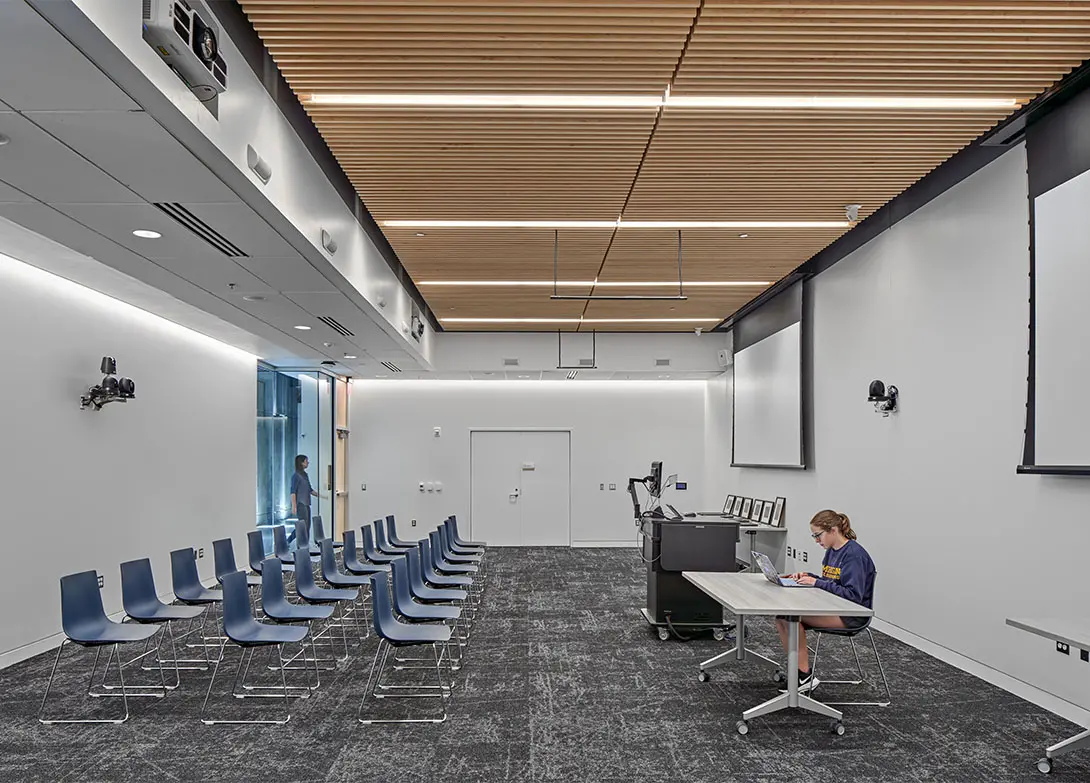
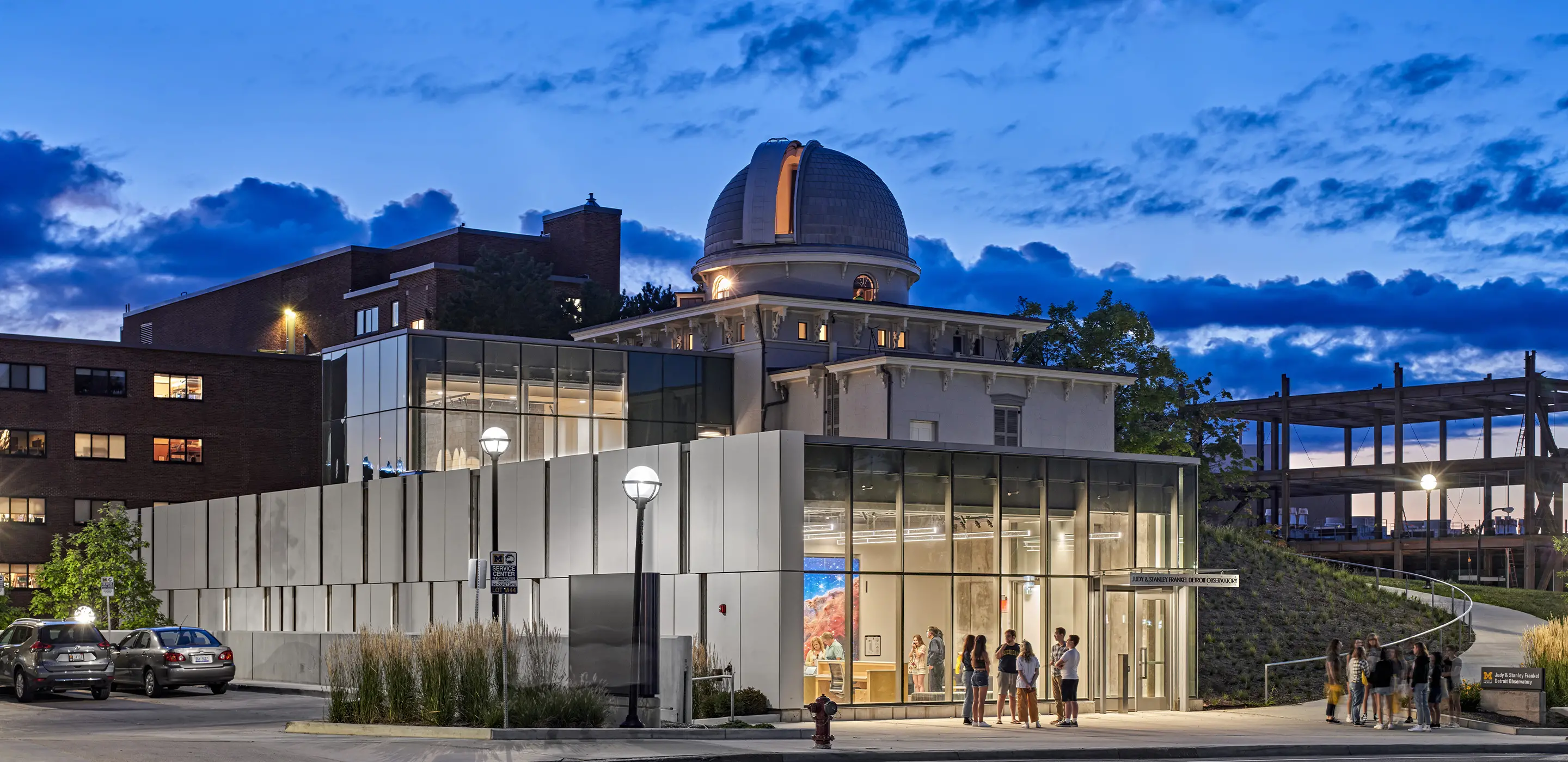
The new addition is tucked carefully into the hillside, minimizing visual impact and allowing the Observatory itself to remain the architectural focal point. From the street, quiet, refined forms establish a new presence for the Observatory, creating an identifiable entry point while complementing the original structure. Inside, a series of south-facing windows invite daylight deep into the building, connecting interior spaces to the changing sky. At night, these same windows glow with animated patterns of light, signaling viewing events and transforming the Observatory into a beacon for the campus.
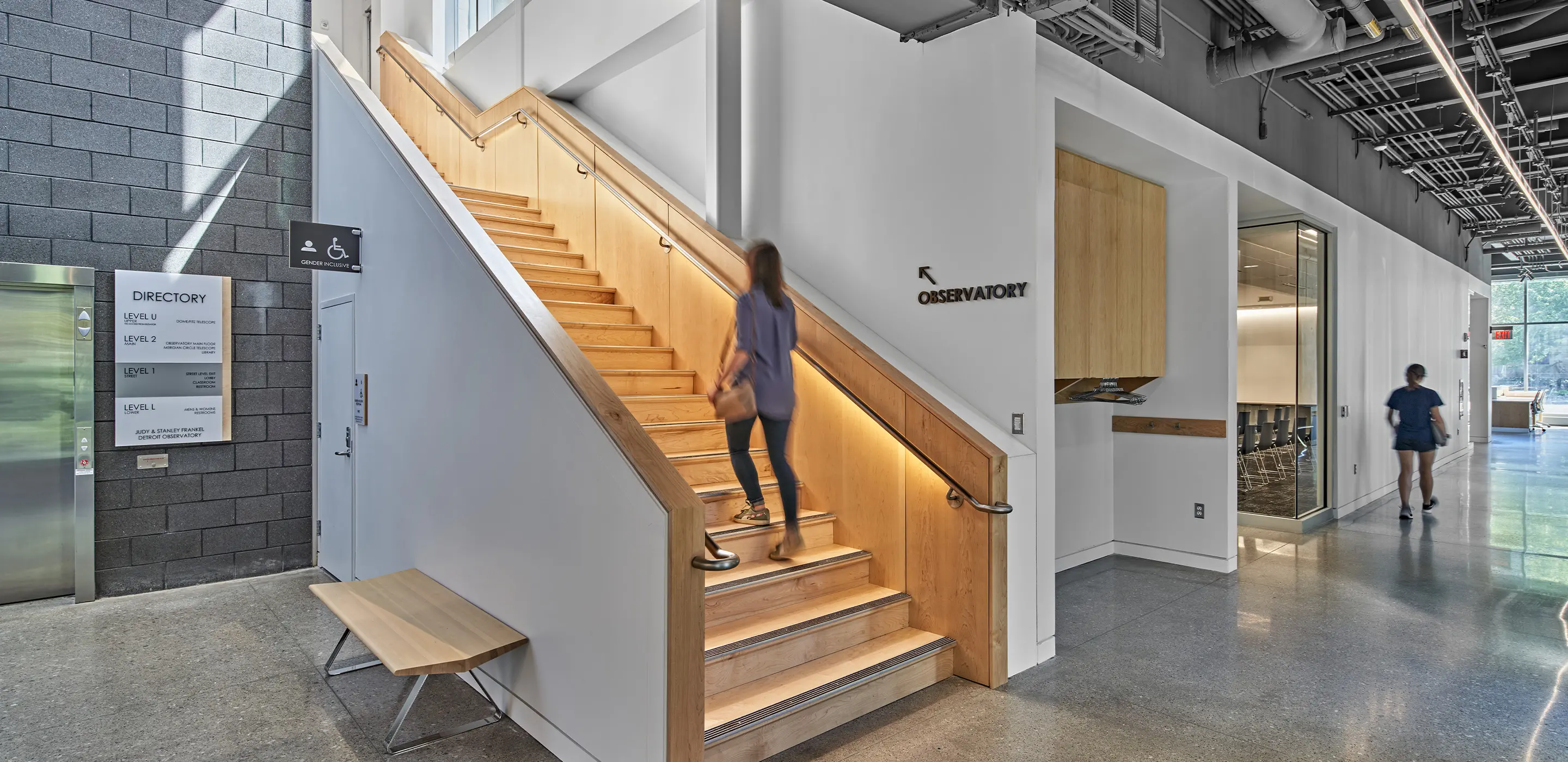
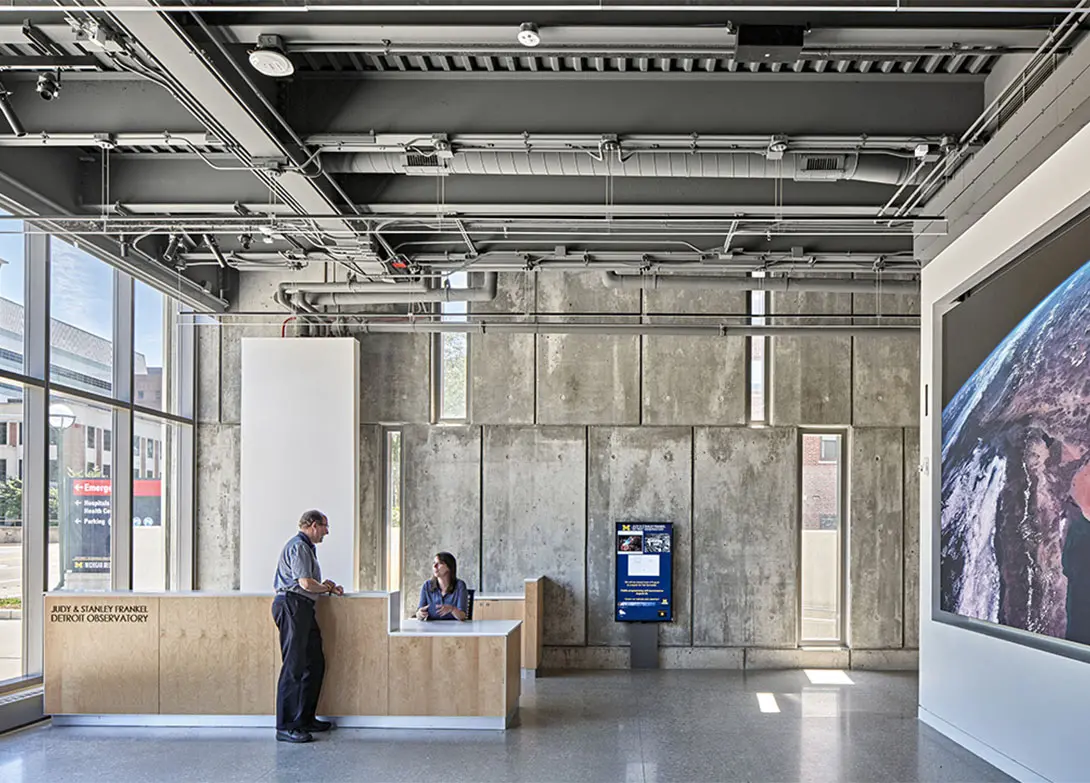
The expanded facility includes a multipurpose room designed to support educational programs, outreach events, and public lectures. A reception area, expanded restroom facilities, storage, and a small catering kitchen round out the new amenities, creating a more comfortable and versatile experience for guests. Landscape design played a critical role: portions of the hillside disturbed during construction were restored with naturalistic plantings that reflect the historic landscape, while the east-west student pathway south of the addition was re-graded to be fully accessible, eliminating a previous route through a service area.
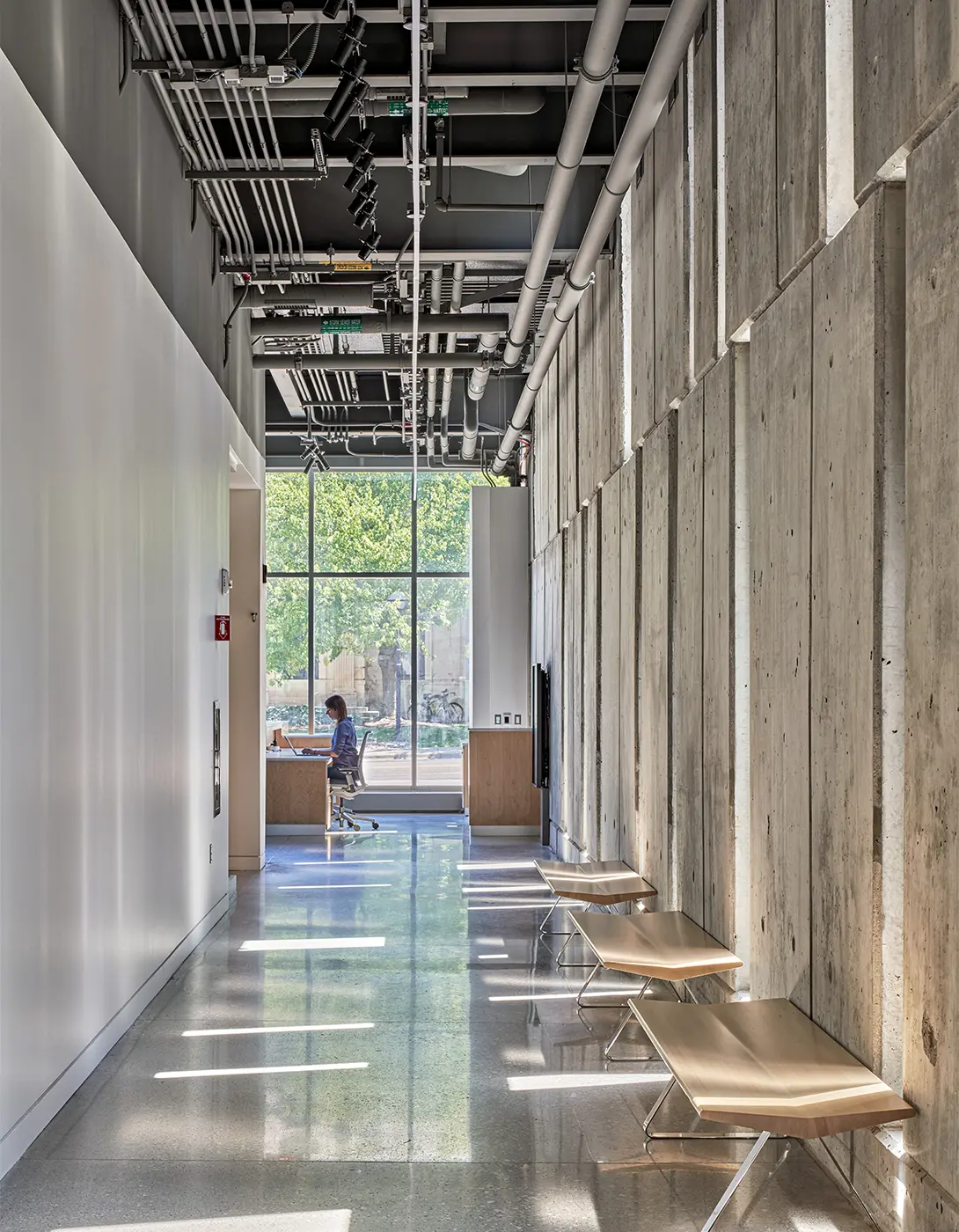
Now projected to become one of the most heavily used educational and outreach facilities on campus, the Detroit Observatory is once again a center for discovery—this time connecting history, science, and community in ways that extend far beyond its hilltop perch.
Recipient of a 2024 AIA Michigan Honor Award, the project demonstrates how thoughtful design can illuminate history while opening new horizons for learning and engagement.