What Berlin Can Teach US Cities About Placemaking
August 7, 2026
Cities built to endure
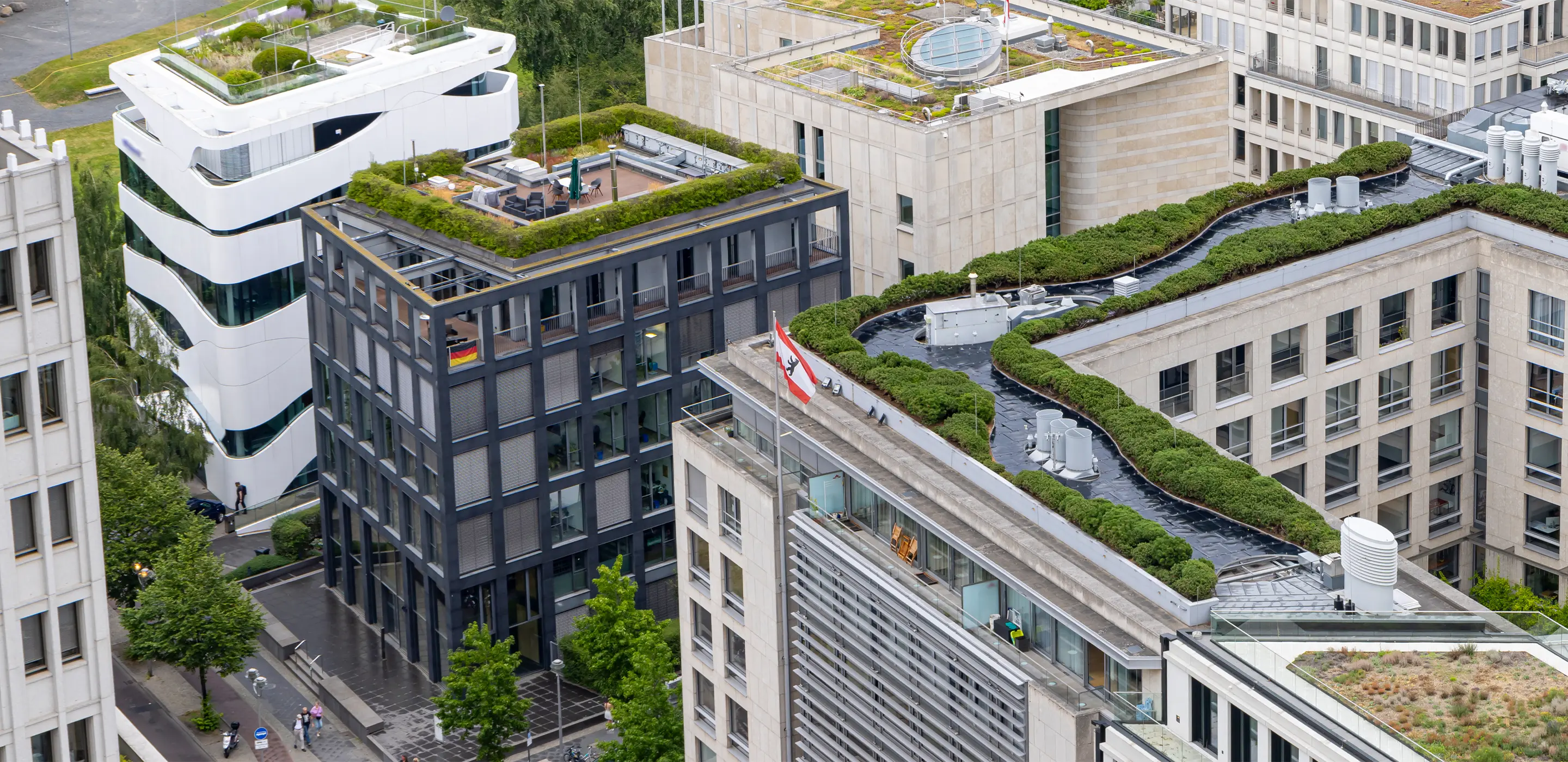
Creating a vibrant city builds upon many of the same design principles that shape a successful office, home, or school. Each requires us to consider how people connect, how they develop a sense of belonging, and how a place can respond to change without losing its identity.
Jeff Joerling, CPSM, LEED AP, Strategy & Development Leader at HED, recently joined civic and private-sector leaders from across Denver for the Downtown Denver Partnership’s annual Urban Exploration program. This year’s destination was Berlin: A German city repeatedly shaped by division, reunification, reinvention, and an enduring willingness to experiment.
Through the lens of a strategist grounded in human-centered design, Jeff considers what Berlin’s evolution can teach Denver and other US cities and how the principles behind a vibrant city are often the same principles behind a successful building.
What is the Downtown Denver Partnership’s Urban Exploration program, and what does it do?
Each summer, the Downtown Denver Partnership (DDP) embarks on their annual Urban Exploration. This event gathers passionate civic and private leaders from developers and builders to the Mayor’s Office and Denver Public Schools together to talk about urban development.
Each year, Urban Exploration visits a different city, carefully chosen for the goal of exploring ideas that can be brought back to Denver and implemented. Some ideas are big and inform the city’s long-term plan, while others are more tactile and approachable and can be rapidly tested. This year, I was fortunate enough to join the group, representing HED as we explored Berlin.
Why was Berlin selected as a city we could learn from?
Berlin is uniquely both a very old city and a very young city. It feels modern and historic at the same time and has evolved over the centuries.
WWII left Berlin over 90% destroyed, while the postwar era saw a race to rebuild each side of the divided city almost as a show of force. But it was when the wall came down, and the city was challenged with reunifying, that the most interesting era (at least through the lens of urban exploration) in Berlin’s history began.
How does a city, literally divided down the middle with pockets of isolation from the rest of the country and world, come together? Forget growth. The city was challenged again with survival.
Berlin and Denver have profoundly different histories. Where do you see meaningful parallels between them?
While Denver was never bifurcated like Berlin and is certainly not as old (by almost 700 years!) on its own scale, we experience many of the challenges Berlin has overcome.
Our “wall” may be a river or a railway, and our sectors may be defined by city and county lines. Just as Berlin is not the Bavaria we think of in German tourist brochures, Denver is not the mountain town people often associate with Colorado.
Denver has always been a city of pioneers. It’s a place that people with intention choose to move to. Its challenges are vastly different from those Berlin has faced, but Berlin’s continual reinvention offers a useful lesson: rebuilding is not simply about replacing what was lost. It is an opportunity to reconnect neighborhoods, bring people back into the public realm, and reconsider what a city needs to thrive.
As Denver and many other cities across the US confront downtown vacancy and a decrease in residents and pedestrians, the question is not how we replicate Berlin’s response, but what we can learn from its capacity to adapt.
What was your central takeaway from the experience?
At HED we are in the business of placemaking. Whether it is a new residential tower for seniors, an engaging workplace for a fast-moving company, or a brand-new STEM learning center, there are certain design considerations that make a great place a great place.
As we explored Berlin through the lens of how the city was built, rebuilt, and then rebuilt again, the same themes of placemaking kept surfacing. What makes a vibrant city are the same elements that make a great office, home, or school. At every scale, successful places create opportunities for people to connect, develop a shared sense of identity, move beyond physical and social barriers, feel safe, and adapt over time. Berlin made clear that these qualities do not emerge by accident; they must be intentionally designed into the places we inhabit.
How does connectivity contribute to a successful building or city?
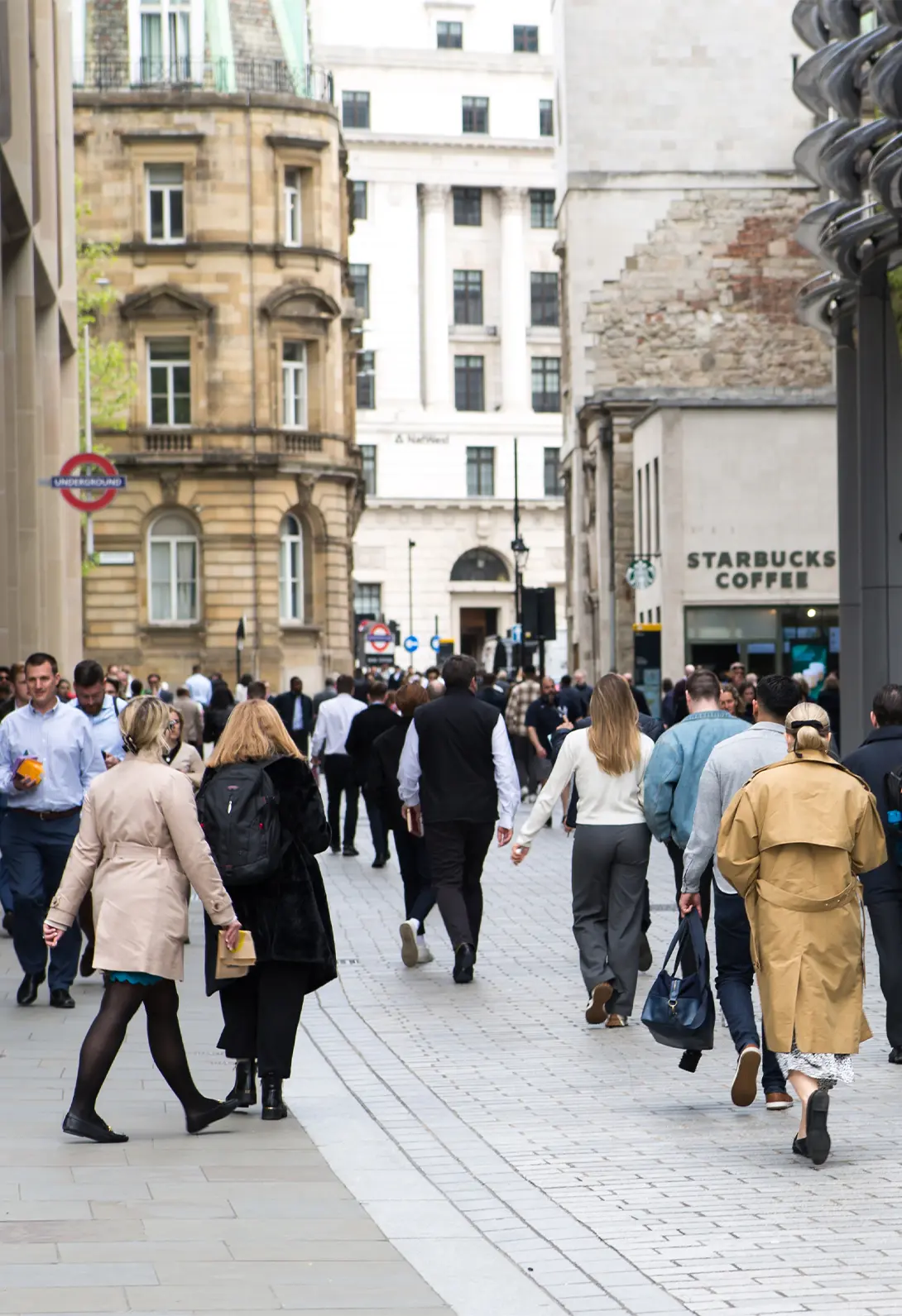
Now more than ever, a person’s entire life could be spent in isolation. But that’s not how humans are meant to exist. When we design an office, we create places for interaction.
We think about meeting rooms, of course, but also spaces for “collisions,” discovery, and chance encounters with coworkers you might not otherwise have reason to engage with. We create opportunities to display accomplishments and projects in progress.
The same idea goes for a city. Where can people gather? When something exciting or meaningful happens, where will people gravitate?
How can we create opportunities for residents and visitors to discover a new favorite park, restaurant, or art installation? And how does a city properly showcase what makes it special and acknowledge its past—our shared history, both joyous and painful?
Those connections that can be made in a well-thought-out space, or city, can last a lifetime.
What role does identity play in placemaking?
Identity gives people a reason to feel connected to a place. It reflects what an organization or community values, shapes how others perceive it, and reinforces the shared culture of those who belong there. Smart placemaking addresses questions like: What does it mean to belong here? How would we describe this place, and how would others describe it? What makes its culture distinct?
Throughout a city, places and landmarks can tell its story, express what it values, and remind people why they chose to call it home. Like pictures on a wall, that story should be present all around us. Not confined to plaques, but brought to life through murals and art walls, community-driven public art, monuments, statues, and interactive installations that invite people to participate.
How can design help overcome the barriers that divide people and places?
Whether it is a barbed-wire-covered wall, a river, or a railroad system, physical seams can divide a city and shape how people move through it, experience it, and relate to one another. The same is true at the scale of a building: a corridor-laden school can isolate students and teachers, just as an office divided across floors can weaken connection and collaboration.
Some barriers are unavoidable, but their effects do not have to be. Great design can soften these divisions by creating clear pathways, shared destinations, moments of visibility, and reasons to cross from one side to the other. The goal is not simply to connect two points, but to make that connection feel intuitive, welcoming, and even enjoyable.
Why must safety be understood as more than just physical protection?
Without creating a safe place for all residents and visitors, none of the other considerations matter. Safety begins with physical protection from violence, hazards, and environments that feel difficult to navigate or oversee, but it must extend further. A truly vibrant city or space also supports psychological safety: the confidence that you are welcome, visible, respected, and able to participate without fear of exclusion.
Design plays a role in both. Clear sightlines, thoughtful lighting, intuitive circulation, accessible routes, and active public spaces can support physical security, while inclusive amenities, varied places to gather, and environments that reflect the people who use them can foster comfort and belonging. When people feel that a place was designed with them in mind, they are more likely to inhabit it fully, look out for one another, and contribute to a shared sense of safety.
How should cities and organizations prepare for growth and change?
As great as an organization or city may be, a vibrant future depends on growth. Not just change for the sake of change, but thoughtful plans for expansion and shifting populations. Preferences and trends will evolve.
Today it may be large private offices, and tomorrow open collaborative spaces; the same way today may favor large forums for live performances, and tomorrow may call for more intimate, interactive gatherings.
Room to grow, and a plan to accommodate that growth and change, are vital to the longevity of any great place.
What lessons do you hope carry forward from Berlin?
What stood out most to me wasn’t just what Berlin has built, but how it continues to approach change with intention, creativity, and a willingness to embrace complexity.
There’s an energy in Berlin that comes from constantly reimagining what the city can be. It’s not about erasing the past, but about layering new ideas on top of it in a way that feels authentic and forward-looking. That mindset is incredibly powerful.
Back in the states and in our own cities and communities here, I hope we carry forward that same sense of possibility. We want to have the confidence to experiment, to invest in connection and identity, and to design with both purpose and flexibility. If we can channel that energy into how we shape our neighborhoods, our downtown, and our shared spaces, we have an opportunity to create something truly lasting and uniquely our own.