Thoughtful Spaces for Transitional Kindergarten
June 11, 2025
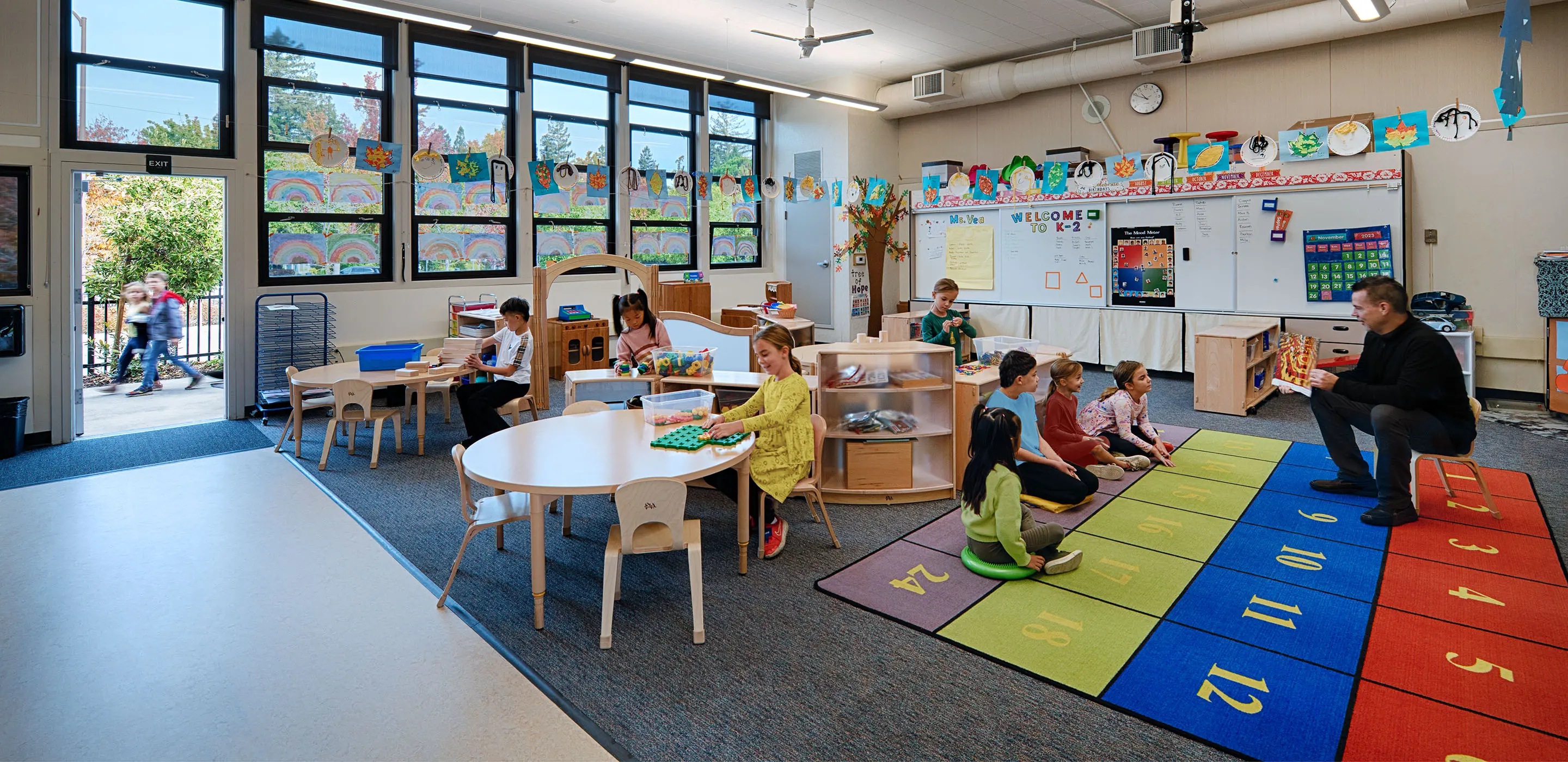
Early Education Environments that Resonate
Investments in Transitional Kindergarten (TK) is reshaping the educational journey for young learners.
More than an early start, TK offers districts an opportunity to set the tone for student success—academically, socially, and emotionally. TK is about creating a campus experience that gives our youngest learners a foundation for belonging and curiosity as they enter early education.
As these buildings become part of existing campuses, they also introduce new dynamics, aimed at giving young learners the best possible start.
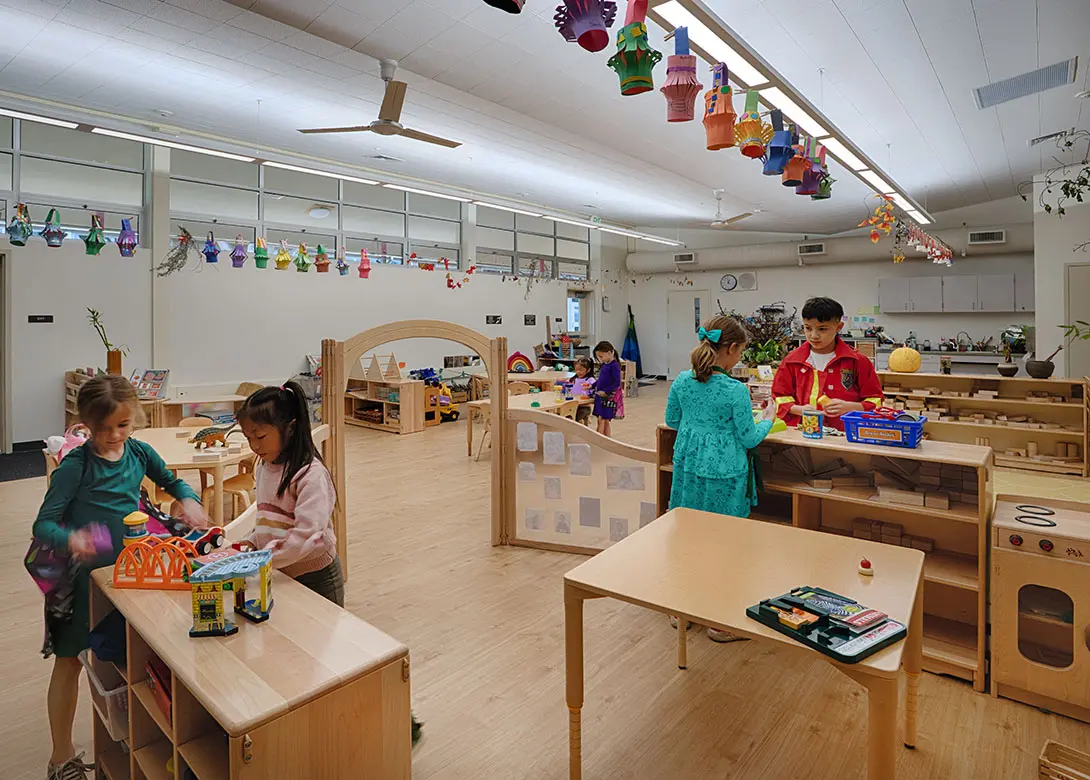
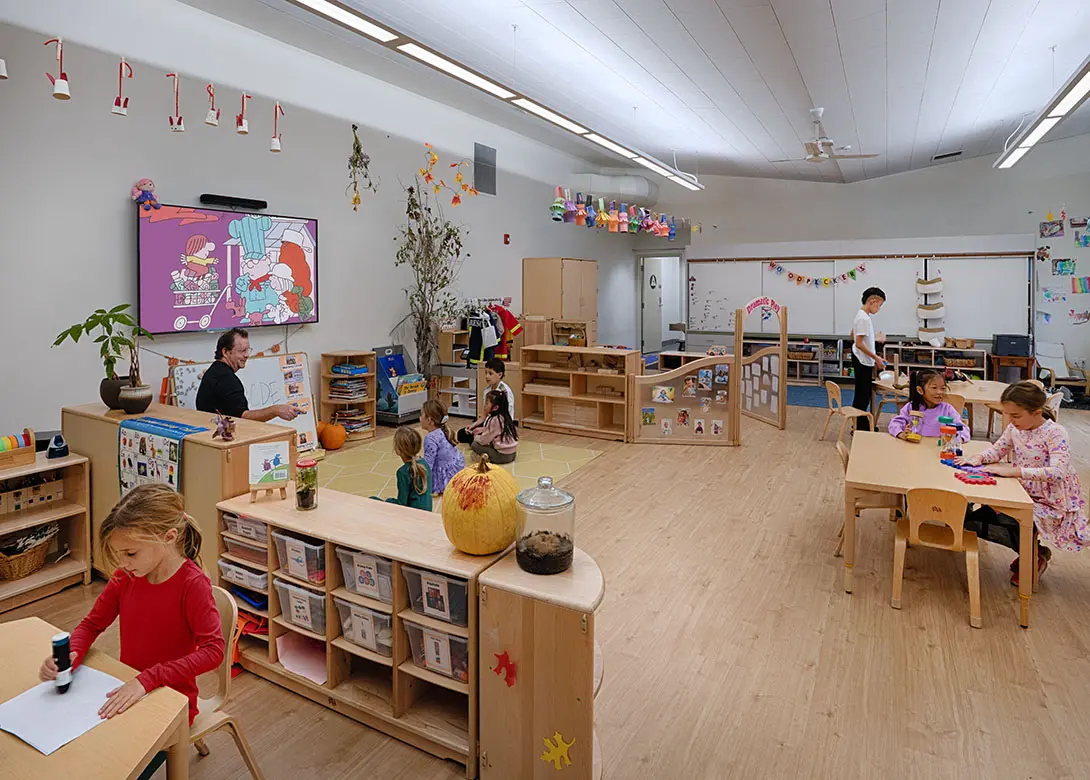
Here are eight essential considerations HED brings to every TK project so that the spaces we create are safe and engaging for the children, parents, and educators who use them every day.
1. WELCOMING LOCATION ON CAMPUS
TK classrooms are intentionally placed, typically, near the front of the campus. In addition to clear visibility, this provides accessibility, safety, and a smoother transition for families. Parents often walk children in to drop them off and again to pick them up. Proximity to drop-off zones minimizes stress, makes mornings and afternoons manageable, and eases the emotional handoff at the door.
2. CREATING A COMMUNITY OF LITTLES
Positioning TK classrooms near kindergarten rooms supports peer familiarity and developmental alignment of young students. These buildings form a “mini-campus” where young learners thrive in a setting designed just for them. With their own playgrounds and learning zones, students are able to feel seen and safe.
3. SECURITY THROUGH LAYOUT
Through strategic positioning, the building itself becomes a buffer. Windows are placed higher on the outside-facing walls, and lower on the interior or courtyard-facing walls. Play areas are tucked behind structures rather than exposed to public view. These subtle but effective orientations protect children while creating a nurturing, enclosed experience.
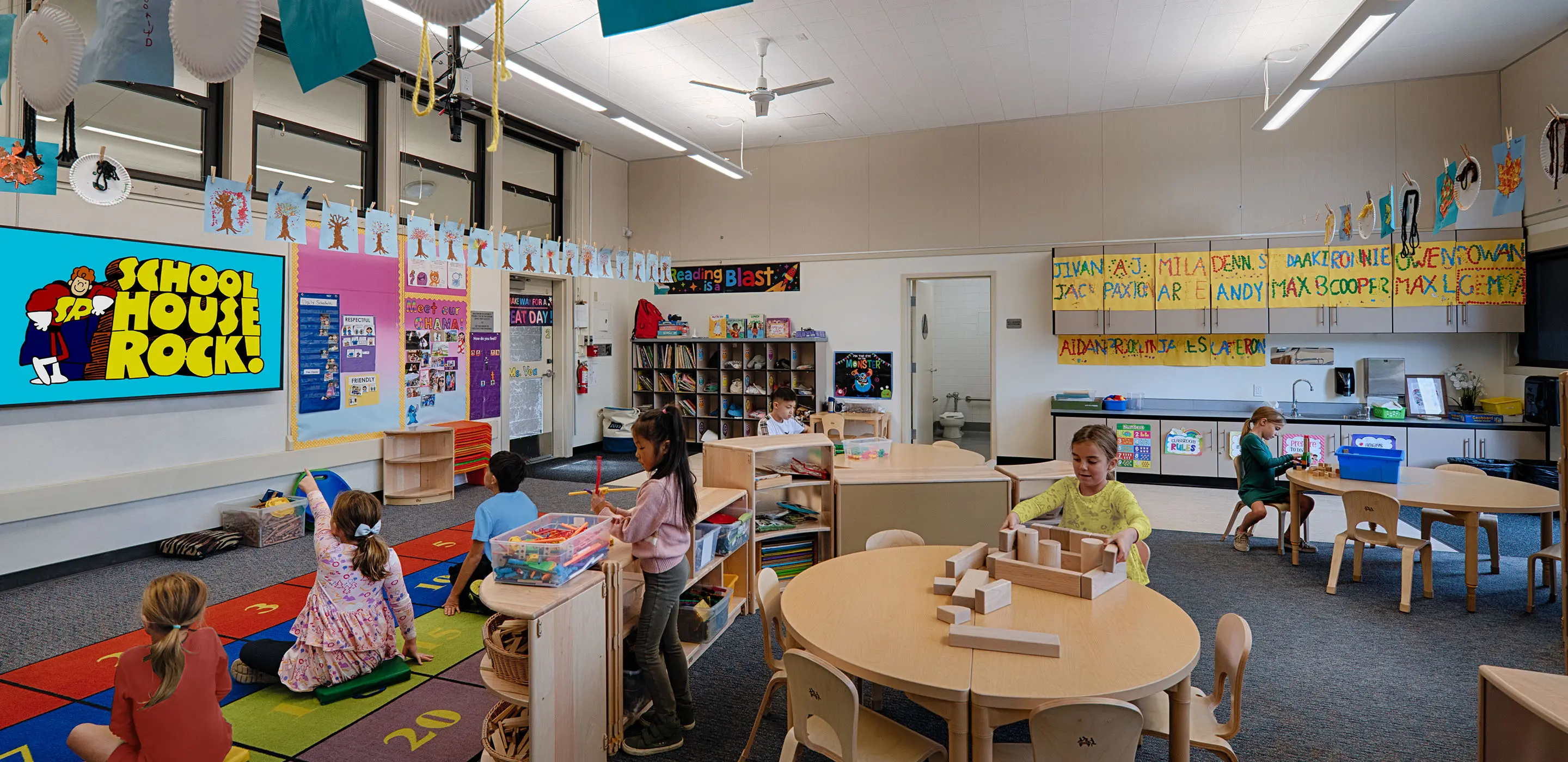
4. CLASSROOM DESIGN TAILORED FOR AGE FOUR
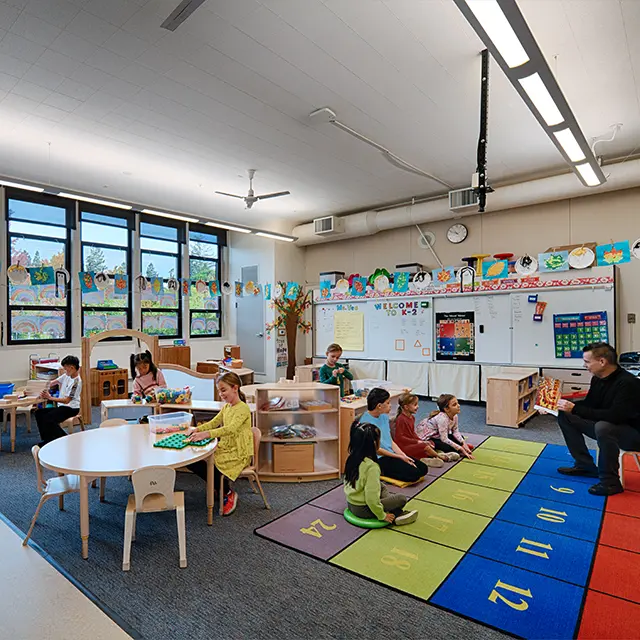
California mandates larger TK classrooms—up to 400 square feet more than standard rooms. That space matters, allowing for integrated, age-appropriate amenities like in-class restrooms, lower-mounted boards and storage, and ample space for movement and learning zones. These large, open-concept, flexible spaces allow the room to adapt to learning needs, and evolve with the class.
5. FLEXIBLE INTERIORS FOR ADAPTIVE LEARNING
We design TK classrooms as blank canvases. With castered furniture and movable storage, teachers can transform the environment based on curriculum, student needs, or the season. Thoughtful material choices (like a blend of carpet and resilient flooring) support everything from quiet reading areas to messy art spaces.
6. CALMING CONNECTION TO NATURE
Biophilic design (design focused on the connection and incorporation of nature) is part of our nature as humans. In TK spaces, this shows up in operable windows, high clerestory glazing for privacy, and visual and physical connections to sensory gardens or natural play. These features promote calm, creativity, and well-being in students and staff alike.
7. PLAYGROUNDS WITH PURPOSE
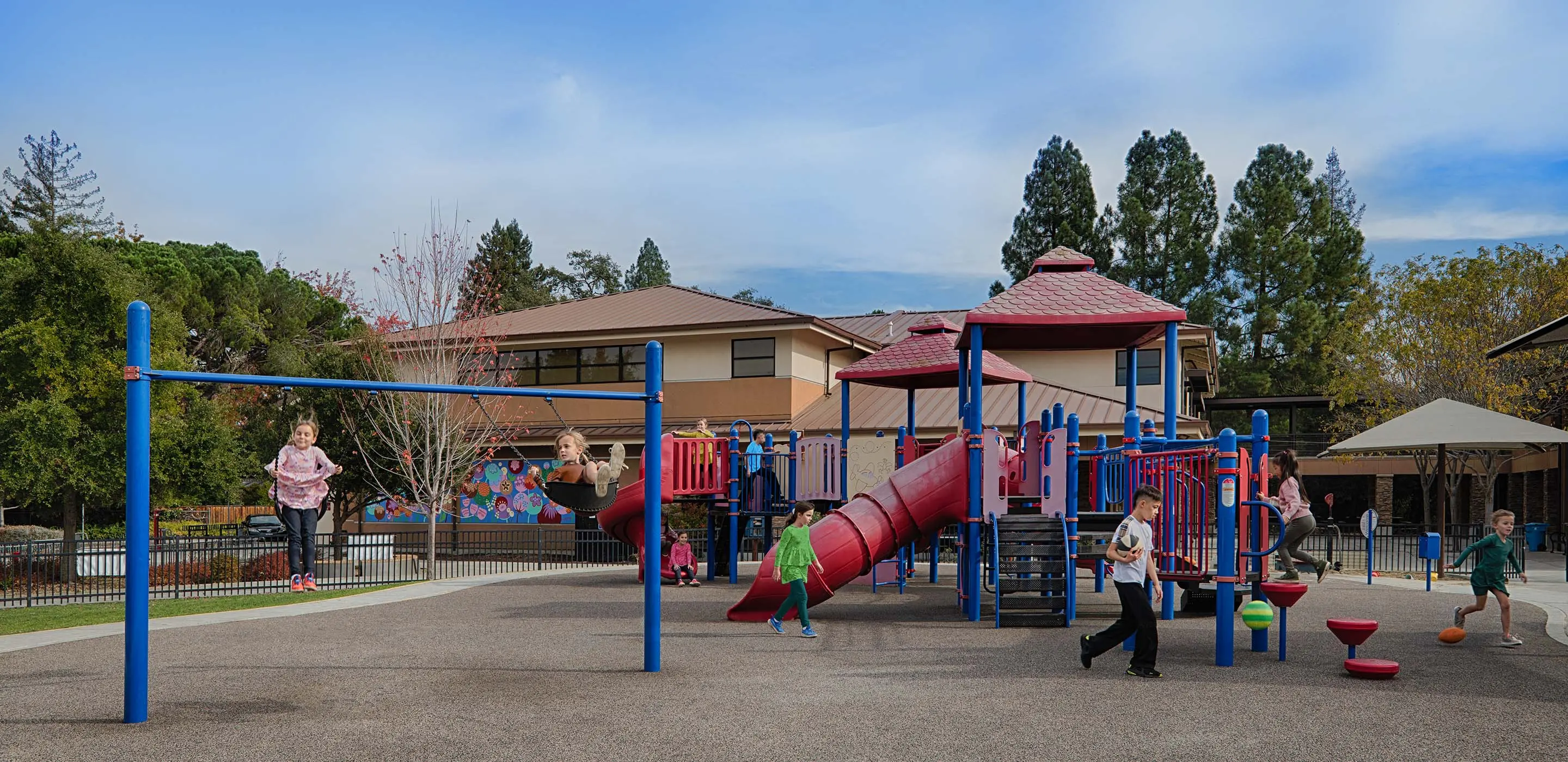
Play is learning. That’s why we go beyond the standard set of swings and slides. TK play spaces include textured paths, gamemarked pavements, chalk zones, and opportunities for sensory exploration, all intentionally designed to expand learning outdoors. Age and height-appropriate spaces allow young students to explore and express their growing minds in safe and engaging ways built just for them.
8. INTEGRATED PLANNING FOR SMARTER OUTCOMES
TK classrooms are often additions to existing schools, but success hinges on more than their construction. Our integrated design team works closely with districts to evaluate site master plans, align classroom placement with broader campus goals, and surface costs or sequencing issues early. This helps avoid reactive redesigns and keeps projects on track. Thinking about pick up/drop off zones, staggered traffic times, and inclusive accessibility can set a foundation for further success within the classroom.
Because the first places we learn shape not only how we think—but who we become.
Built for Belonging
Transitional Kindergarten is about creating a meaningful first step into the world of learning, independence, and social connections. These early environments play a powerful role in shaping how children experience school and how families experience community.
At HED, we believe in building environments that welcome our youngest learners and spark imagination. A smartly designed TK can give every child a safe, encouraging, and thoughtful beginning. Considered design of all aspects of the classroom and campus benefits not only students, staff, and families, but the larger neighborhoods and community as a whole