The Case for Modular Construction
August 23, 2024
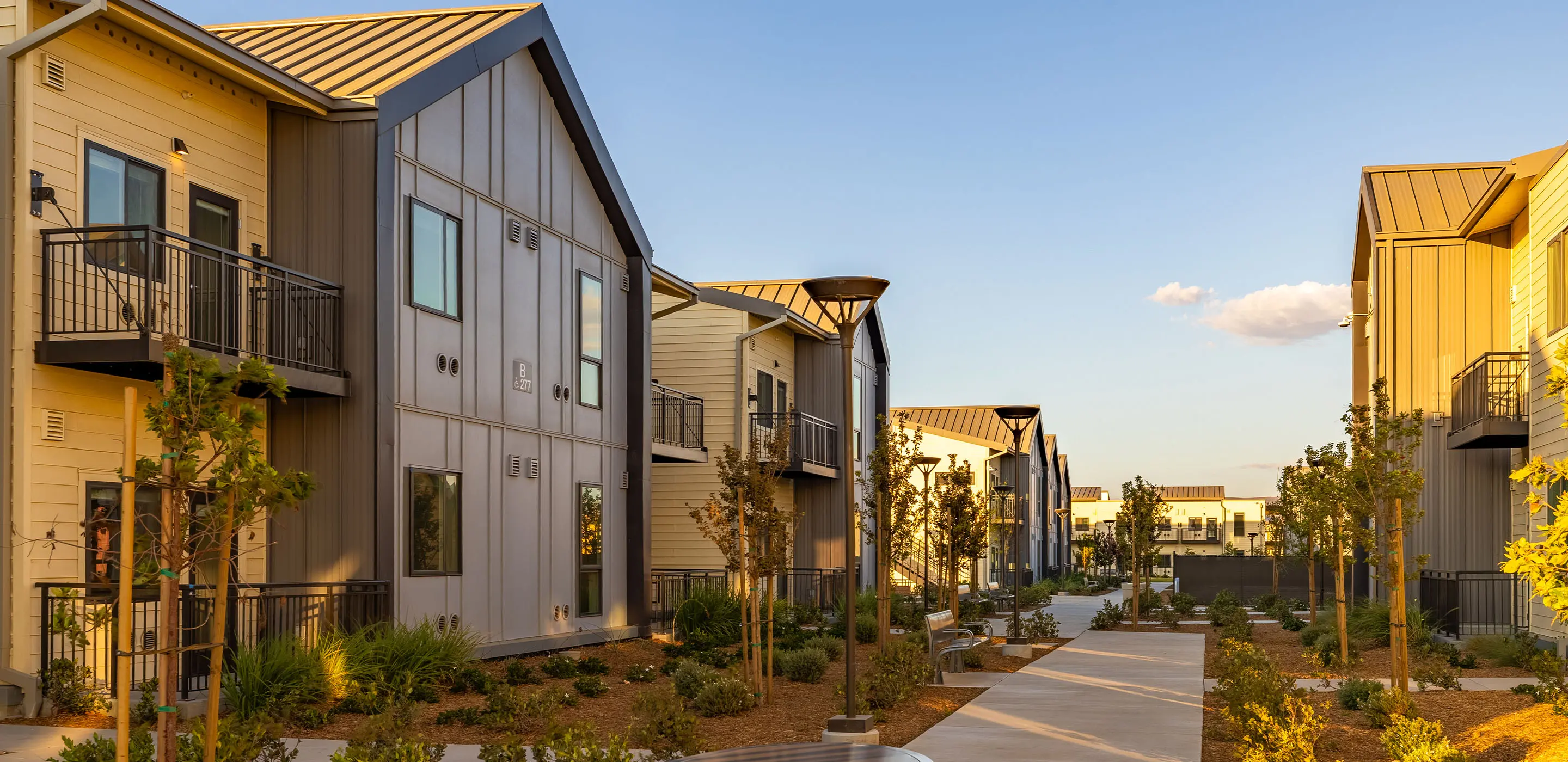
Fast, affordable, innovative
Modular construction has emerged as a promising method to address the growing demand for housing solutions that are quicker to market and more affordable. It is an innovative approach where building components are prefabricated in a factory setting and then assembled on-site, offering significant time and cost savings.
The ability to produce large quantities of standardized units in a factory setting not only accelerates the construction timeline but also leverages economies of scale to bring down costs. The streamlined process reduces waste, enhances quality control, and mitigates many of the risks associated with traditional construction methods. However, achieving these benefits hinges critically on collaboration with experienced general contractors and factories during the design phase.
Without a design that aligns with the principles of modular construction, the promised efficiencies can evaporate due to increased variation and complexity. Similarly, those same efficiencies in design may not come to fruition if all parties do not understand the goals, standards, and specifications of the client and design intent in the preconstruction phase. Understanding workflows, particularly related to shop drawing processes, understanding factory standards, and early coordination of systems and interior finishes will minimize variations in the construction of the components.
The Efficiency Potential of Modular Construction
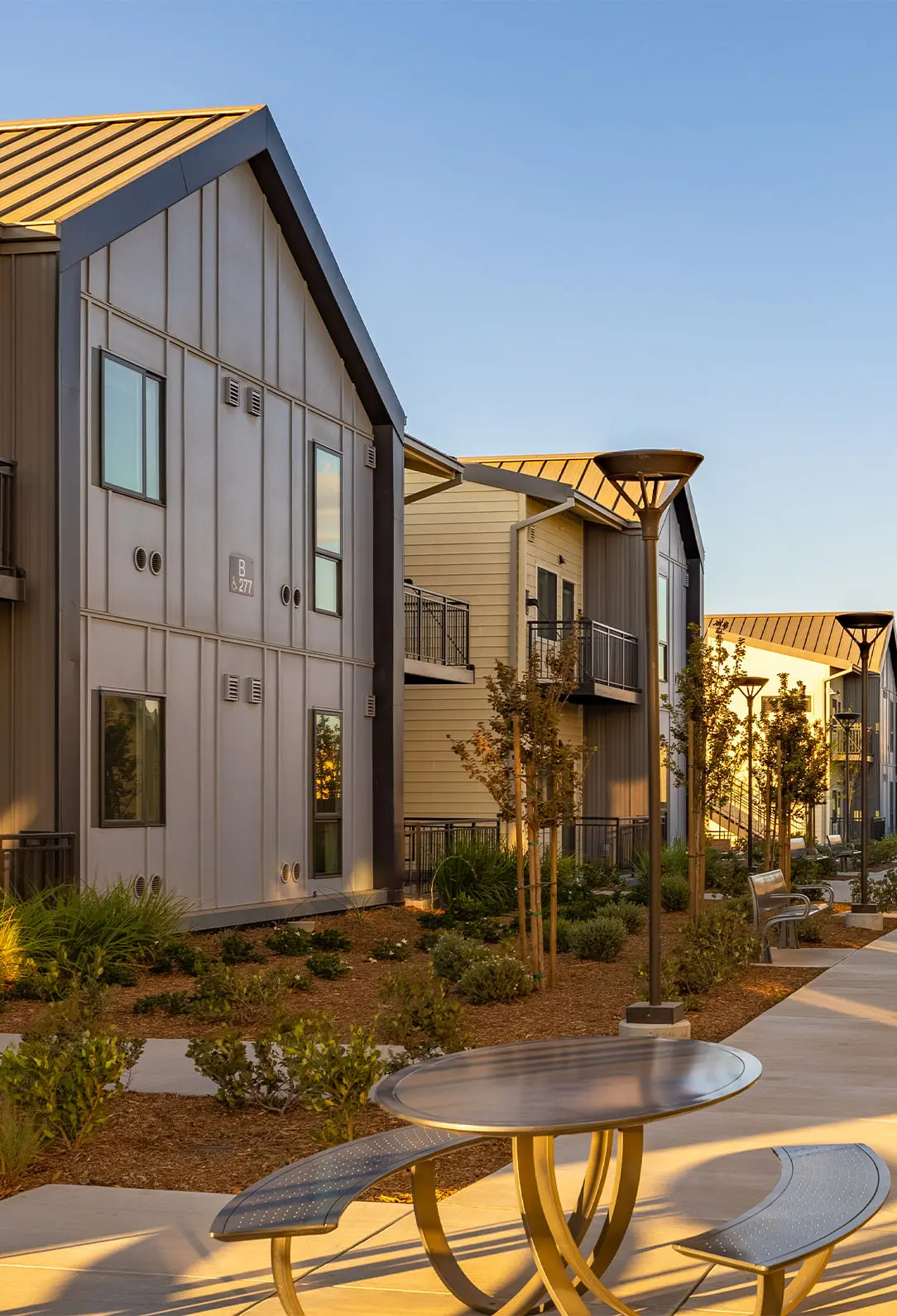
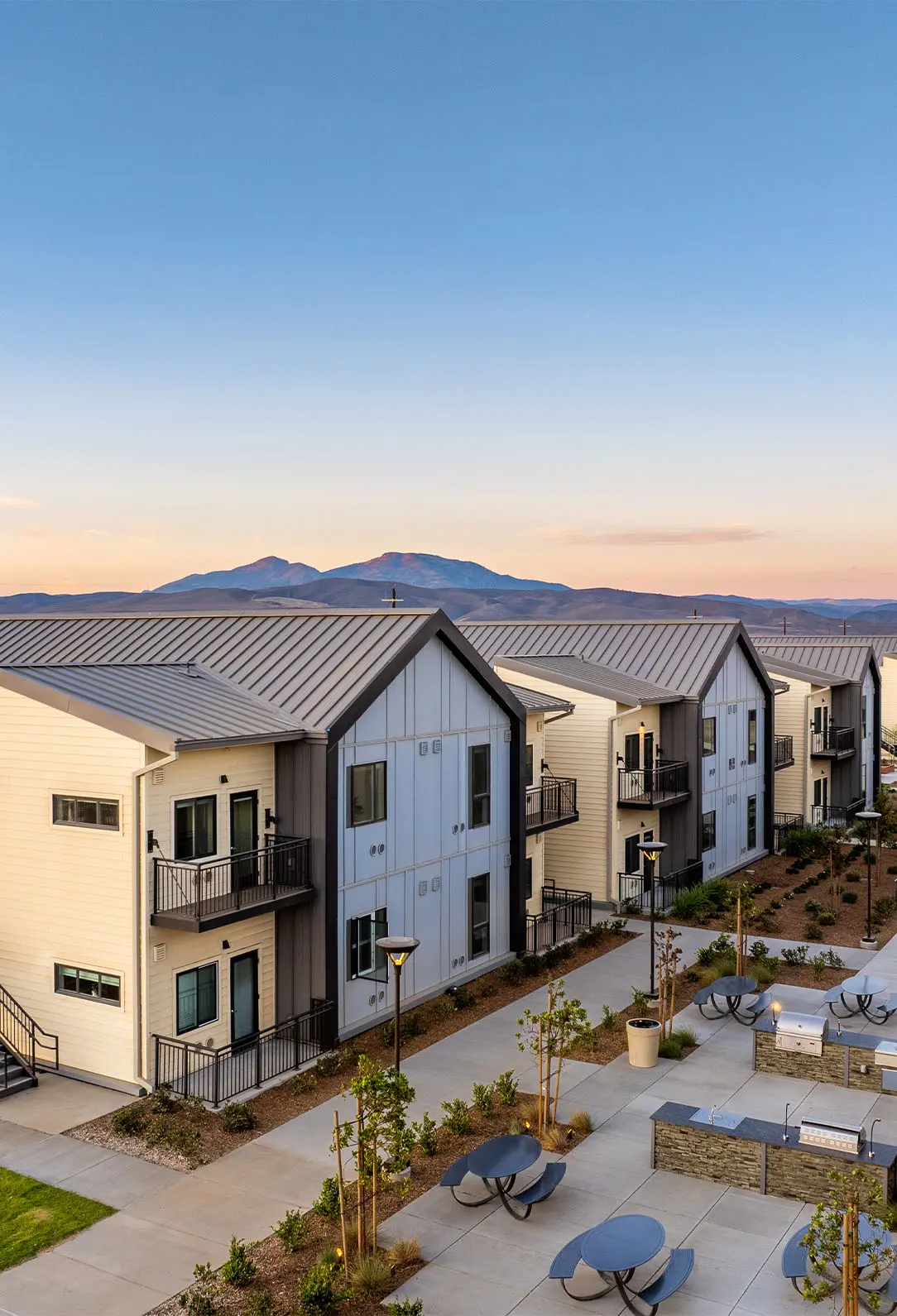
Modular construction is particularly well-suited for projects like 3-star hotels and affordable multi-unit housing. These types of buildings benefit greatly from the potential for rapid, scalable construction.
A key to this efficiency is the ability to standardize units, which allows for large volumes of square footage—ranging from 4,000 to 11,000 square feet per day—to be produced in a controlled factory environment. More standardization and fewer variations contribute to producing more square footage daily which is key to keeping costs down and efficiency high. Moreover, this controlled environment mitigates common on-site delays related to weather, labor shortages, and material logistics.
The Importance of Unit Standardization
At the heart of effective modular or prefabricated construction is unit standardization. By minimizing variation, more consistent and repeatable units can be manufactured swiftly and cost effectively.
Here are the critical aspects of standardization:
Uniform Unit Dimensions
Keeping the module sizes consistent across the building ensures that each unit can be produced in a repeatable, assembly-line manner. This standardization reduces the need for customized production, which can introduce delays and increase costs.
Repeatable Floorplan
Designing buildings with central corridors and identical unit layouts simplifies the manufacturing process. Each floor can be replicated with minimal changes, further enhancing the speed of construction.
Consistent Fixtures and Finishes
Using the same fixtures and finishes throughout the building reduces the variability in the production process. This consistency helps in bulk purchasing, reduces the complexity of the installation process, and minimizes potential errors.
Shear Walls
Consistent shear wall designs that stack uniformly should be considered to avoid inconsistent stud packs and sheathing between different levels of the building.
Optimizing Building Siting for Modular Construction
While the design of the units themselves is crucial, the siting of the building plays an equally important role in realizing the benefits of modular and prefabricated construction. These methods are best suited for sites with regular geometry, where the straightforward layout allows for efficient assembly. Sites with clean, regular geometry are ideal for adapting modular or prefabricated delivery, accommodating simple layout, and maximizing site usage.
To that end, the site must also provide sufficient space to accommodate the delivered modules and units as they are brought in and assembled. A cramped or constrained site can slow down the process significantly, negating the time savings offered by either method of construction.
In conclusion, the promise of modular and prefabricated construction—offering speed to market and standardization —can only be fulfilled when the design serves the approach. Standardizing unit sizes, layouts, fixtures, and structural elements minimizes variation, while selecting appropriate sites for assembly ensures that these efficiencies are maintained throughout the construction process. With thoughtful design and planning, modular and prefabricated construction can revolutionize the way we build, making quality housing and hospitality facilities more accessible and affordable.