Environments reflective of the people they serve
At HED, inclusion means designing environments that reflect the people who live, work, and gather in them. Inclusion is the principle that informs how we move beyond stated needs to uncover deeper narratives within the communities we serve. This is how design transcends functionality to become truly transformative.
In every project, we ask how the built environment can best reflect and support the community it serves. We consider how design can be a catalyst for belonging. These conversations guide our approach, making each project an opportunity to innovate, connect, and shape a future where architecture and engineering make our communities a better place.
Daniel Jaconetti, AIA, Fitwel Ambassador, LFA, LEED AP, Associate Principal, and National Sustainable Design Leader at HED, shared four top considerations we think through when designing solutions for our clients. From the start of each new project, our integrated teams come together to ask:
- What is this project’s greater reach?
- Who might this project be overlooking?
- What opportunities exist to include, engage, and promote human connection?
- How can the design support health and resilience for the community, especially in times of need or emergencies?
These questions and the answers they yield form the foundation of our design philosophy. By approaching design with intention, we aim to elevate the human experience by creating spaces that reflect the deeper purpose of each environment, centered on the people it will serve.
Greenfield Commons: Human-First Design in Action
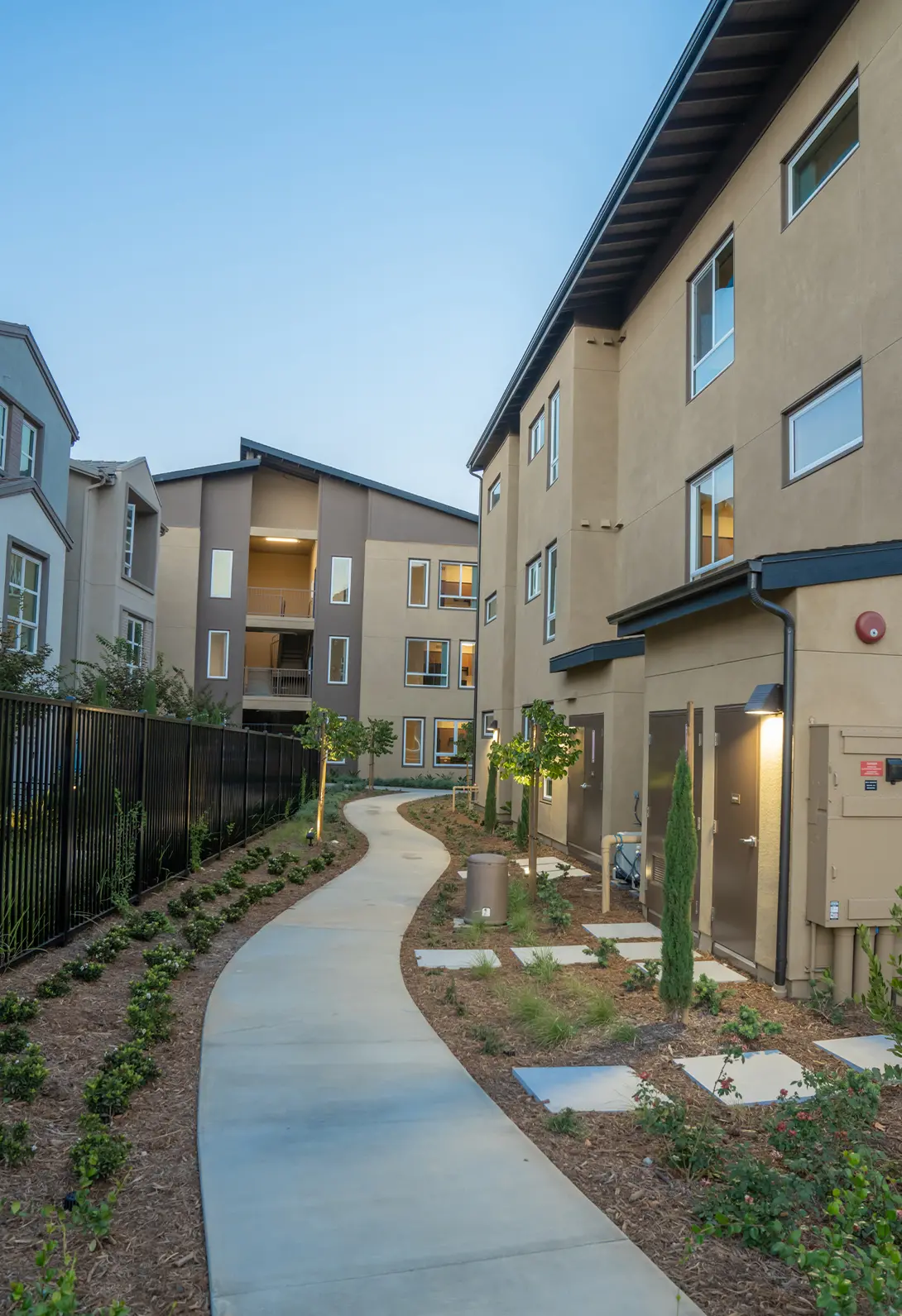
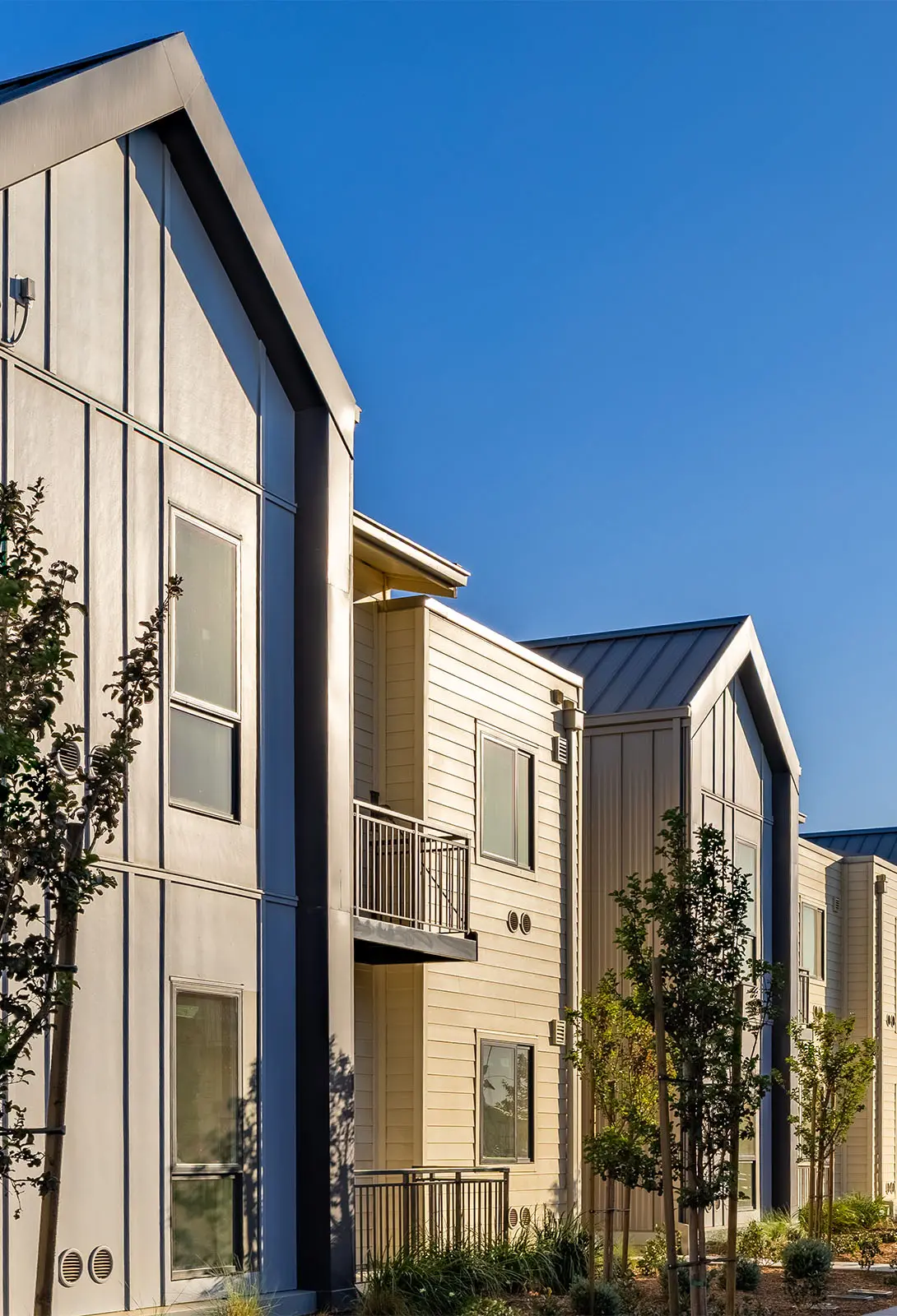
One striking example of this philosophy at work is Greenfield Commons, a project where our commitment to thoughtful, future-focused, and human-centric design culminated in something beautiful for the farming community of Salina Valley, California. Developed in collaboration with EAH Housing, this visionary project redefines what affordable housing can be.
Greenfield Commons prioritizes safety, sustainability, and community well-being. The two-phased development features two hundred energy-efficient homes built with modular construction, ensuring both affordability and environmental responsibility. Beyond the residences, the community is enriched with shared gardens, recreational spaces, and wellness programs, all designed to support a thriving lifestyle for residents.
With its pursuit of Leadership in Energy and Environmental Design Gold Certification and a one hundred percent energy offset through renewable sources, Greenfield Commons was designed from the start with its residents and their futures in mind.
Winning the Project: The First Act of Intentionality
Our Request for Proposal process is the first step in demonstrating our commitment to purpose-driven, human-centric design. In addition to the parameters of the project, we consider the present and future needs of the community each design will serve.
Our integrated design team takes a philosophical approach to each project:
Understanding the Client and Community
- Who are we designing for beyond just the direct client?
- What cultural, social, and economic factors should inform the design?
- How can we demonstrate a deeper awareness of the community’s needs and aspirations?
Building a Representative Team
- Does the project team’s experience reflect the community’s lived realities?
- Are diverse voices leading the conversation?
Addressing Blind Spots
- What communities might be missing from our engagement and impact?
- How do we ensure our designs do not unintentionally exclude?
These are the questions we ask to understand the project, the goals of the client, and the needs of the people the environment will serve.
The Case for Inclusion
In the book, “The Medici Effect,” author Frans Johansson, explores how innovation flourishes at intersections, where diverse perspectives, disciplines, and lived experiences converge. This principle is deeply relevant to the architecture, engineering, and construction industry where the concept of inclusion is a strategic advantage. How can diverse teams drive better outcomes? What untapped ideas emerge when different voices contribute to the conversation? The way we form our teams impacts the way we complete our projects.
This idea extends beyond team dynamics to influence how we design and who we design for. If diverse collaboration leads to stronger solutions, then considering identity in the design process becomes just as essential.
In her book, “Design for Identity,” writer, interior design consultant, and Diversity, Equity, Inclusion, and Belonging (DEIB) practitioner, Jessica Bantom, explores the concept of identity in human-centered design. She poses a pivotal question: “What communities are we not serving?” Rather than looking at design from a top-down approach, she challenges the industry to think about building projects from finish to start where inclusion stands as a guiding principle that shapes decision-making from the earliest stages of a project.
Designing for Community
At HED, inclusivity is a design imperative, not an afterthought. From the earliest stages of a project, we prioritize accessibility, equity, and belonging—ensuring that built environments actively support those who have been historically overlooked. Through architecture and engineering, we create spaces that are thoughtfully designed for everyone.
Projects like Greenfield Commons demonstrate the necessity behind intentional, inclusive design. They prove that affordable housing, when viewed through the lens of the people within, becomes more than shelter. It becomes a catalyst for thriving, connected, and resilient communities. At HED, we recognize that buildings do more than shape skylines; they shape lives. Our integrated practice is a collective of diverse voices and bold perspectives innovative ideas can emerge to drive better outcomes. For us, great design isn’t just about aesthetics or function; it’s first about people.