How ESG, AI, and integrated design are reshaping the future of work
May 11, 2026
A Q&A with HED Leaders After SustainabilityLIVE 2026
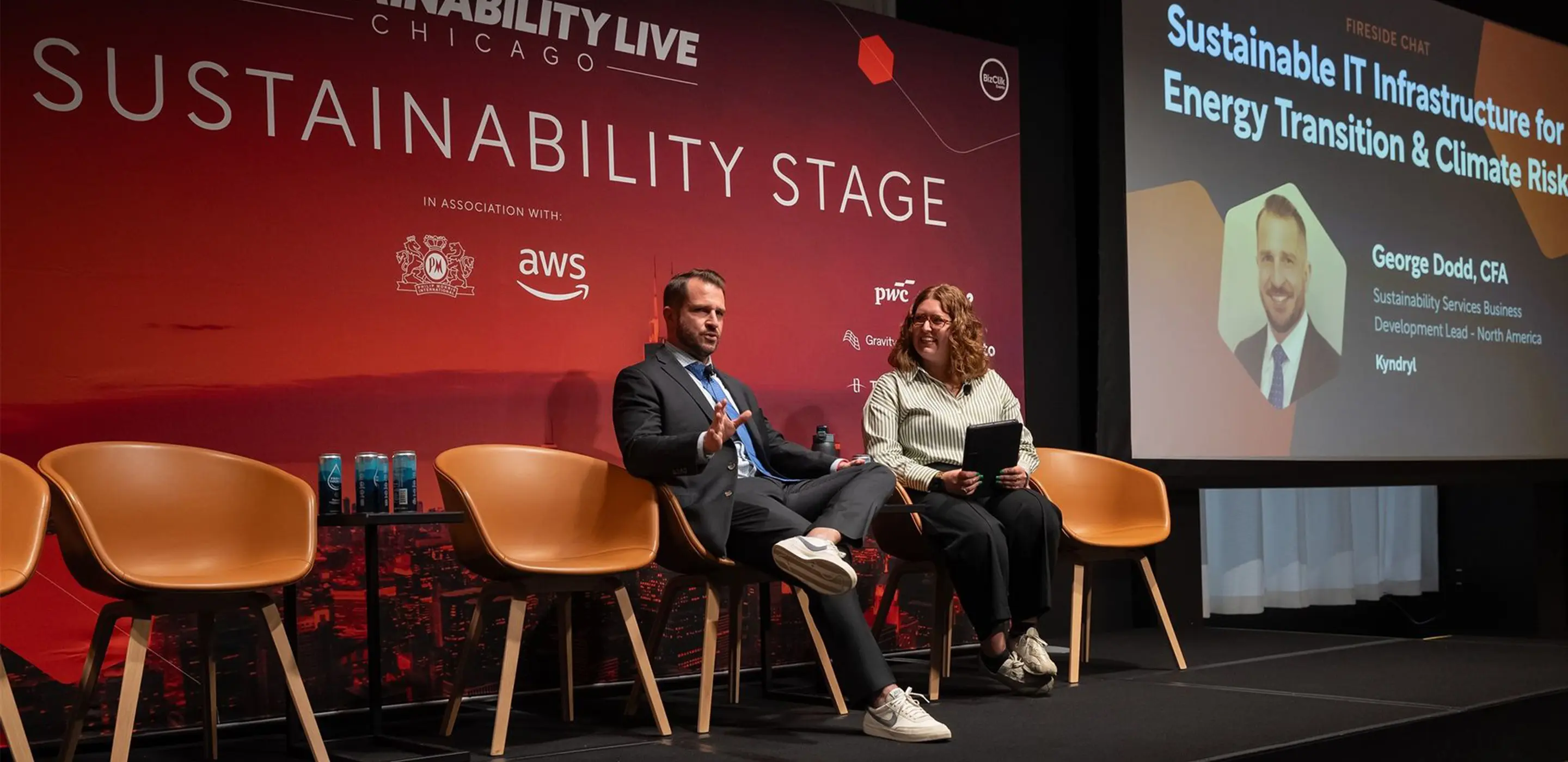
Recently, at SustainabilityLIVE: The US Summit 2026, global leaders across industries came together to affirm that sustainability planning is rapidly accelerating from a business ambition into an operational imperative.
This activation of ESG leadership across sectors reinforces the call to connect strategy, design, and performance in new ways. Artificial Intelligence was a common thread throughout the conference programming, and discussions explored how global companies are welcoming the powerful capabilities of AI technology to transform their businesses’ processes, workforce and their “why.”
Our team hosted an interview conversation with HED Workplace Strategy and Development Leader, Samantha McCloud, AIA, NCARB, RA, to bridge insights from the summit into identifying design shifts that are already visible and actively shaping the future of workplace environments.
HED: SustainabilityLIVE emphasized a shift from ambition to execution. What does that look like in today’s workplace?
SM: What stood out at the summit is that organizations are no longer rewarded for setting targets. Instead, they’re being measured on results. This means our role as designers is advancing from proposing design solutions based on experience and best practice standards to guiding client decision-making through technology-enabled data-evidence to reduce carbon, optimize energy use, and support healthier, more productive teams.
AI is powerful, but only in partnership with human insight. AI can process vast building data and identify opportunities, but it’s design thinking that translates that into spaces people actually want to use. At HED, we see the workplace as a living system that continuously improves through both data and human experience.
HED: AI was a major theme at the summit. How should organizations think about its role in workplace design?
SM: While AI is transforming everything from business administration processes to workforce and workplace real estate strategy, it doesn’t replace the human layer of design. AI doesn’t understand culture, collaboration, or what makes a space meaningful to the people within it.
At HED, we approach AI as an amplifier. It allows our teams to move faster and test more scenarios, and it ultimately frees designers to focus on what matters most: creating pleasing environments that align sustainability with human performance. The future success of workplace isn’t fully-automated. It’s further-elevated through a combination of intelligence and empathy.
We see artificial intelligence and sustainable building design converging along two parallel tracks: technical performance and human experience. In sustainable design, this means optimizing measurable outcomes across the building lifecycle – energy use, carbon impact, materials, and operational efficiency, while also creating spaces that enhance long-term human wellness, comfort, and enjoyment, sustaining workforce satisfaction and connection to the company. AI mirrors this dual role. On one hand, it accelerates technical processes by improving analysis, simulation, and decision-making, enabling more precise and efficient design outcomes. On the other, it elevates human capability- freeing designers and stakeholders from routine tasks so they can engage more deeply with creativity, strategy, and the lived experience of the built environment. Together, both fields reinforce a shift from purely functional performance toward interactive systems that are not only efficient, but also meaningful and responsive to human needs.
HED: Scope 3 emissions and lifecycle thinking were also key topics. How is that changing design decisions?
SM: Including indirect greenhouse gases produced in a company’s value chain is expanding the definition of responsibility. As part of designing for operational efficiency, to greater detail we’re considering where materials come from, how they’re transported, how they’re used, and what happens at the end of a building’s life.
This detailed understanding and design coordination requires a much more integrated approach. HED brings together architects, engineers, environmental graphic designers and strategists early to evaluate trade-offs across carbon, cost, and experience. AI helps us model those variables quickly, but human judgment ensures the outcome is balanced.
HED: Resilience and climate volatility were front and center. What defines a resilient workplace today?
SM: Resilience has evolved from durability to adaptability performance. Today’s workplaces need to respond to changing environmental conditions, shifting workforce expectations, and rapid technological change.
That means flexible systems, passive design strategies, and infrastructure that can evolve over time. AI helps us anticipate and optimize performance, but it’s human-centered design that ensures these spaces remain intuitive and supportive. A resilient workplace enables organizations to thrive through disruption.
HED: Sustainability is no longer siloed – it’s embedded across operations. How should workplace design reflect that?
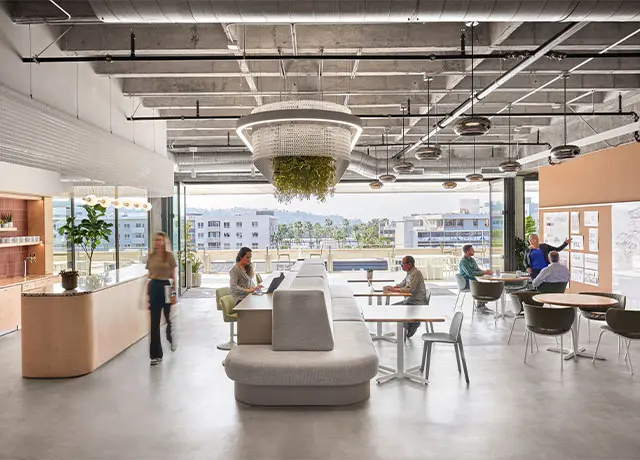
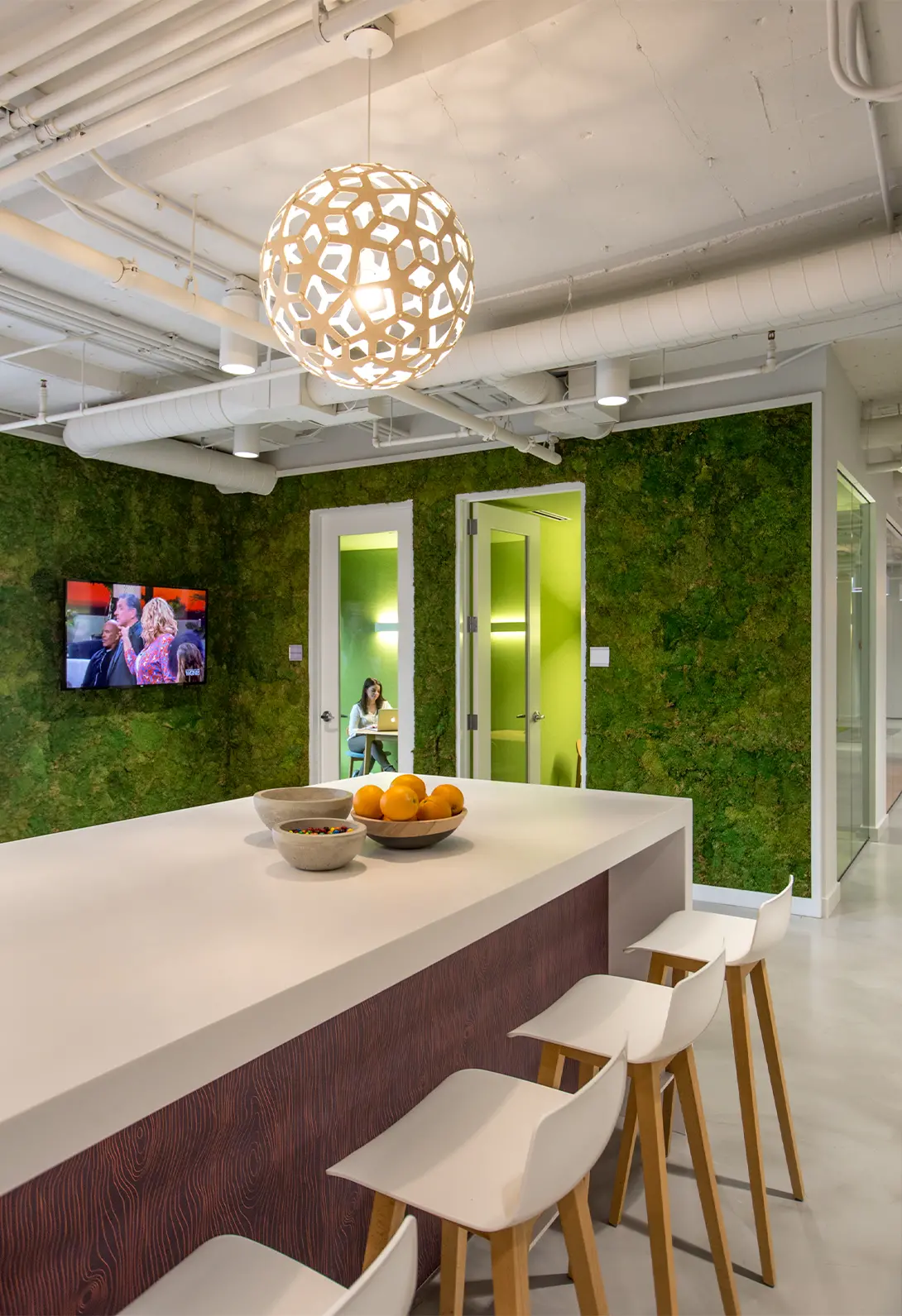
SM: The workplace is becoming a physical expression of an organization’s values and ESG strategy. It’s where sustainability becomes visible and tangible for employees, clients, and stakeholders.
We’re designing spaces that make impact legible. AI provides the data layer, but human insight determines how people engage with that information. When people can see and feel sustainability, it drives behavioral change, which is ultimately where the biggest impact happens.
HED: Looking ahead, what defines leadership in sustainable workplace design?
SM: Leadership today requires multi-disciplinary integration that brings together sustainability, technology, and human experience into a cohesive strategy. Sustainable workplace design applies technology to track performance, activates experts and stakeholders early to reduce coordination costs, and empowers people to drive greater operational value.
At HED, we believe AI will continue to accelerate what’s possible, but it’s human creativity and systems thinking that make it meaningful. The most impactful workplaces will be those that are not only high-performing, but also deeply responsive to the people who use them.
From a performance standpoint, we’ll see workplaces that are net-zero or net-positive, with real-time data informing how they operate. From an experience standpoint, there’s a growing emphasis on wellness, flexibility, and connection. Spaces will support different modes of work interactively and will be more precisely designed to support the human connection to purpose.
Ultimately, sustainability and workplace design are converging around a shared goal: creating environments that are resilient, efficient, responsible and meaningful.
Closing Thoughts
The insights from SustainabilityLIVE reinforce that global ESG accountability is driving business decisions. As the conversation shifts from commitments to outcomes, the workplace stands at the center of sustainable transformation.
What This Means for Our Clients
Through our HED-integrated approach and pairing advanced technologies with human-centered design, HED is supporting clients move beyond ambition and into action. Engaged early in the client collaboration stage of defining the “Why,” our architects, engineers, interior designers and graphic designers united in team culture and team continuity, produce purposeful environments that connect human to place through precise attention to detail that expresses a company’s story and values.
This means our clients save on capital investment costs stemming from sub-contracted design coordination issues, late stage design changes, and gaps in team cohesion and communication. Our clients advance their capabilities to work through compelling workplace design that attracts top talent and inspires team member commitment through visibility and connection to company values. HED workplaces celebrate our clients’ present and prompt their teams to advance the future.
Image courtesy of BizClik Media, Sustainability LIVE: The US Summit 2026, Chicago. (bizclikmedia.com)