HED’s FAIA Cohort Reflects a Culture of Advancement
June 22, 2026

Leadership ahead of the curve
The American Institute of Architects (AIA) is the industry’s most influential network of professionals. Fellowship is among the highest honors, reserved for architects whose work has made significant contributions to architecture and society.
Fewer than three percent of AIA members hold this prestigious designation.
In 2012, when Susan King, FAIA, LEED AP, LFA, was elevated to the AIA College of Fellows, the honor was both deeply personal and professionally rare.
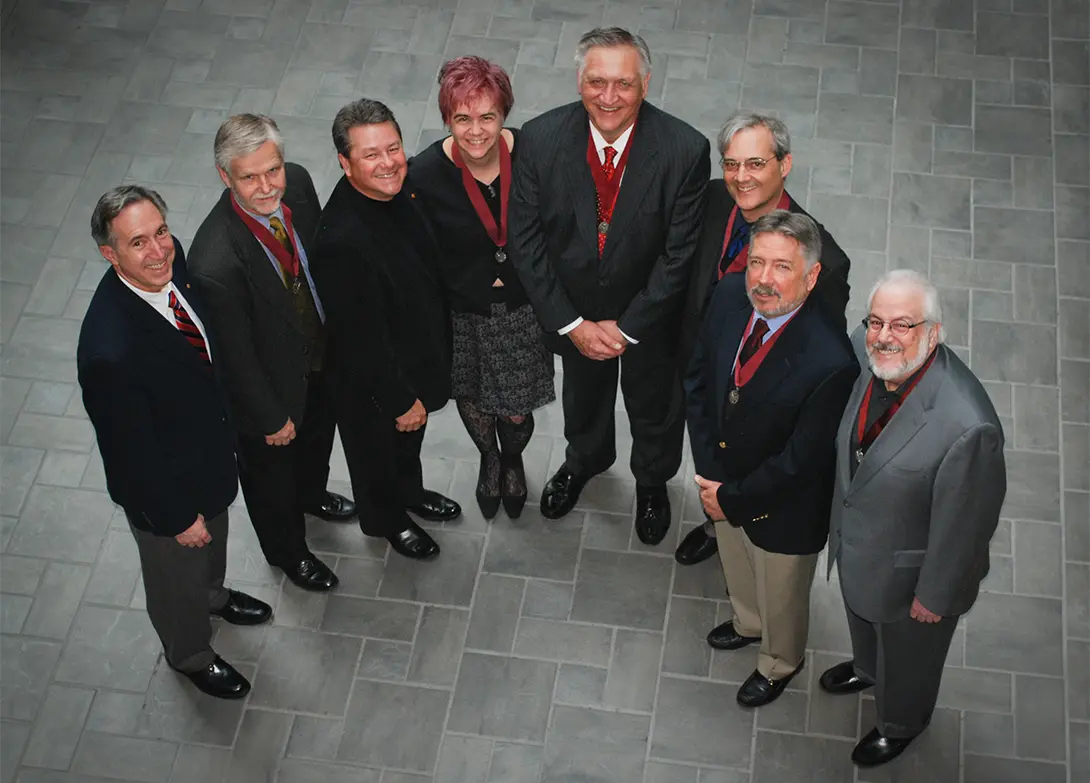
Each year, when someone is elevated to Fellowship, it’s tradition at HED to gather all the current Fellows at the firm for a commemorative photo.
But Susan also remembers something else about that moment: she was the only woman in the frame.
For many women of her generation in architecture, that image was familiar enough to feel ordinary. The profession had always made room for extraordinary women, but often only a few rose at a time. To be recognized was to be grateful and proud, but also aware of the ratio around her. One woman at the table. One woman in the photograph. One woman whose presence carried the peculiar burden of being both individual achievement and symbolic evidence.
Fourteen years later, that has changed.
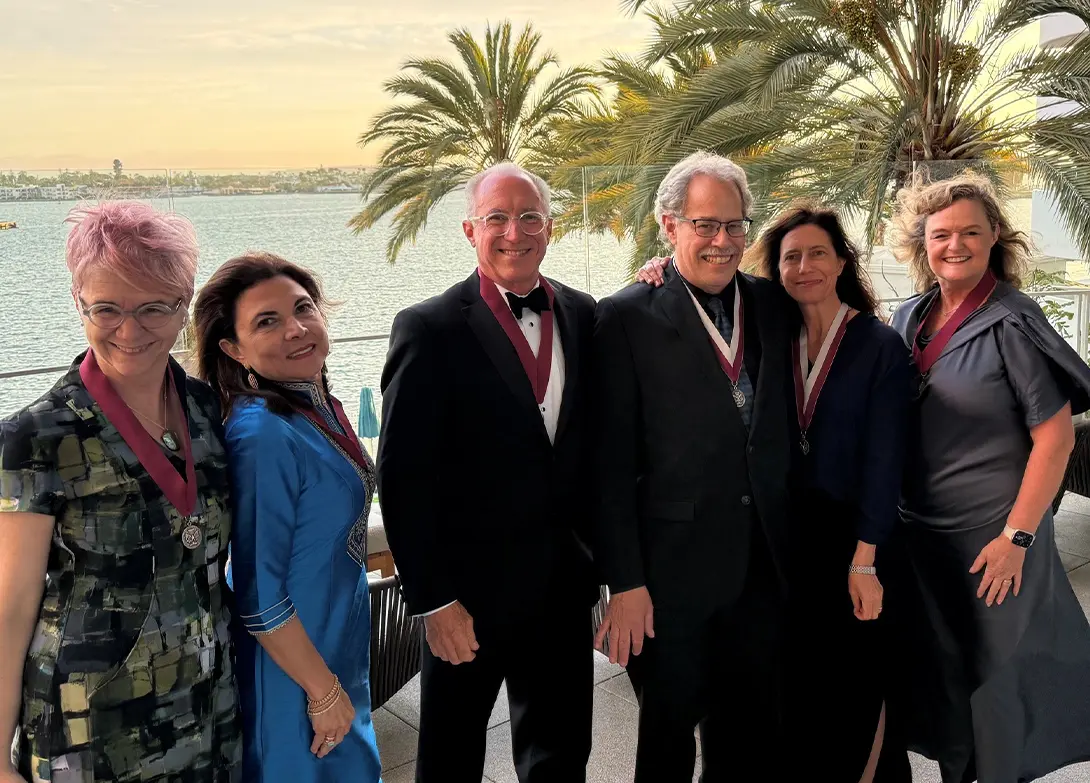
This June, as our team celebrates the elevation of Mary Ruppenthal, FAIA, and Jack Bullo, FAIA, to the AIA College of Fellows, the diversity ratio has flipped.
With Mary and Jack joining the College, HED’s current FAIA cohort includes Susan King, Martha Ball, Sharon Woodworth, Tania Van Herle, Mary Ruppenthal, and Jack Bullo.
“Over the course of my own career,” says Susan King, “recognizing the need to advocate not only for myself but for other women in the profession has shaped it in a way that I did not expect, nor was I at all prepared for, when I entered the profession.”
The shift in numbers of Fellows within a firm is meaningful because it is not yet typical.
Nationally, the AIA’s 2025 Membership Demographics Report shows that women make up 26.3% of all AIA members and 18.3% of all AIA Fellows. Even among new Fellows this year, women represented just 29%.
The pipeline is changing faster than the highest levels of recognition: women account for 34.1% of AIA Associate members and 41.6% of AIA Architect members who reported initial licensure in 2025. But Fellowship, like most late-career honors, still carries the long shadow of a profession built over generations around male visibility, sponsorship, and advancement.
In that context, HED’s numbers are not incidental. They are evidence of a culture in which women have not only entered the profession, but stayed, led, shaped work at scale, and been supported toward its highest forms of peer recognition.
Fellowship is not an ornamental credential. It is the cumulative result of work, influence, mentorship, advocacy, and a national body of impact.
Susan’s own career has been rooted in exactly that kind of impact. As HED’s Housing Sector Leader, she is known for advancing place-based, mission-driven design, with a career focused on high-quality housing for underserved communities throughout the Midwest. Her work has consistently joined affordability, sustainability, and dignity, treating housing not merely as a building type but as a form of social infrastructure.
That commitment to access and equity has extended beyond project work into sustained advocacy for women in architecture, including her long-standing leadership with Chicago Women in Architecture, an organization with more than 50 years of history supporting women across the profession.
The leaders at HED who have joined her in Fellowship followed distinct paths.
The work of Martha Ball, FAIA, LEED AP BD+C, in higher education has helped shape academic, research, and student life environments that foster belonging and learning.
Sharon Woodworth, FAIA, ACHA, EDAC, LEED AP BD+C, brought a clinician’s understanding to healthcare design, using architecture to improve operations, care environments, and the lived experience of patients and providers.
Tania Van Herle, FAIA, LEED AP, HED’s Co-CEO, has led across architecture, operations, governance, and firmwide systems, pairing design training with organizational leadership. Her Fellowship recognized her work as a change agent in both K-12 education and firm operations, reflecting a career shaped by design excellence, strategic transformation, and the systems that help organizations perform at a higher level.
Mary Ruppenthal, FAIA, LEED AP, DBIA, now extends that lineage through her work in educational environments. A Sector Leader at HED, Mary approaches PreK-12 and higher education projects through a humanity-centered lens, engaging educators, administrators, and communities in a process grounded in listening, performance, safety, wellness, and student success. Her elevation to Fellowship in 2026 recognizes not only the buildings she has helped bring into being, but the collaborative civic work those buildings represent.
Jack Bullo, FAIA, LEED AP, who was elevated this year as well and is currently the only male architect in the AIA’s College of Fellows from HED, is a recognized leader in academic space planning and higher education design. Jack has shaped flexible, future-ready environments for colleges and universities, with a focus on evolving pedagogies, research facilities, and long-term institutional resilience.
Architecture is a field that knows how to talk about structure. It is less practiced, historically, at talking about the structures that determine who advances. Sponsorship is a structure. Visibility is a structure.
The decision to nominate, mentor, recommend, advocate, and make room is a structure. Over time, those choices become culture. And that is the culture practiced and valued at HED.
Such a culture has produced a cohort of Fellows at HED whose work crosses housing, healthcare, education, sustainability, operations, research, and community impact. It also produces a clearer image for the next generation of design professionals.
The broader profession is moving, but slowly. NCARB’s 2024 data shows that women represent 27% of architects overall, while also making up 42% of newly licensed architects and 46% of licensure candidates. The future of architecture is more balanced than its present; the question is whether firms can hold onto that talent long enough for parity to reach leadership, ownership, and honors like FAIA.
HED’s FAIA cohort suggests one answer: yes, but not passively. The numbers strengthen when the culture strengthens. They strengthen when women are not treated as rare exceptions to celebrate, but as leaders to develop consistently. They strengthen when recognition becomes a shared responsibility across the entire company.
This year’s celebration, then, is not only about two new Fellows. It is about the conditions that allow excellence to be recognized across a wider field of practitioners. For HED, that means continuing to build a culture where diversity is not an outlier in leadership, but central to it.
“While great progress has been made in bringing in and supporting greater levels of diversity,” Susan says, “we still have a lot of work to do, and I’m thrilled to be a part of the progression.”