Doubling Surgical Capacity with Smarter Design
March 27, 2026
Parkland’s hybrid operating suite expands access and modernizes care
Facing surging demand, Parkland Health’s new hybrid operating suite doubles capacity for minimally invasive procedures while speeding care and expanding access for underserved patients.
Jeff Simcik, Principal and Sector Operations Leader for Healthcare at HED, brings a pragmatic, experience-driven lens to the evolving demands of surgical environments.
In this piece, originally written for and published by The Dallas Examiner, he explores how Parkland’s advanced hybrid operating suite reflects a broader shift toward integrating imaging, flexibility, and real-time decision-making into the surgical setting. The result is a model that supports both clinical precision and operational efficiency at scale.
Read the full article below, or view the original publication here: Parkland reveals advanced hybrid operating suite design
Parkland Hospital Sets Standard for Human-Centered Healthcare Design
By Jeff Simcik
Across the country, hospitals are under increasing pressure. Patient demand is rising, medical procedures are becoming more complex, and many facilities are operating at or beyond capacity. In communities where access to care is limited, even small delays can have serious consequences.
Meeting this demand requires more than adding new technology. It requires designing healthcare environments that support high-tech, high-volume care with respect to the human experience, ensuring both patients and the professionals who care for them are supported.
With a mission rooted in delivering health equity and excellence for underserved communities, Parkland Health in Dallas, Texas understands and readily meets these challenges. As one of the busiest trauma centers in the nation, Parkland provides lifesaving care to thousands of patients every year. The healthcare system’s latest investment in a new hybrid operating suite combines advanced medical technology with thoughtful human-centered design to expand access while improving safety and reliability.
Parkland Exemplifies Healthcare Industry Pain Points
Already seeing more than 1 million outpatient visits every year, Parkland was experiencing growing pains like many of its peers across the country, with especially high demand for cardiovascular and trauma procedures performed in hybrid operating rooms.
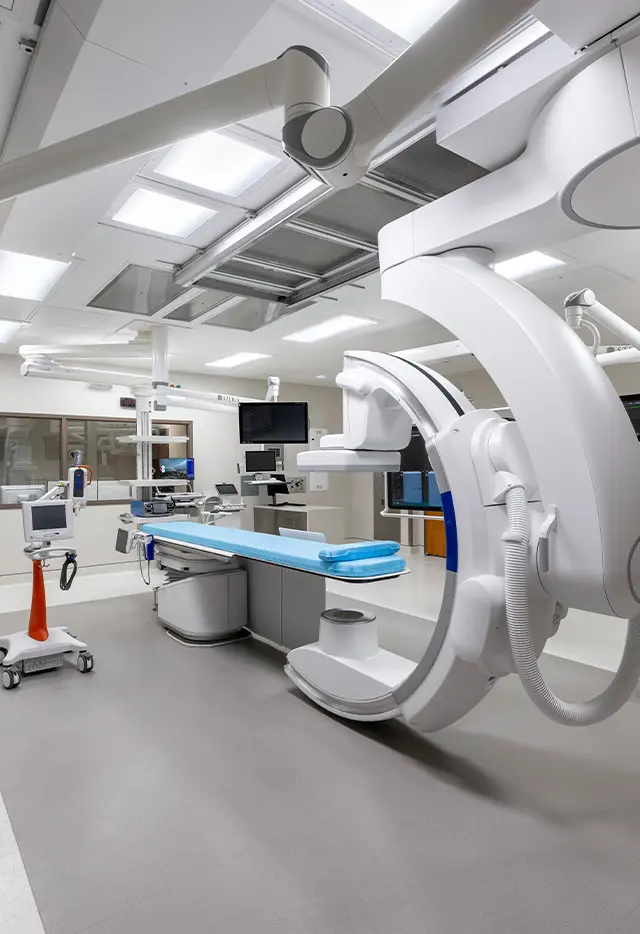
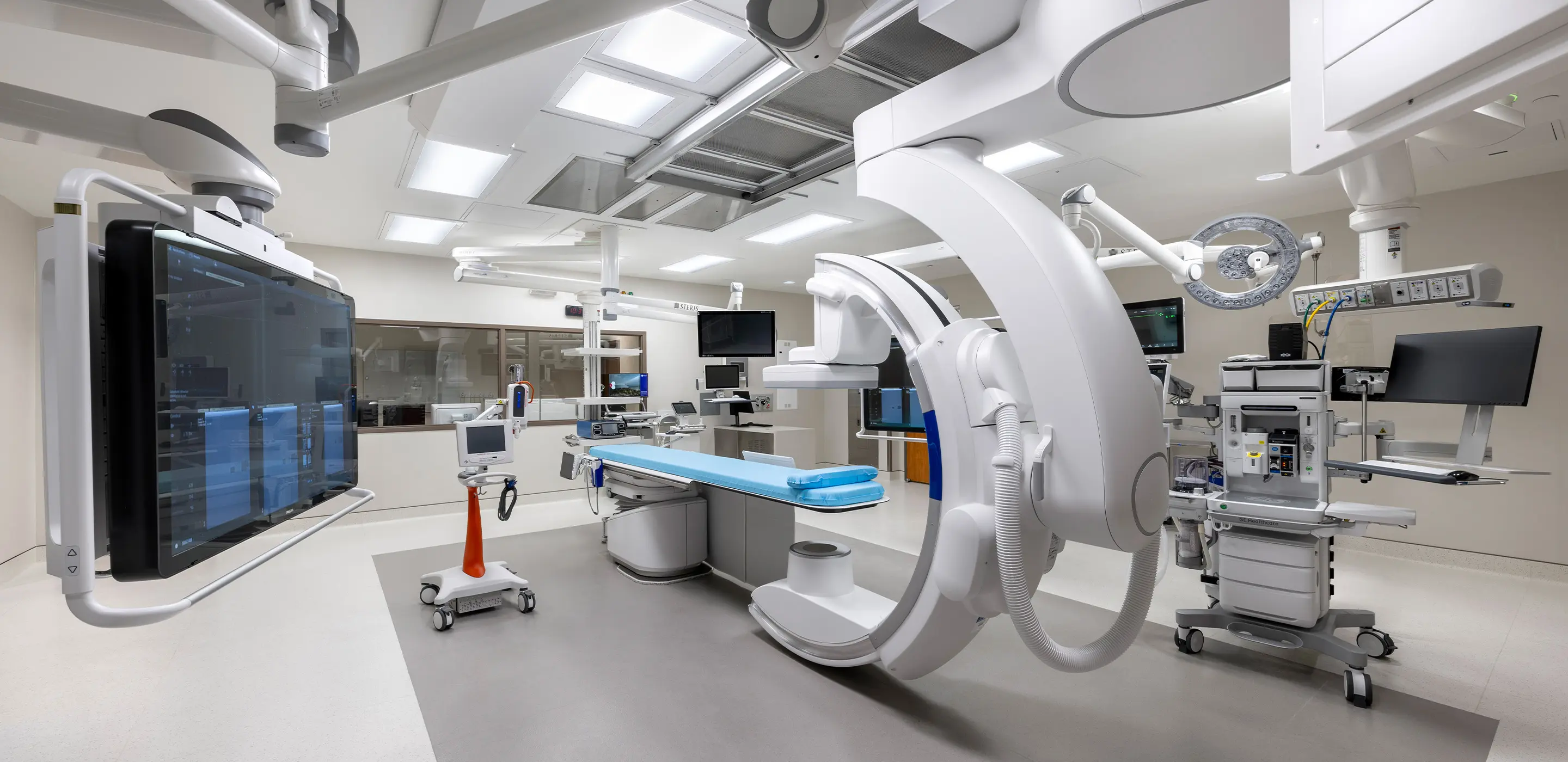
A hybrid operating room combines traditional surgical space with advanced imaging equipment. This allows doctors to perform minimally invasive procedures while using real-time imaging to guide them.
Many legacy facilities may not have the capacity or infrastructure in place to support these types of modern, minimally invasive, image-guided procedures. In a conventional OR, unexpected imaging needs can require moving the patient to a separate suite, disrupting workflow, extending procedure time, and increasing demand on limited physical and human resources. In the case of Parkland, it was not an infrastructure issue, but a capacity issue.
In healthcare, limited overflow capacity means that when one OR is offline or unavailable, care schedules tighten quickly, delaying care to patients, and limiting critical procedures. Parkland had only one hybrid operating room. If it was in use or temporarily offline, other patients would have to wait. Expanding this capacity became critical.
To deliver modernized ORs like this one, construction must proceed carefully alongside ongoing patient care. Delivered inside a fully operational hospital, the new hybrid suite at Parkland advanced amid round-the-clock clinical activity. Through detailed phasing and close coordination with management teams, patient services continued, with a focus on preventing or minimalizing any downtime or disruption to daily healthcare operations.
Human-Centered Design Reduces Friction for Staff and Patients
Parkland’s new hybrid OR leverages thoughtful, human-centered design to improve performance, speed, and safety. Built for flexibility, the suite allows the care team to adapt quickly to changing conditions. For example, built-in imaging can guide minimally invasive procedures, but the OR can pivot in minutes to support invasive interventions if needed. That means fewer patient transfers, faster treatment, and greater operational efficiency.
The layout was designed in a “same-handed” configuration as the existing hybrid operating room, so clinicians don’t have to reorient when moving from one OR to another. This seemingly small detail can dramatically reduce cognitive load, improve performance and response time, and lower risk.
Most impressively, the new hybrid suite doubled Parkland’s OR capacity for these minimally invasive lifesaving procedures, adding built-in redundancy and eliminating single points of failure. Because this makes advanced treatment more accessible locally, the new addition improves healthcare equity for underserved neighborhoods, while reducing recovery time and backlog.
Inclusive Design Process Yields Best Practices
As the lead designer on the project, HED’s integrated design process brought all design disciplines to the table from the start for seamless collaboration. Building that partnership up front meant fewer unknowns, reactive decisions and change orders, and faster, more accurate build-out, allowing better integration with existing facility systems and services. In addition to critical building systems, HED incorporated clinicians, administrators, equipment providers, and departmental leads for facilities, infection control, and IT to account for all systems and necessary perspectives.
HED’s inclusive team culture shapes design quality as much as its technical expertise does. At Parkland, we listened carefully to understand clinical needs and workflow, designing for peak stress. We thought about the 2 a.m. emergencies, not just the day-to-day routine. When seconds count, consistency, repetition, and familiarity for staff are essential, and we built that into every design decision. Working as a single, integrated design team, every voice and discipline comes together to inform the process to predict risk early, challenge assumptions, and strengthen decision-making.
Aligning Design with Outcomes Drives Client Value and Better Community Care
Modern healthcare demands environments that perform under pressure and enable clinical teams to operate with speed, precision, and consistency. High-tech infrastructure is essential, but aligning workflow and human experience early in the design process strengthens operational efficiency, supports staff performance, and improves long-term outcomes.
Parkland’s vision and investment in thoughtful, human-centered design demonstrate how modern healthcare facilities can integrate innovation, throughput, and compassion, advancing both community health and institutional performance.