Designing the Next Chapter in Housing
July 16, 2026
Affordability, supply, and long-term value
The 21st Century ROAD to Housing Act arrives at a moment when housing affordability is no longer a niche policy concern, but a defining pressure on communities across the United States. The law is intended to increase housing supply by reducing regulatory barriers, streamlining certain approvals, and expanding tools that may help more housing get built.
For architects, however, the question is not only whether policy can create more opportunity. It is whether that opportunity can translate into places that are durable, equitable, connected, and worthy of long-term community life.
In this Q&A, HED’s Otis Odell, AIA, LEED AP, National Sector Leader for Housing, shares an architect’s perspective on where legislation intersects with design, development, approvals, financing, and the larger responsibility of creating housing that serves people over time.
Q: The new housing law is intended to improve affordability by increasing housing supply. From your perspective as an architect, what parts of the development process create the biggest barriers to building more housing today?
The bill seeks to allow local jurisdictions to make the approval process more streamlined and to provide zoning changes to allow more affordable housing. Ultimately the local jurisdiction will need to be the one to implement those changes, reduce timelines, and rezone land to facilitate the goal of increasing supply.
The benefit to the development community is reduced effort in gaining approvals and ultimately improving speed to market. Anything that can reduce the timeline potentially reduces the cost.
The biggest barrier to development is the availability of capital. The bill raises the FHA loan limits which can potentially allow more units to be built. It also increases the RAD (Rental Assistance Demonstration) program to allow the renovation and upgrade of 100,000 more units of public housing to be converted to safer and upgraded affordable housing. Further, it raises the cap for banks to invest in Low Income Housing Tax Credits (LIHTC) creating the potential for more units to be built.
But this is not a funding bill. The Fed is not putting dollars toward housing; they are modifying policy that streamlines the process and allows various institutions to provide more money for housing. Design approach and design solutions remain essentially the same.
Q: Affordability is often discussed in terms of price, but architects think about value differently. What does “affordable housing” actually mean when you’re designing communities that people want to live in for decades?
Housing for all must go beyond the design of a building and address community connection. Certainly, low maintenance, resilient, and sustainable design solutions remain critical to the success of a project. Long term value is achieved through flexible spaces that can adapt as priorities and cultural shifts occur.
Moreover, connection to community and context create value. Context includes social context, economic context, physical context, political context, etc. All of these issues must be effectively addressed to create lasting value for residents.
Q: If this legislation succeeds in encouraging more housing development, what design trends or project types do you expect we’ll see more of over the next five to ten years?
The development community is positioning for more build to rent (BTR) developments creating more rental product for the middle-income demographic that is not as keen on apartment living. There will also be a more intentional move to develop in Opportunity Zones due to incentives for the developer.
These projects have not been ideal for affordable housing development in the past, and that may change with this bill. As noted above, more opportunities exist for the rehab of existing public housing and more quantity of Affordable housing (capital A meaning LIHTC projects). Community Development Block Grants (CDBG) funding has long been considered a source for assisting in the capital stack for affordable housing. This bill creates additional opportunities for CDBG grants to assist with disaster relief. Providing housing solutions quickly for those who have been displaced by climate disaster and/or natural disaster.
My thinking is that modular solutions will be appropriate for these situations and HED is moving to discuss this with our modular housing relationships.
Q: Many people assume affordability means sacrificing design quality. In your experience, where have you seen thoughtful design actually improve affordability or long-term project success?
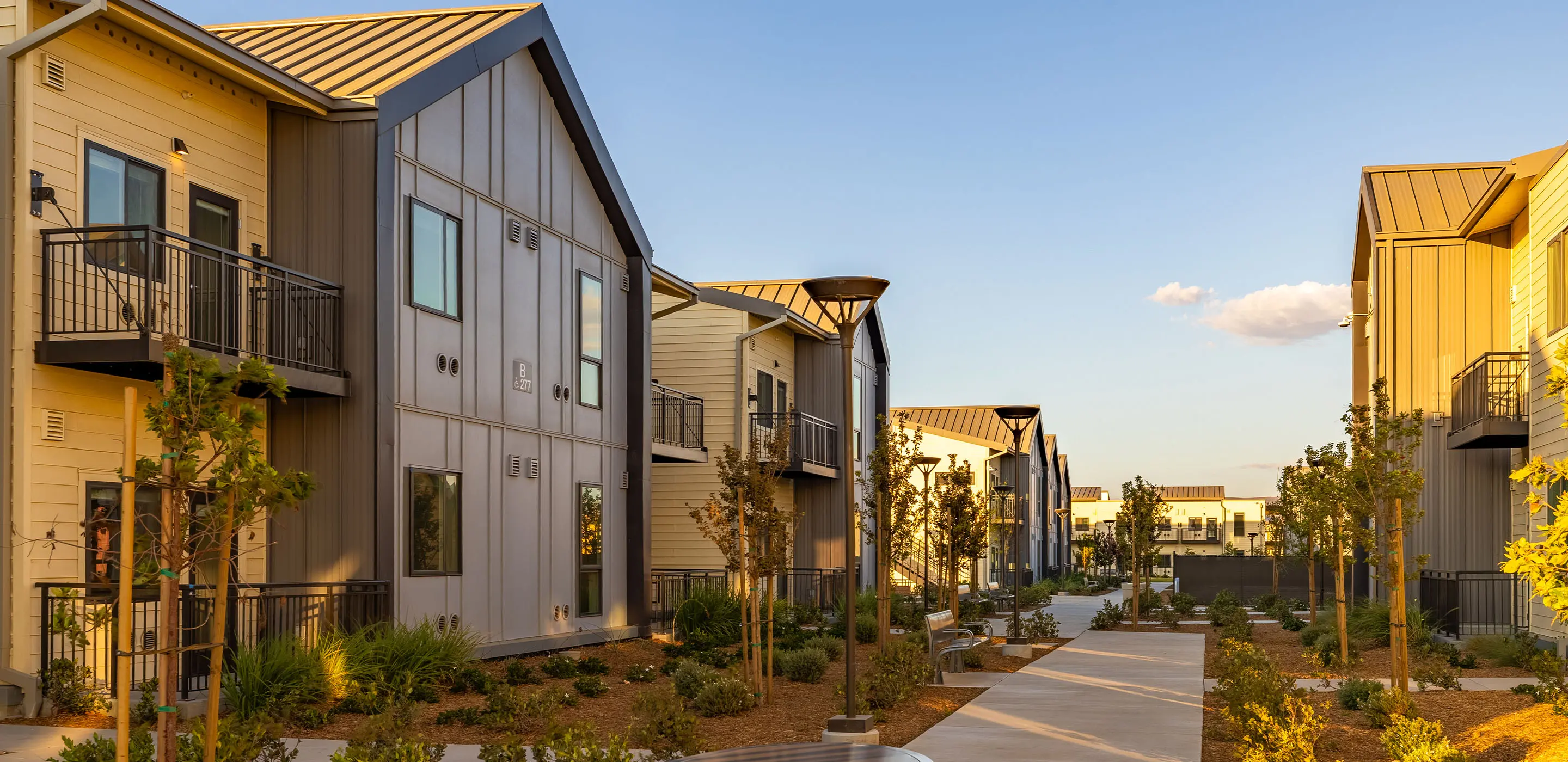
One can look an any of HED’s affordable housing work to see how we have not sacrificed quality or design in our work. Mariposa Lily has a fantastic rooftop deck experience for the residents. Thatcher Yard is a multi-generational solution bringing courtyards and proximity to the ocean withing a neighborhood consisting of multi-million dollar single family homes. Greenfield Commons is a 200-unit affordable development (modular delivery) that presents a superior design aesthetic and multiple courtyards to facilitate community connection.
Q: Looking beyond this legislation, what’s one change—whether in policy, regulation, or industry practice—that you believe would have the greatest impact on improving housing affordability in the United States?
This country must focus on reducing regulation, assist in identifying new funding sources, and create mixed income communities that contribute to the social construct of our society. Do not place all affordable housing in a single location. Assure that affordable development is inclusionary and brings all the benefits of community that is offered to any individual in our country.
Designing for What Comes After Policy
The 21st Century ROAD to Housing Act may help open doors by addressing parts of the development process that slow or constrain housing delivery. But policy alone does not create community. That work still depends on the careful coordination of financing, entitlement, planning, design, construction, stewardship, and long-term civic will.
For architects, the task is to help turn possibility into places that endure: housing that is attainable without being diminished, efficient without being disposable, and connected to the larger social fabric of the communities it serves.