Designing for First Responders
April 14, 2024
Innovations in Fire Station Design
As communities evolve and urban landscapes change, fire stations stand as vital pillars of safety and emergency response. The demands placed on these stations continue to evolve, prompting architects and designers to innovate in their approach to fire station design.
Designing for Fast Response Time
Time is of the essence in emergency situations, and fire station design must prioritize swift response. When designing for first responders, the following elements are crucial:
Multiple Circulation Paths / Efficient movement from living quarters to the apparatus bay is essential. Design layouts that offer multiple paths can shave off valuable seconds during response.
Bi-fold Exit Doors / Unlike traditional overhead roll-up doors, bifold doors enable quicker exit from the apparatus bay, ensuring firefighters can mobilize swiftly.
Acoustical Treatments / Clarity in communication is vital during emergencies. Incorporating acoustical treatments throughout the station enhances the effectiveness of alerting systems, ensuring every call is heard loud and clear.
Drive-Through Bays / Minimizing the need for reversing trucks, drive-through bays facilitate seamless flow and enhance safety, eliminating the risk of accidents during high-pressure situations.
Single-Story Layouts / Opting for a one-story design whenever possible not only enhances safety by eliminating stairs but also streamlines operations, making it easier and safer for firefighters to navigate the station.
DESIGNING FOR COMFORT
Firefighters spend significant portions of their lives at the station. The design of the space should prioritize their comfort, well-being, and support them in building teams and developing strong bonds.
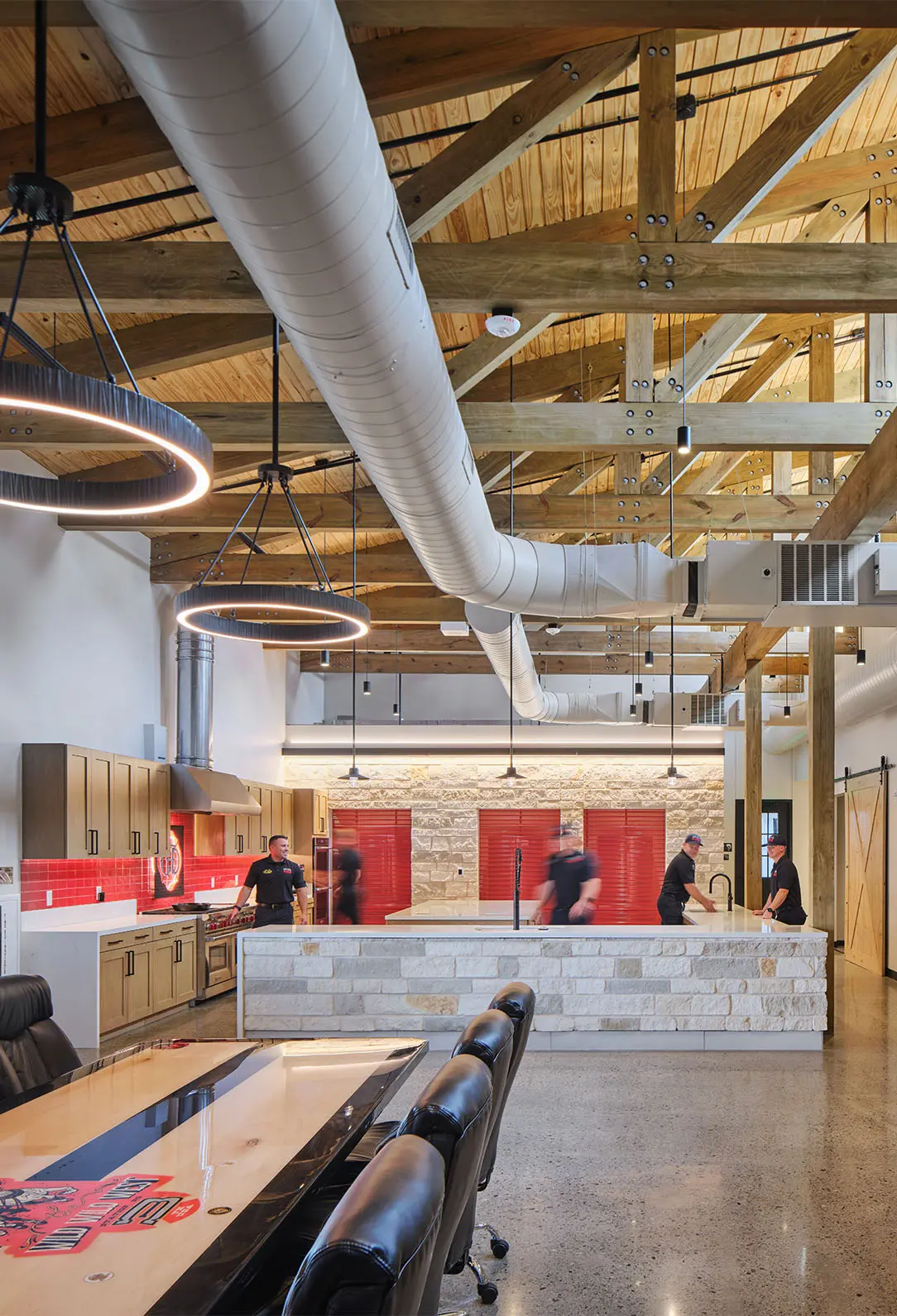
Creating a Hearth in the Home away from Home / A large but homey kitchen adjacent to an outdoor space and open to the dining space is essential to creating a home-away-from-home atmosphere and build comfort and camaraderie. A fire station kitchen should contain professional grade appliances and be open to dining, outdoor, and living areas – it should be extra-large and treated like a social zone.
Also consider ancillary zones like coffee corners, high tables, and an open BBQ zone on an adjacent patio with a smoker.
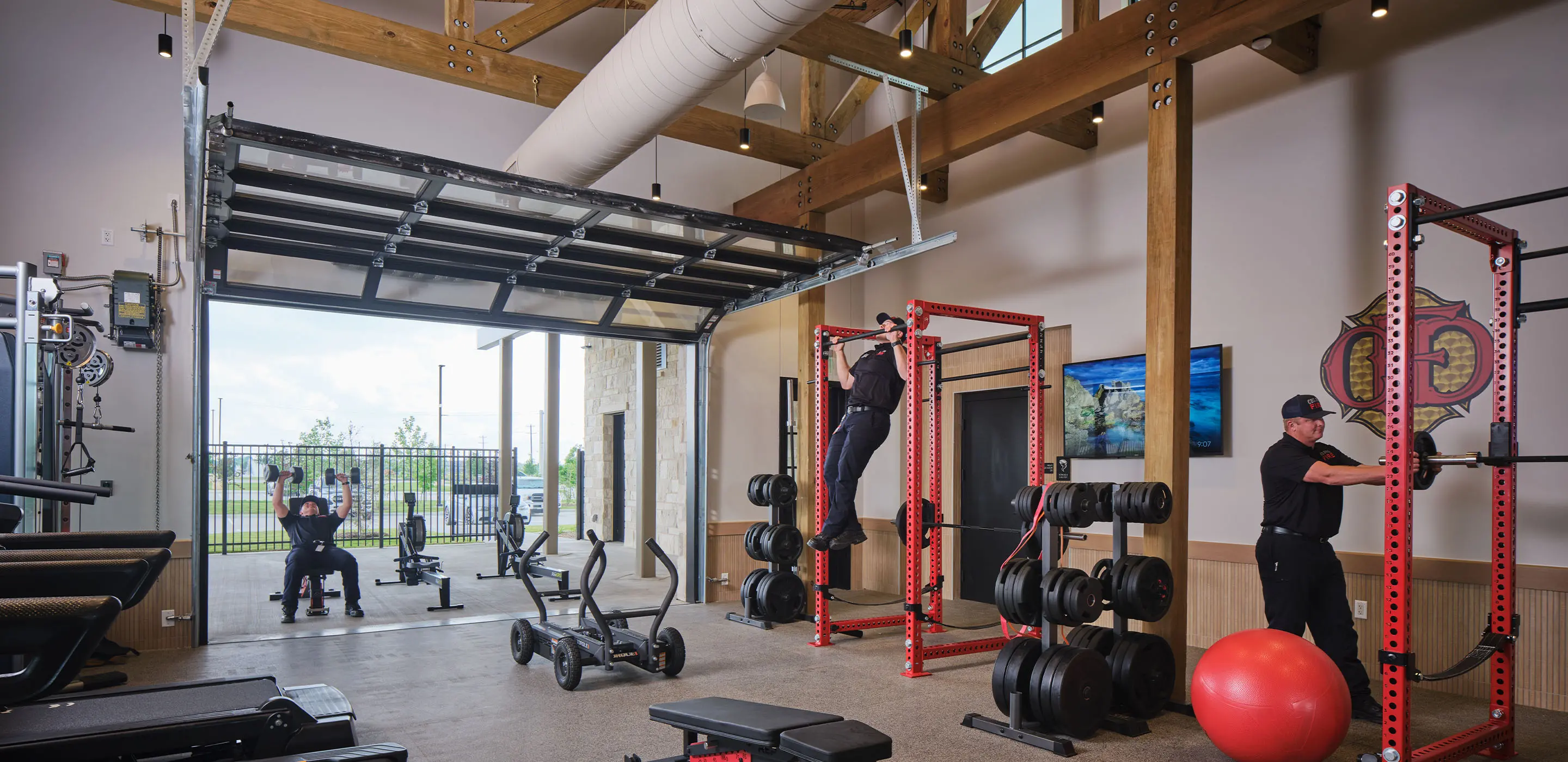
Amenity-Rich Areas / Large day rooms with tiered theater style seating and surround sound audio create a hangout zone. Fitness, always an essential component, should be given extra attention in a fire station, including access to natural light, views, ventilation, sound considerations for controlling the noise from moving weights and electric equipment, and a quality audio system.
Natural Light / Large windows and clerestory lighting not only create a welcoming atmosphere but also promote relaxation and a sense of connection with the outdoors.
Indoor-Outdoor Integration / Blurring the lines between indoor and outdoor spaces with features like roll-up doors and expansive patios fosters a sense of openness while providing privacy and relaxation areas.
Wellness Amenities / Incorporating wellness elements such as fitness areas with scenic views, outdoor cooking zones, and gardens enhances the overall quality of life for firefighters during their shifts.
Shift Considerations / Tailoring amenities such as separate food storage for each shift, private storage in sleeping quarters, and ambient lighting for night calls ensures that firefighters feel at home and well-supported during their shifts.
Community Engagement Spaces / Designing dedicated community rooms facilitates interaction with the public, fostering community engagement through educational programs and events. 3.
Designing for High Performance
Prioritizing high-performance design reduces environmental impact, enhances operational efficiency, and ensures long-term resilience in serving the community’s emergency response needs.
Operational Lifetime Savings / High performance buildings help reduce carbon, water, energy, and waste. The Department of Energy reviewed 22 LEED-certified buildings managed by the General Services Administration and saw CO2 emissions were 34 percent lower, they consumed 25 percent less energy and 11 percent less water and diverted more than 80 million tons of waste from landfills.
Wellness / High-performance design directly contributes to building occupant health and wellness by providing improved indoor air quality, access to natural light, and spaces that promote physical activity and mental well-being.
Changing Regulatory Environment / As municipalities, states, and the federal government continue to evolve building performance requirements, many communities want their next building project to be high performing but have concerns about upfront costs.
Putting First Responders First
One of the most common and direct ways of funding Green Building projects is through grants and subsidies from various levels of government, non-governmental organizations, or utility companies. These are usually offered as a form of financial assistance or reimbursement for meeting certain Green Building standards, such as LEED, BREEAM, or Passive House. Grants and subsidies can cover a significant portion of the initial costs of Green Building projects and reduce the payback period and the risk of investment.
Another way of reducing the costs of Green Building projects is through tax credits and deductions from the federal and state government. There are also rebates and incentives available from utility companies, manufacturers, or retailers. These are usually offered as a form of cash back or discount for purchasing or installing certain energy-efficient or water-efficient products or systems, such as Photovoltaics, LED lighting, HVAC equipment, or low-flow fixtures.
An experienced design leader like HED can navigate the complexities of these programs and help you find the greatest funding opportunities if the goal of high performance is identified up front. Fire stations, like firefighting operations, continue to evolve to meet the dynamic and critical needs of modern community safety.
By prioritizing speed, comfort, and maintenance efficiency, HED’s designers are creating spaces that not only support the vital work of firefighters but also foster a sense of community and well-being.