Designing for Dignity in Senior Living
August 5, 2025
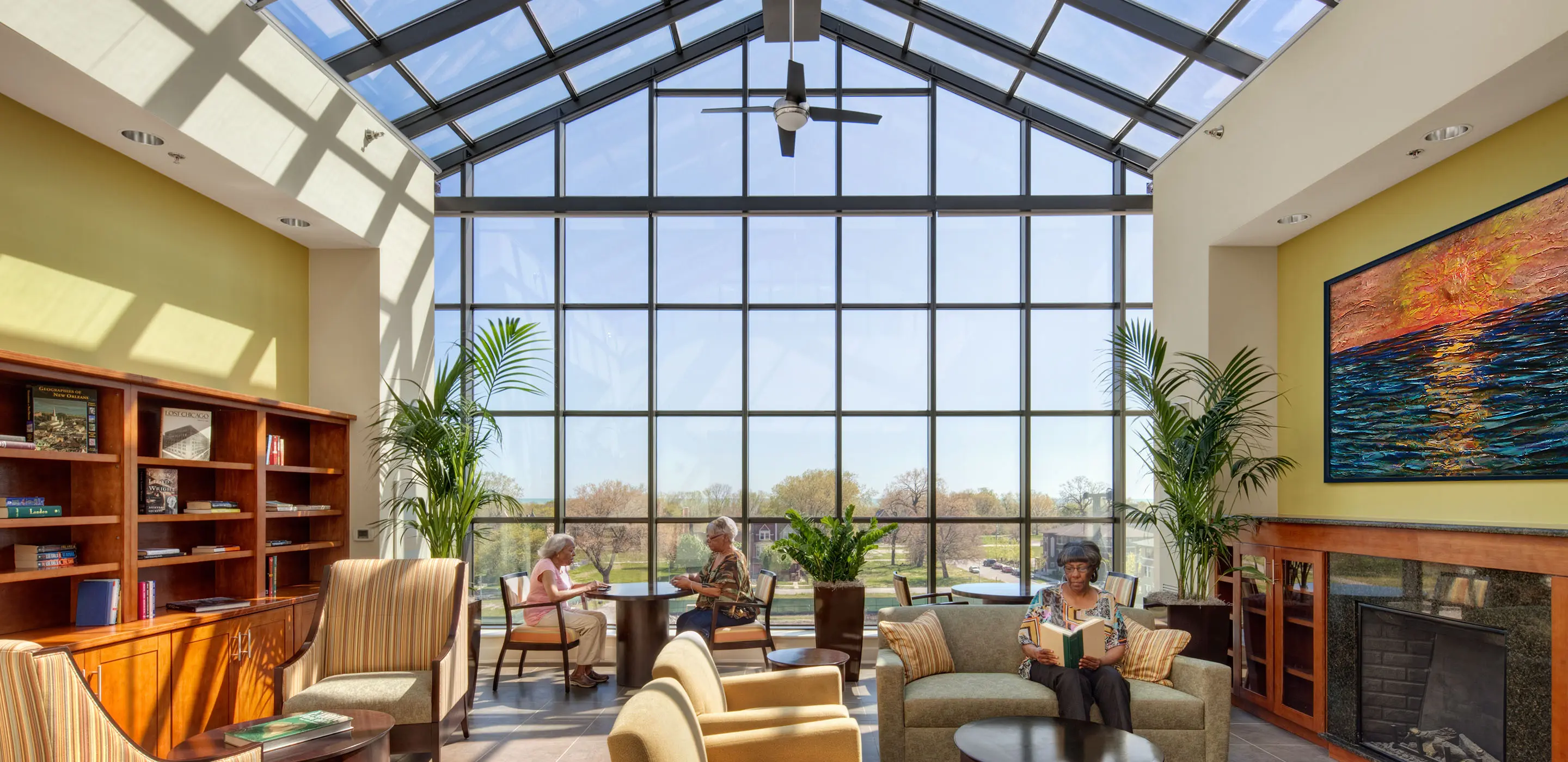
Designing to honor dignity and nurture connection
Across the country, communities are grappling with how to support a rapidly aging population that is increasingly female, cost-burdened, and at risk of social isolation. Loneliness, already a public health issue, hits older women harder. And affordability gaps for middle-income seniors continue to widen, leaving millions without access to the support they need to thrive.
This is where design must lead. By approaching these spaces with the understanding that design influences how people feel, connect, and find meaning. When environments are thoughtfully shaped, they can ease burdens, invite belonging, and restore a sense of self.
Start with Deep Listening and Empathy
The success of any senior living environment begins with understanding the lived experiences of those who will call it home. For women in later life, that often means prioritizing safety, proximity to community, and spaces that support daily autonomy. But it also means understanding the invisible forces: fear of isolation, generational caregiving roles, and the desire for meaningful social connection.
Bringing this insight into every engagement, inviting caregivers, staff, and residents into the design conversation. This becomes the foundation of relevance. It helps us surface opportunities that metrics alone don’t capture. And it helps confirm that we’re addressing the right problems in design.

Leverage Inclusive Design to Encourage Connection
Too often, senior living is reduced to the equation: healthcare plus housing. But real impact happens when design transcends those categories. Thinking beyond siloed disciplines helps design a more complete ecosystem of care. When architects, engineers, landscape architects, and interior designers collaborate from the start, everything, from daylighting to staff workflows to sensory cues, works in harmony.
This includes designing for connection, thinking out strategically located shared spaces, intuitive wayfinding, outdoor areas that invite movement and reflection. Designing for dignity, considering universal design strategies that make spaces feel welcoming, not institutional. Designing for caregivers, intentionally placing respite spaces near staff zones, reducing travel distances, improving sightlines, and optimizing adjacencies to prevent burnout.
The Design Solution to Loneliness
Design that supports care must also support connection. As we look beyond physical needs, we confront a quieter crisis: loneliness.
Loneliness is not solved with programming alone. It’s shaped by the physical environment—by how easily people move, connect, and encounter one another. That’s why we need to think spatially about social health.
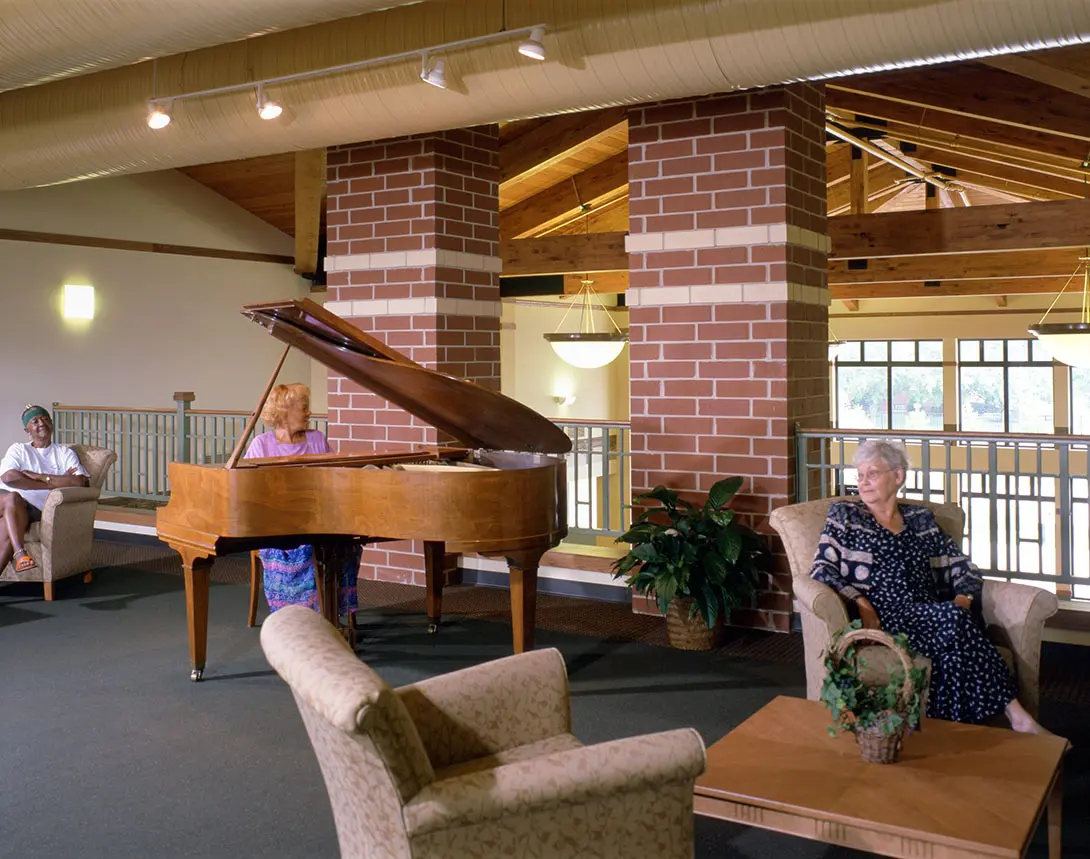
It is key to create a variety of communal spaces that feel personal; intimate alcoves for spontaneous chats, communal kitchens that invite shared routines, quiet corners with visual access to active spaces. These design moves signal to residents: this is your space.
It is important to design with sensory richness in mind. Biophilic elements, natural materials, and changing light conditions foster calm and curiosity.
These aren’t soft touches. They are research backed interventions that reduce stress and improve mood, which is especially important for populations managing grief, cognitive decline, or chronic health conditions.
For women, who are more likely to experience widowhood and social fragmentation in later life, these spatial strategies are essential. They help create environments that heal.
Thoughtful Integration with Technology
As we shape environments that promote social engagement, technology also plays a role, being leveraged to support human connection, not replace it. Integrated digital systems can extend care touchpoints, personalize wellness routines, and streamline operations. But we don’t lead with tech for tech’s sake. We ask: how can this support a more dignified experience?
From app-based engagement platforms to AI-driven care coordination, we work with clients to implement tools that amplify staff effectiveness while deepening resident agency. Designing infrastructure to be future-ready creates flexible systems that can adapt to evolving models of care delivery.
Connection at All Levels
Reframing the way we think about designing for senior living can better position these spaces as part of a broader neighborhood fabric. Isolation often stems from physical and social segregation. A thoughtful design approach reconnects these communities to civic life.
That might mean integrating intergenerational amenities like libraries or early childhood centers. It might mean prioritizing walkability, transit access, and partnerships with local health providers.Wherever possible, we try to embed senior housing into the heart of the community, not on the fringe.
By designing senior living as part of the civic fabric, we uphold dignity—not just in care, but in presence, participation, and place.