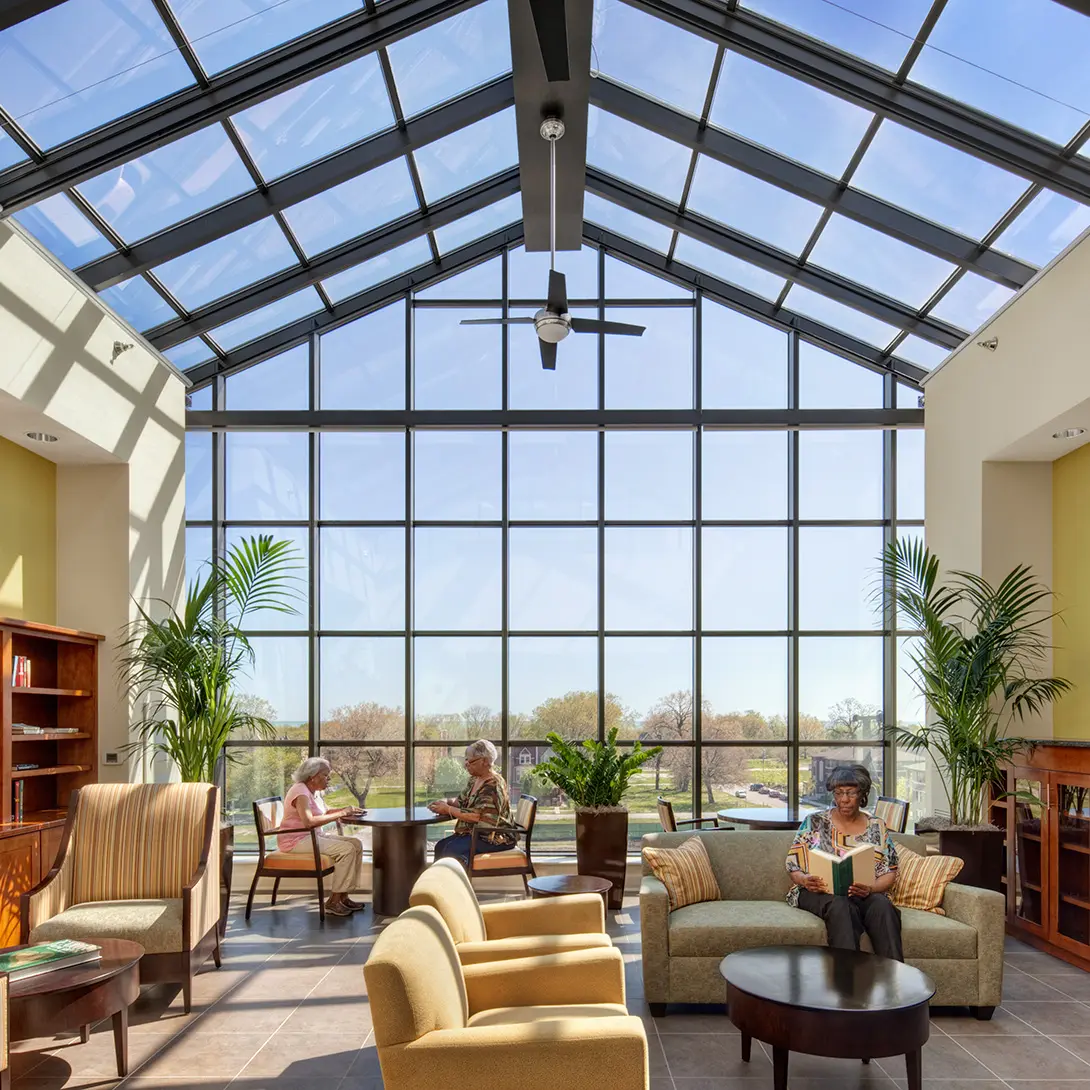
Spaces for Connection in Senior Living
Community is Critical
The significance of social connection cannot be overstated. Research from the National Institute on Aging reports that more than 40% of adults aged 65 and older regularly experience loneliness. Such prolonged isolation increases the risk of dementia by 50% and the likelihood of stroke by 32%, while also contributing to higher rates of depression and anxiety. A well-designed senior living environment is more than just a collection of residences; it is a community that fosters belonging, engagement, and emotional well-being.
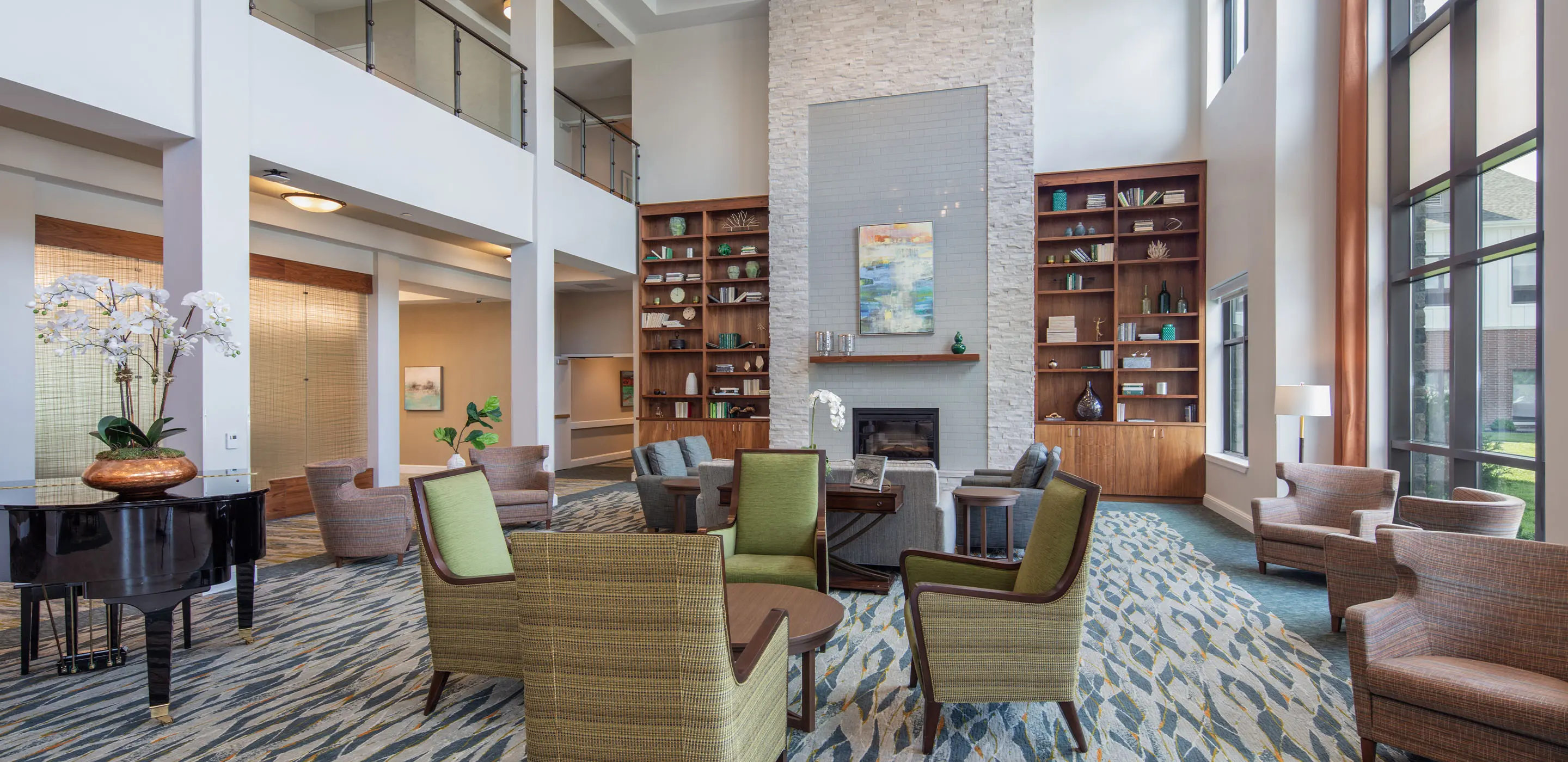
Effective senior living design should focus on vibrant environments that encourage organic interactions and meaningful relationships among residents. Further research indicates that well-designed communal spaces help seniors feel more connected, reducing loneliness and increasing life satisfaction. The WELL Building Standard (WELL) provides a valuable framework for achieving these objectives, emphasizing the role of design in promoting social well-being, mental health, and physical safety.
Designing Senior Living Communities for Connection
Architects and developers must intentionally design senior living environments that reduce barriers to socialization and foster a sense of community. Key strategies include:
- Community-Oriented Layouts: Smaller neighborhood clusters within larger developments create a sense of familiarity and encourage regular social interactions.
- Multifunctional Gathering Spaces: A range of communal areas, from quiet lounges to active social hubs, ensures that residents with different comfort levels can engage at their own pace.
- Engaging Circulation Paths: Wide, well-lit hallways with seating areas promote spontaneous conversations and movement throughout the community.
- Integrated Social Programming: Spaces designed for educational workshops, fitness classes, and wellness activities ensure that social engagement is part of everyday life.
- Thermal and Energy Performance Considerations: WELL emphasizes thermal comfort, recognizing that temperature fluctuations impact both physical comfort and social interaction. Senior living environments should incorporate passive design strategies, high-performance insulation, and energy-efficient HVAC systems to maintain optimal conditions for communal engagement.
Sensory Design: Enhancing Emotional and Social Well-Being
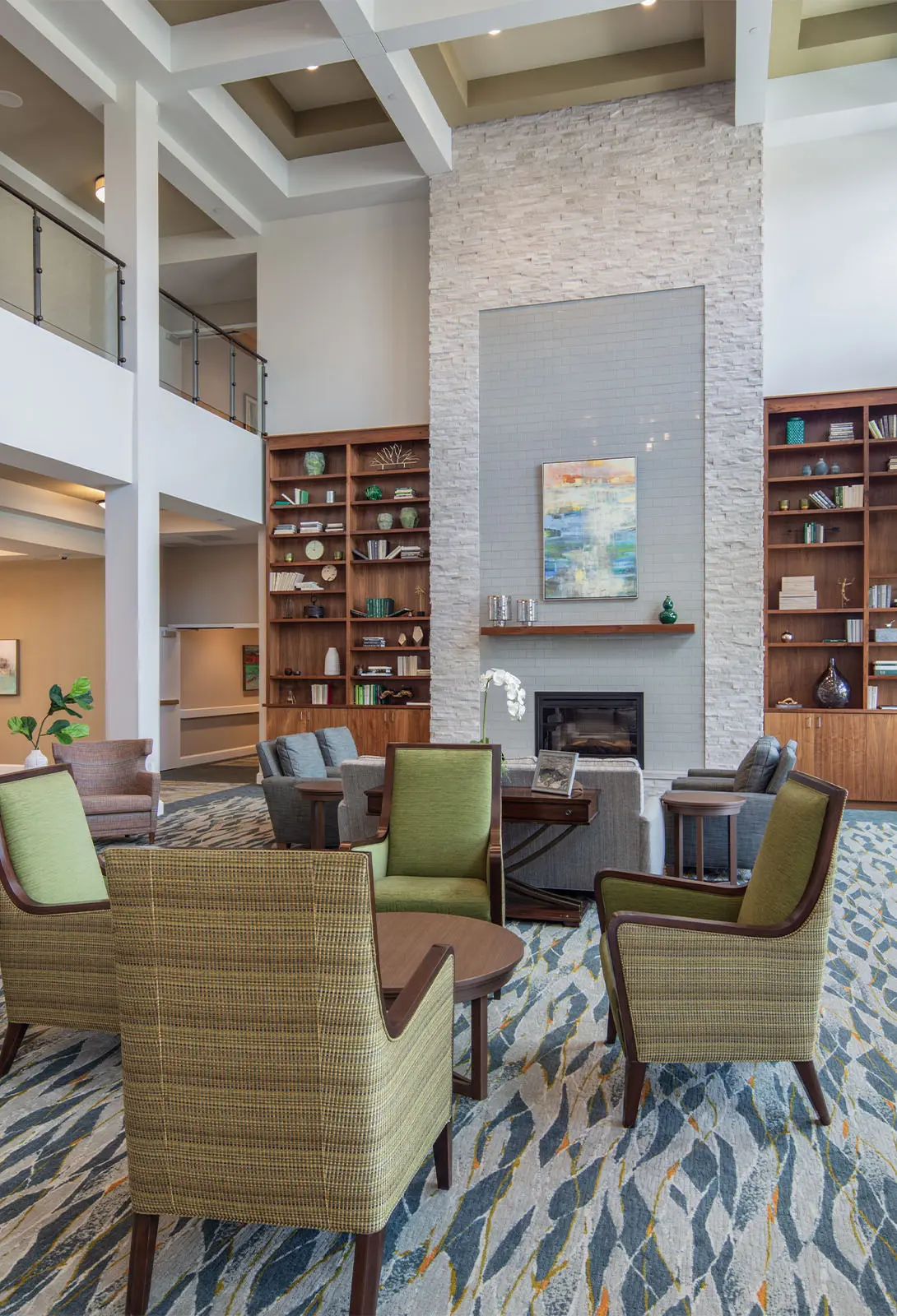
The sensory environment plays a critical role in fostering community and reducing isolation. Acoustics, lighting, and thermal comfort are three key factors that can enhance or hinder social engagement.
- Acoustics: Many seniors experience hearing loss, making it essential to reduce background noise in communal areas while maintaining clear speech intelligibility. Soft furnishings, sound-absorbing materials, and strategic zoning of quiet and active spaces improve auditory comfort and facilitate conversation.
- Lighting: Proper lighting design regulates circadian rhythms, reduces sleep disturbances, and supports cognitive function. Maximizing natural daylight while incorporating adaptable artificial lighting allows residents to engage in social activities comfortably at all times of day.
- Thermal Comfort: Ensuring a stable and comfortable indoor temperature reduces stress and promotes socialization. WELL standards recommend maintaining thermal conditions that support health and well-being, recognizing that discomfort can discourage residents from participating in communal activities.
Balancing Visual Acuity and Biophilic Design for Safety and Connection
While biophilic design (the integration of natural elements into the built environment) offers numerous health benefits, it must be carefully balanced with the need for visual acuity, safety, and social engagement. Ensuring proper illumination is essential for fall prevention and general well-being, yet an overreliance on natural light without proper controls can create glare, impairing vision.
To address these challenges, adjustable lighting systems should be incorporated, allowing residents to personalize light levels for comfort and safety. Materials and finishes that minimize glare while enhancing contrast aid in visual perception, supporting both physical safety and social engagement. The WELL standard outlines best practices for visual lighting design, recommending balanced luminance levels within indoor spaces to enhance both visual clarity and resident well-being.
Designing with Purpose: Community as the Cornerstone
Research from the U.S. Surgeon General’s advisory on social connection indicates that strong social ties increase the likelihood of longevity by 50%, underscoring the transformative power of community-driven design.
Best practices for fostering community in senior living environments include:
- Encouraging Daily Social Interaction: Thoughtful design that incorporates communal dining areas, shared gardens, and walkable outdoor spaces promotes engagement and connection.
- Creating a Sense of Belonging: Recognizing that each resident has unique social needs, offering diverse activity spaces that accommodate both group interactions and private retreats enhance overall well-being.
- Designing for Intergenerational Connection: Incorporating spaces for family visits, community partnerships, and mentorship programs strengthens intergenerational ties and expands social networks.
Building Communities that Support Longevity and Well-Being
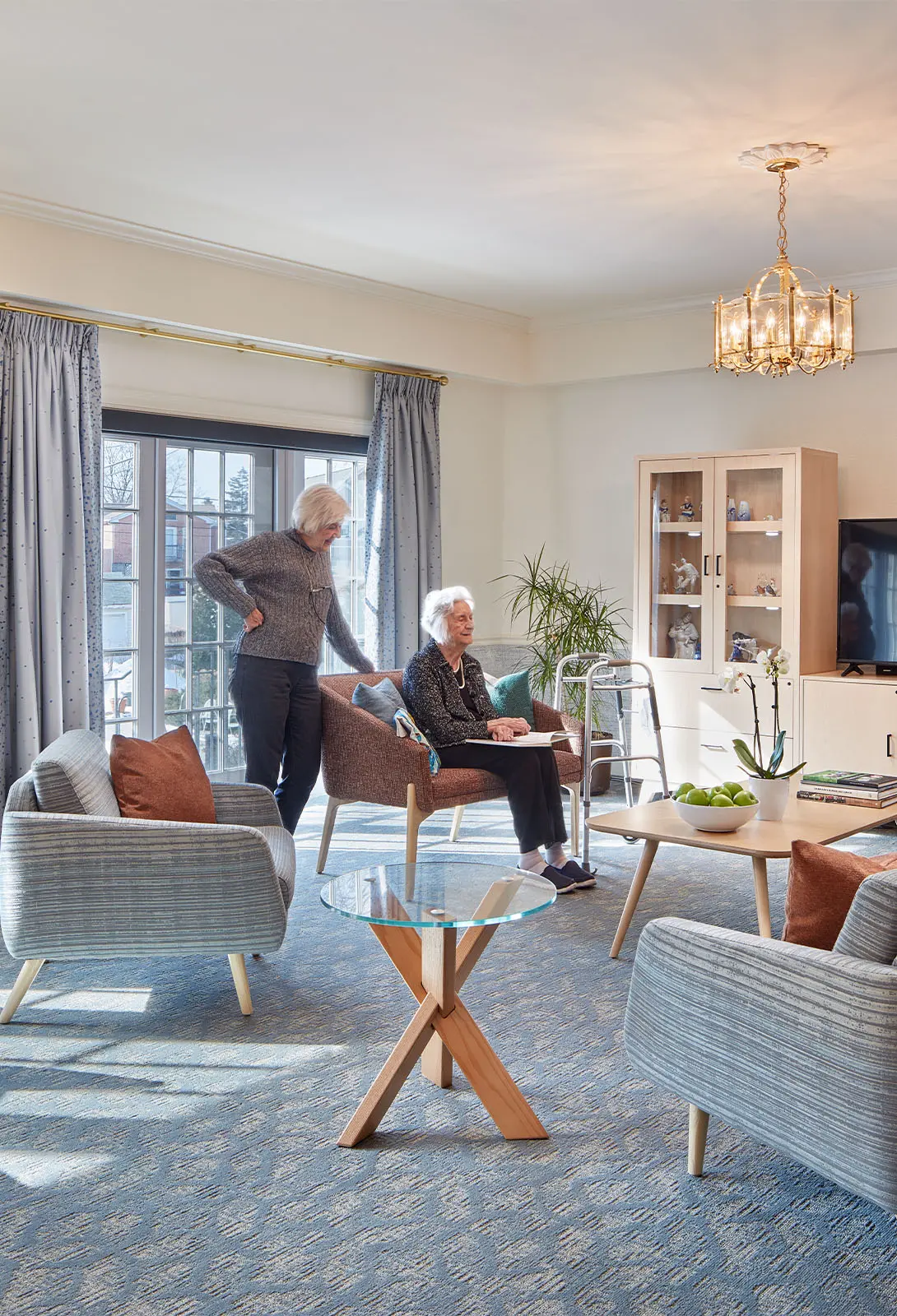
A senior living community goes beyond serving as a residence to be a place where people build relationships, share experiences, and find purpose.
The most successful senior living environments are those that seamlessly integrate architectural design with community-driven principles. By prioritizing spaces that foster interaction, safety, and emotional well-being, developers and architects can create environments that not only house seniors but truly support their long-term health and happiness.