Biophilia & Workplace Design
September 14, 2024
Leveraging Biophilic Design Principles
As a design approach, biophilia aims to reconnect us with natural elements to enhance well-being and productivity in indoor settings. In a world where technology is being more heavily relied on to break down the barriers between those working in different places, biophilia stands out as a method to create strong connections to the physical place and the occupants sharing that space.
Biophilia is the concept that humans have a natural desire to connect with nature. That natural spaces are more calming, healthier, more attractive, and more stimulating to our senses and creativity.
How Biophilic Design Aligns with Top ROI Factors
Implementing biophilic design in the workplace not only enhances employee well-being but also creates significant investor valuation gains and boosts brand perception. It enhances experience, health and wellness outcomes, and drives significant business benefits like:
Stimulating Creativity, Decision-making, and Cognitive Function
Incorporating biophilic design in the workplace can significantly boost creativity, decision-making, and cognitive function. Studies show that these natural elements reduce stress and improve mood, creating a more conducive environment for innovative thinking. For instance, research from the University of Exeter found that creativity levels can increase by up to 15% in workspaces with biophilic elements. Additionally, the Harvard T.H. Chan School of Public Health reported a 26% improvement in cognitive function for tasks performed in environments enriched with natural features.
Lowering Absenteeism and Promoting Productivity
Evidence shows biophilic design can lower absenteeism and boost productivity in the workplace. Indoor plants improve air quality by reducing pollutants, leading to a healthier indoor environment and reducing illness-related absenteeism by up to 6%.
Employees in offices with greenery and sunlight report 15% higher productivity and 40% higher job satisfaction, according to the Human Spaces Global Report. Additionally, investing $1 in biophilic design can yield $20 in increased productivity and reduced absenteeism, as noted by the Global Impact Investing Network.
Creating Investor Valuation Gains and Enhancing Brand Perception
As environmental, social, and governance (ESG) issues become crucial for market competitiveness and stock valuation, companies with biophilic and sustainable offices are seen as more ethical by 27% of investors, according to PwC.
This perception positively impacts customer and stakeholder views, with sustainable practices leading to a 4-6% annual outperformance over peers, as reported by Harvard Business Review. Furthermore, every 1% increase in sustainability scores correlates with a 0.5% higher market value and a 0.1% increase in return on assets, according to MIT Sloan Management Review.
Companies that disclose ESG metrics, including biophilic design initiatives, enjoy a 25% lower cost of capital, highlighting the financial and reputational benefits of such sustainable practices.
Improving the Value of Real Estate and Lease Holdings
Incorporating biophilic design principles into commercial properties significantly enhances the value of real estate and lease holdings. Such properties command rental premiums of 3-8%, as reported by JLL, and boast market values 10-20% higher than those without biophilic features, according to the Journal of Sustainable Real Estate.
Additionally, companies integrating these designs are better prepared for future environmental regulations, thereby reducing compliance costs and risks, as noted by Deloitte. This forward-thinking approach not only attracts premium tenants but also ensures long-term financial and regulatory benefits, making biophilic design a smart investment in the real estate market.
Top Biophilic Design Strategies
Effectively integrating biophilic design principles into the workplace is not just about adding potted plants during move-in. The greatest success comes from a holistic approach that starts at the beginning and is woven into every facet of the design. At HED, our team implements a thoughtful mix of strategies to create a blend unique to the needs of each client and their space.
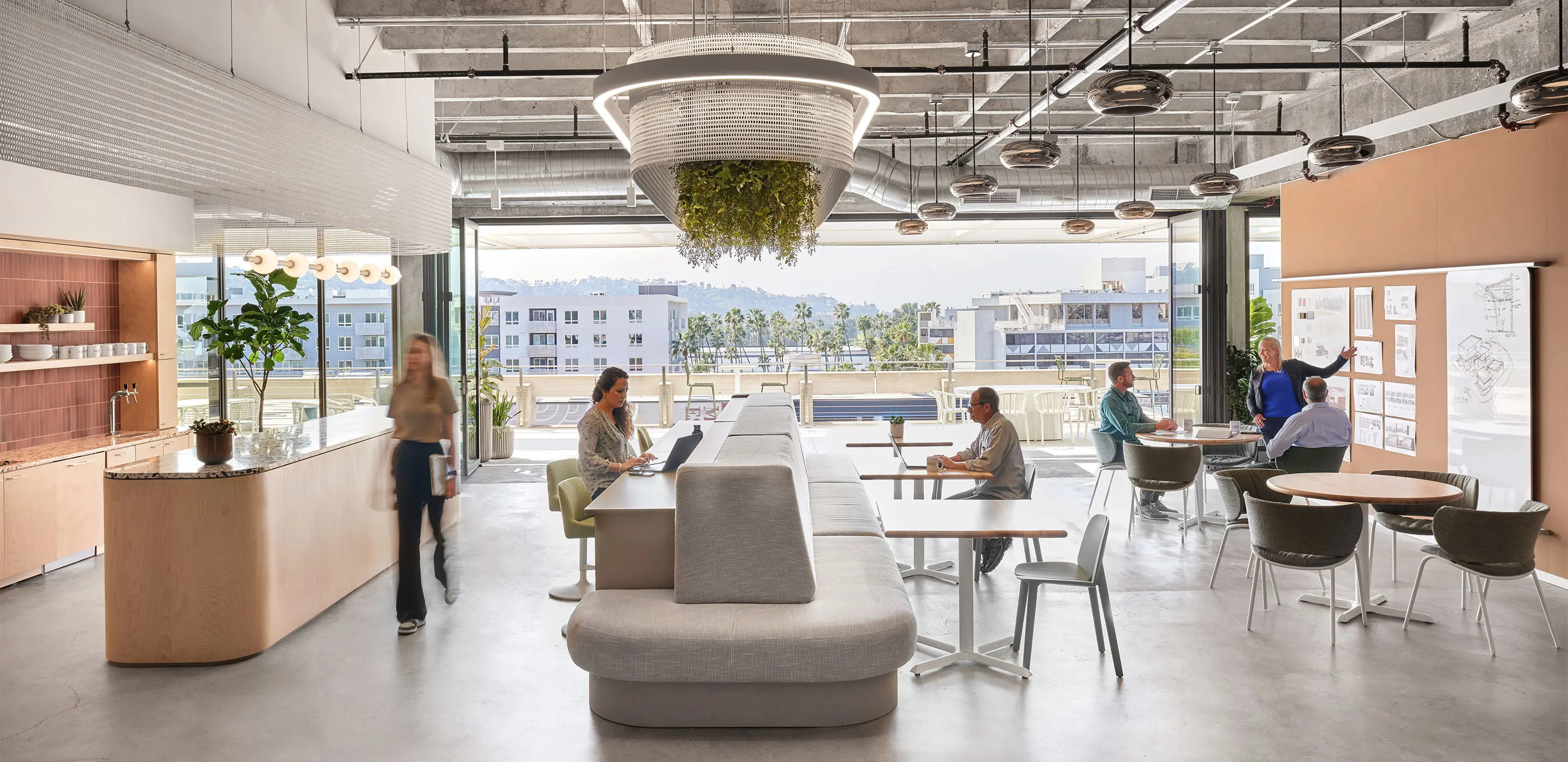
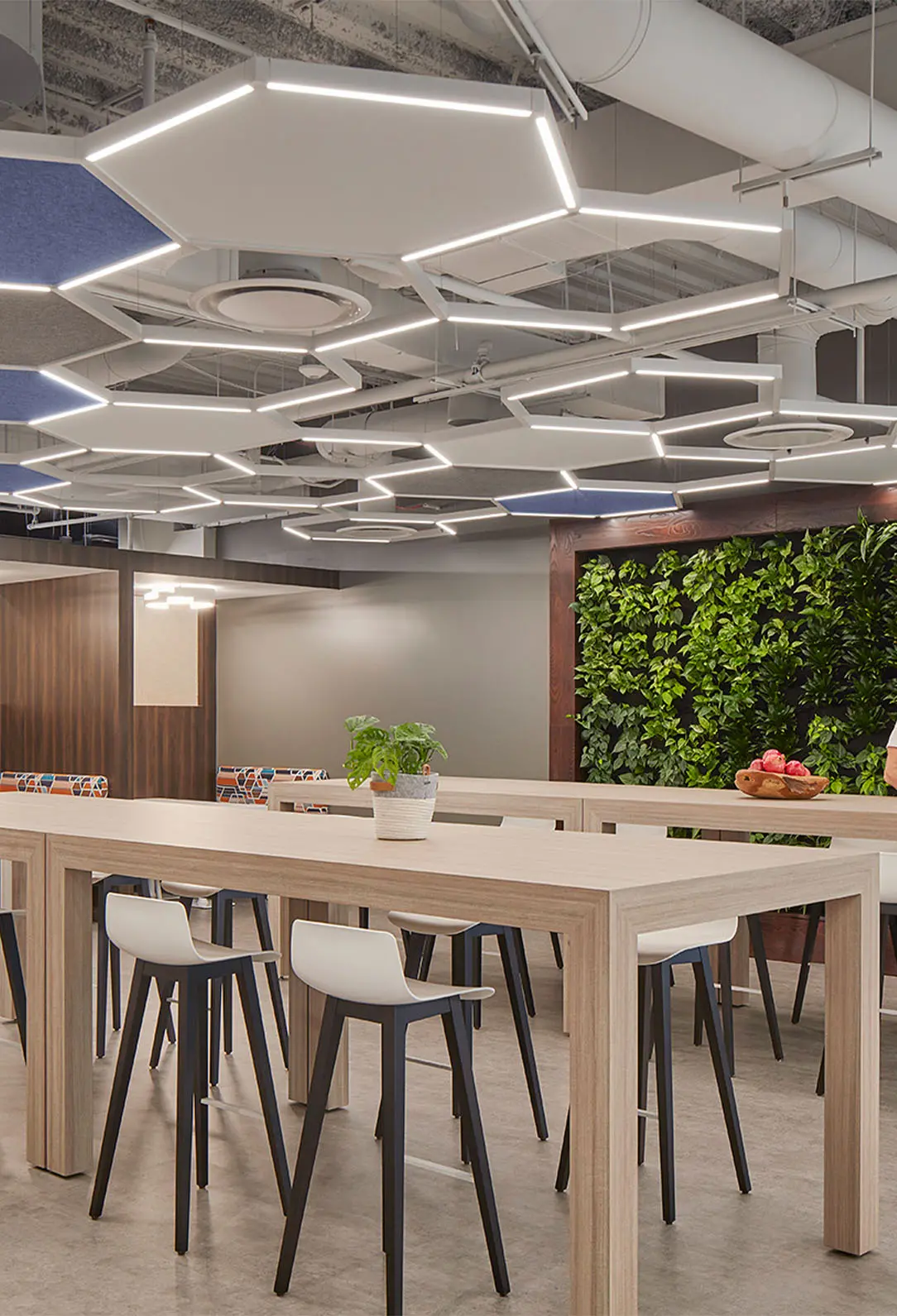
Maximizing natural elements is essential. We design spaces to maximize natural light exposure and integrate plant life throughout the office, selecting species suitable for indoor environments to enhance aesthetic appeal and air quality.
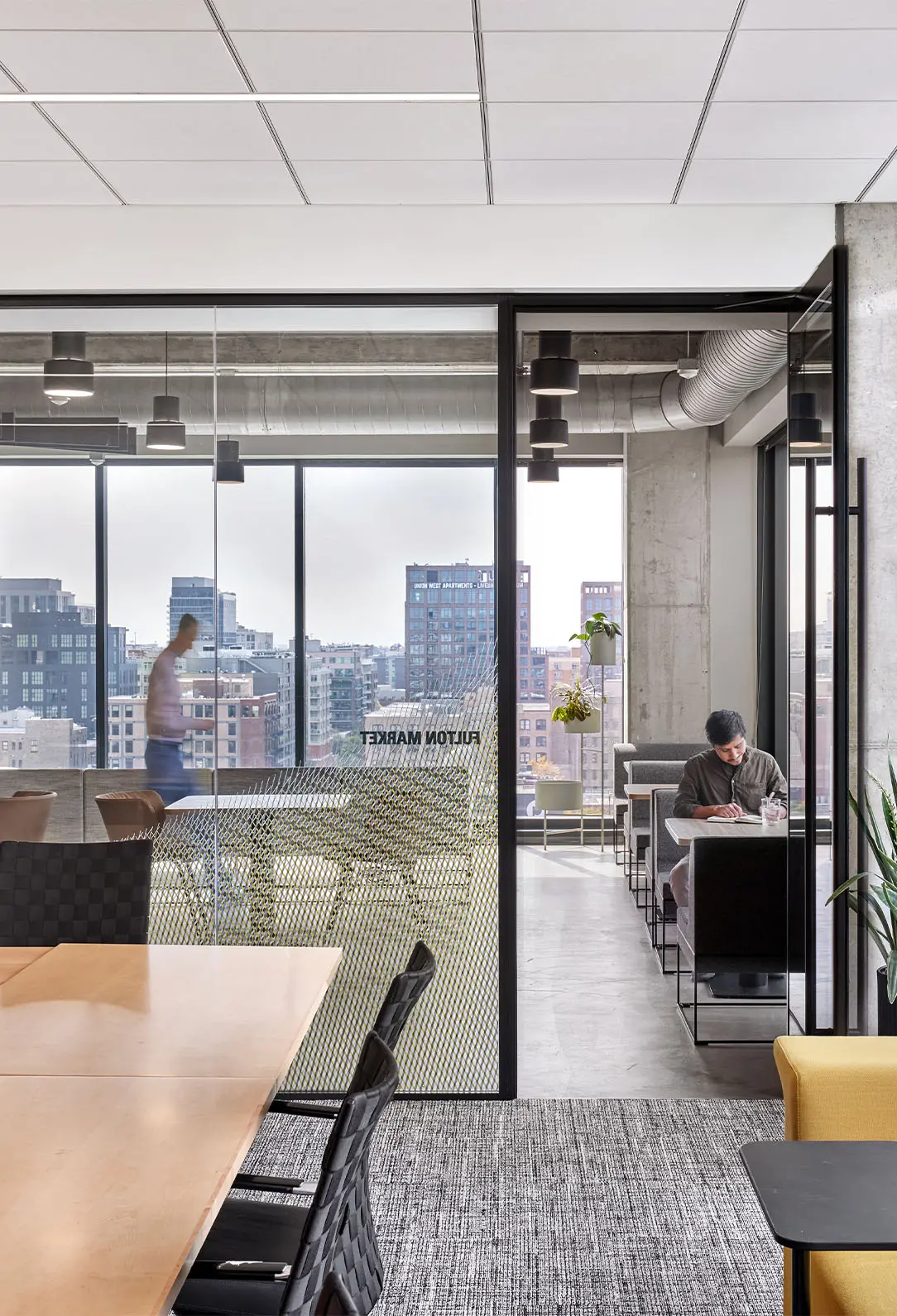
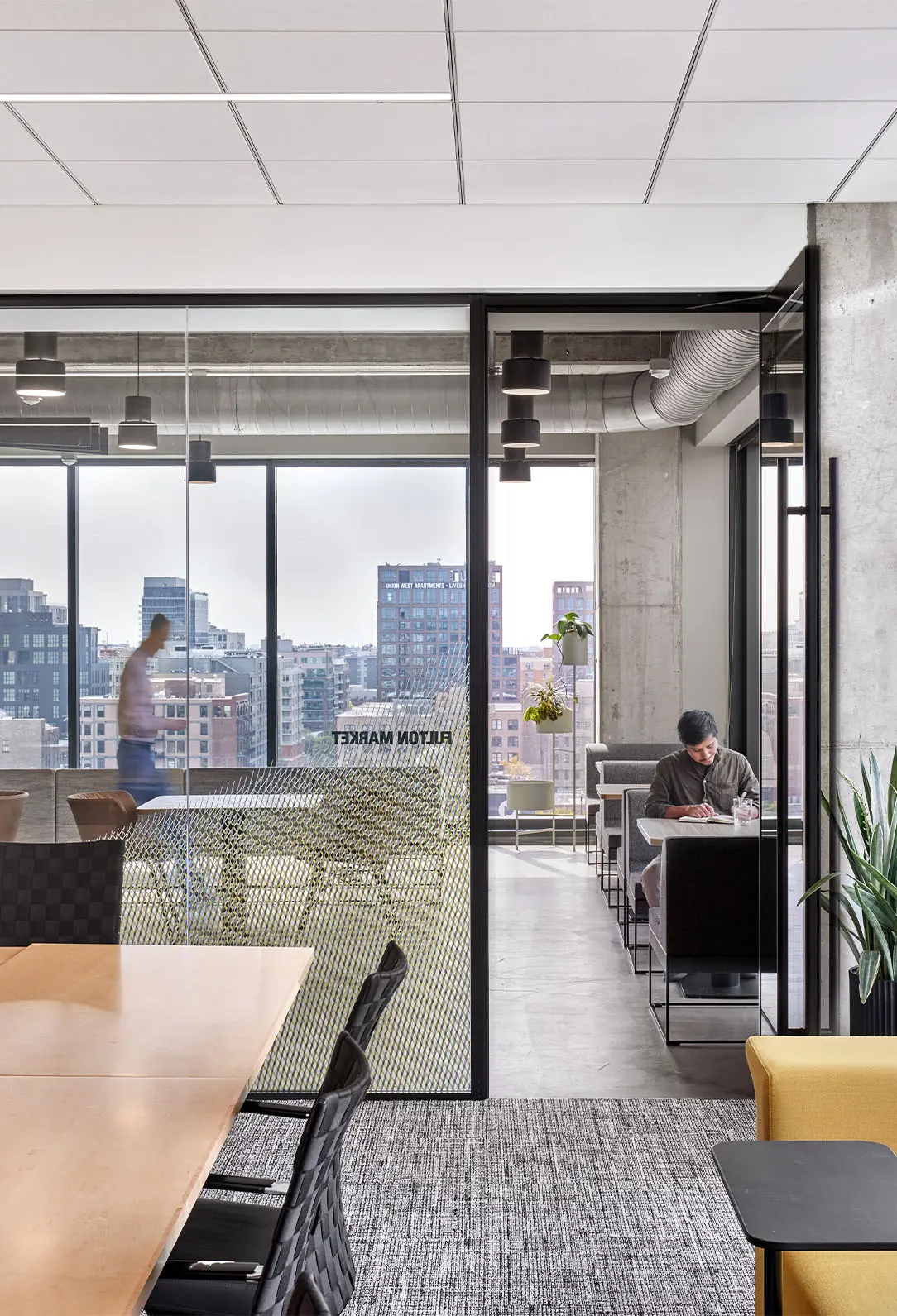
Providing views of nature is another key strategy. Arranging workspaces to offer views of green spaces or urban landscapes can improve mood and reduce stress levels among employees. Additionally, using furnishings and finishes made from natural materials like wood, stone, or bamboo not only enhances aesthetic appeal but also contributes to a calming and comfortable environment.
Improving air quality is crucial, as indoor plants can reduce levels of CO2 by 10% and certain VOCs by up to 50%, according to the NASA Clean Air Study. Proper siting and orientation for correct light penetration and airflow, combined with effective daylighting strategies, can reduce energy consumption for lighting by up to 20-30%, as noted by the EPA. Biophilic design elements such as natural materials, plants, and moving water can also reduce perceived noise levels by up to 5 decibels, creating quieter and more comfortable workspaces, according to the Human Spaces Global Report.
The sound of flowing water can not only mask distracting noises but has also been found to enhance concentration and focus within busy office environments, as reported by Frontiers in Psychology.
Water recycling systems used in these features can also contribute to a company’s environmental, social, and governance (ESG) goals by conserving water resources and reducing environmental impact, as noted by the Green Building Council.
Creating flexible work zones that allow for natural ventilation, personalized control over lighting and temperature, and adaptable layouts that mimic natural environments is an effective strategy. Whenever possible, taking advantage of available outdoor space is recommended as both an alternative work zone and amenity feature – both if you can. This encourages physical activity, contributing to better health and wellness, and serves as an amenity that, almost universally, users value highly when surveyed.
Finally, selecting the correct sustainable design certification system for each project is crucial. Many such programs dovetail neatly with biophilic design principals. HED works closely with clients to engage them on their organizational and project goals, surfacing the criteria for success and clarifying the correct certification system early to ensure success.
The Proven Case for Biophilic Design
Humans have a deep, biological connection to the natural world, and spaces that successfully incorporate biophilic design can trigger more profound attachments to “place.” When the workplace is enriched with natural elements, it fosters a sense of well-being and comfort that goes beyond aesthetics.
Simply put, people feel better in these spaces, and people like to be where they feel good. A biophilic workplace is less stressful, more welcoming, and enhances employees’ connection to their workplace. By cultivating a space that promotes natural interactions and tranquility, biophilic design sets the stage for more meaningful relationships among coworkers, encouraging collaboration, creativity, and a shared sense of purpose.